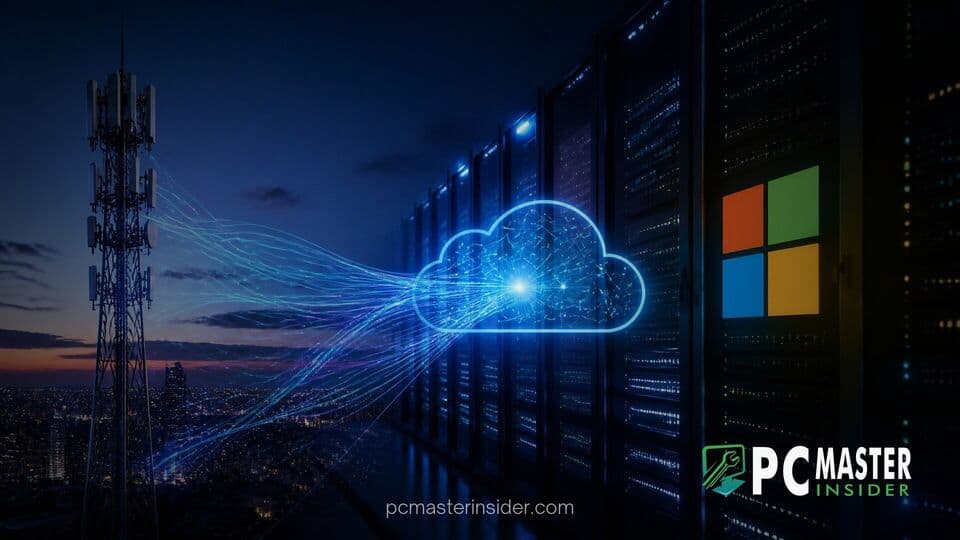
Nokia and Microsoft have announced an expansion of their longstanding alliance to create an agentic, unified data foundation designed to accelerate network automation for telecommunications operators. By integrating Nokia Data Suite with Microsoft Fabric, the two tech giants aim to simplify complex data integration and cut processing times from weeks to minutes.
The collaboration empowers global telecom providers to transition from static network infrastructures into fully programmable, AI-native platforms. Through the unified solution, network engineers can deploy autonomous artificial intelligence agents across multi-vendor and cross-domain environments, helping carriers maintain high service reliability while dramatically lowering operational friction.
Microsoft Fabric AI Partnership to Transform Telco Data Workflows
Under the enhanced microsoft nokia fabric ai partnership, the combined architecture connects Nokia Data Suite's curated, domain-specific data products directly into Microsoft Fabric's enterprise analytics ecosystem. Historically, telecommunications providers have struggled with fragmented data silos across radio access networks, core operations, and IT systems. Preparing network information for machine learning applications often required tedious, manual data ingestion that stretched across multiple weeks.
By connecting Nokia Data Suite with Microsoft Fabric, operators can instantly normalize, model, and govern vast streams of telecom telemetry. Nokia Data Suite applies standardized, industry-aligned semantic modeling and glass-box quality controls, ensuring that downstream AI applications receive transparent, trustworthy inputs. Concurrently, Microsoft Fabric supplies the storage backbone via OneLake, alongside robust governance framework integration and connectivity to tools like Microsoft 365 Copilot, Azure AI Foundry, and Power BI.
This streamlined pipeline enables operators to rapidly clean up siloed records and deploy AI-driven automation across hybrid, cloud, and on-premises infrastructure. Because the joint solution respects local data sovereignty boundaries, telecom providers can comply with strict regional regulatory requirements while maintaining operational agility.
Microsoft Fabric Integration with Nokia Data Suite
The core objective of integrating Nokia Data Suite with Microsoft Fabric is to furnish a reliable layer of structured information that autonomous AI agents can act upon safely. The architecture bridges operational technology with enterprise intelligence, allowing carriers to query raw network statistics and execute closed-loop workflows without human delays.
Key Features and Telecom Network Automation Capabilities
The joint platform introduces several targeted automation capabilities built for modern 5G and cloud-native networks:
- Autonomous VoNR Assurance: AI agents constantly monitor Voice over New Radio sessions, detecting service anomalies in real time, executing automated root-cause analyses, and recommending immediate corrective actions.
- Geographic Experience Mapping: Machine learning algorithms correlate radio frequency data with subscriber sessions to map network quality geographically, helping teams spot localized performance degradation instantly.
- Predictive Maintenance: The platform analyzes real-time and historical telemetry to predict hardware and software failures before they result in widespread network outages.
- Engineer Copilots: AI-driven operational assistants provide actionable guidance to human engineering teams while preserving human-in-the-loop oversight for critical infrastructure changes.
Impact on Enterprise Telecommunications and AI Agents
Executives from both companies stressed that having high-quality, trusted data is the primary prerequisite for moving artificial intelligence out of pilot phases and into live daily network operations.
"Nokia and Microsoft are bringing the right data, at the right time, for the right reason to telecom operators worldwide," said Vivek Jaiswal, Senior Vice President of Autonomous Networks at Nokia. "Together, we are helping networks evolve from static infrastructures into programmable, AI-native platforms."
Silvia Candiani, Corporate Vice President of Worldwide Telco & Media at Microsoft, reinforced the necessity of centralized data management. "Telecom providers are ready to move AI from experimentation into everyday network operations, but that requires trusted data, strong governance and platforms that can scale," Candiani noted. "By bringing together Nokia Data Suite and Microsoft Fabric, we are creating a faster path to turn complex network data into actionable intelligence."
Broader Enterprise AI Cloud Expansion Strategy
This telecom alliance fits into Microsoft's overarching cloud and artificial intelligence infrastructure roadmap. Over recent months, the enterprise technology landscape has shifted heavily toward deploying autonomous, task-oriented software agents. Companies are aggressively adapting custom silicon, enterprise data lakes, and local processing capabilities to power specialized AI workloads.
Similar moves across the industry demonstrate a growing demand for optimized AI foundations. For instance, Qualcomm partnered with Amazon on custom AI silicon to handle data center inference, while Meta detailed its custom MTIA AI chips to power internal machine learning workloads. On the software side, companies are bringing autonomous capabilities directly to end-user hardware, as seen when Perplexity released a local AI agent for Windows PCs running high-performance hardware.
Furthermore, Microsoft continues to emphasize safety frameworks and disciplined rollout strategies across its portfolio. Leadership at Microsoft has highlighted plans like Satya Nadella's Microsoft AI Code of Conduct to ensure enterprise platforms scale responsibly under unified data governance models.
By establishing a unified data foundation for telecommunications providers, Nokia and Microsoft are addressing one of the most data-intensive sectors in modern enterprise technology. The platform is now available globally for deployment, providing telecommunications operators with a practical blueprint to scale autonomous, self-healing network operations.