Recent leaks from well-known industry insiders indicate that both AMD and NVIDIA have revised their hardware roadmaps, postponing the full rollout of their next-generation gaming graphics cards until 2028. The extended hiatus in consumer GPU releases comes as global memory chip shortages and overwhelming demand for enterprise artificial intelligence hardware alter manufacturing priorities across the semiconductor industry.
Reports Indicate Next-Gen GPU Architectures Pushed to 2028
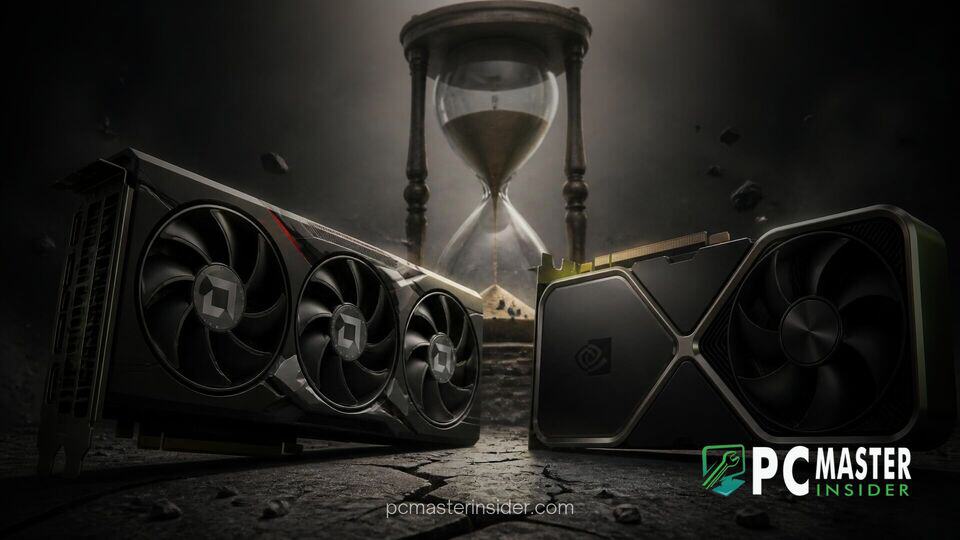
According to claims from reliable hardware leaker Kepler_L2 on the AnandTech forums, full consumer lineups for NVIDIA's next-generation architecture, codenamed Rubin (expected to form the GeForce RTX 60 series), and AMD's RDNA 5 family will not hit retail shelves until 2028. Aside from a single anticipated mid-range offering from AMD, both companies appear ready to skip major desktop graphics releases throughout 2027.
This potential schedule shift represents one of the longest gaps between flagship desktop GPU generations in recent memory. Historically, graphics card manufacturers operated on an 18 to 24-month cadence for consumer architecture refreshes. However, mounting supply chain pressures and soaring DRAM manufacturing costs have disrupted traditional product cycles.
Industry observers note that leading memory fabricators are allocating a vast majority of their production capacity toward High Bandwidth Memory (HBM) and specialized enterprise DRAM to serve data centers. Consequently, high-density GDDR7 memory modules required for next-generation desktop cards remain scarce and expensive. These high component costs have reportedly even jeopardized intermediate product releases, such as NVIDIA's rumored GeForce RTX 50 Super mid-generation refresh, which leakers suggest may be canceled entirely.
The market dynamics reflect broader industry trends where graphics card makers balance consumer demand against enterprise profitability. A recent market analysis showed desktop GPU shipments hit four-year high as NVIDIA holds 90% share, proving that overall volume remains robust even while manufacturers face component allocation bottlenecks.
Memory Shortages and Market Factors Impacting AMD and NVIDIA Roadmaps
The core catalyst behind the reported delay is the ongoing crunch in global memory supply chains. Enterprise demand for large language models and neural network processing has driven hyperscalers to lock up silicon manufacturing capacity, making specialized memory components significantly harder for consumer graphics divisions to secure at reasonable price points.
NVIDIA in particular has directed immense engineering and production resources toward server-grade computing platforms, leaving consumer desktop products with tighter supply constraints. At the same time, hardware makers continue expanding AI acceleration into other segments. For example, ASUS unveiled ProArt PCs powered by NVIDIA RTX Spark at IFA 2026 to support specialized local creator workflows, demonstrating how silicon allocation spans beyond traditional gaming environments.
The Exception: AMD RDNA 5 AT2 Mid-Range GPU in 2027
While the broader market faces a dry spell, the leaks highlight one notable exception to the 2028 delay. AMD is reportedly planning to launch a single graphics processor codenamed "AT2" sometime during 2027. Built on the upcoming RDNA 5 architecture, this chip is expected to serve as a standalone mid-range release before the rest of the RDNA 5 family debuts a year later.
Reports suggest the AT2 die could feature approximately 64 Compute Units, positioning it as a direct successor to current upper mid-range options like the Radeon RX 9070 XT. By launching AT2 early, AMD could potentially secure an advantage in the mid-tier desktop market while NVIDIA remains focused on existing Blackwell hardware.
Expected Specifications and Role in Next-Gen Gaming
The choice to launch a lone mid-range die allows AMD to test its new RDNA 5 architecture in real-world gaming conditions without committing massive volumes of high-density memory modules. RDNA 5 is widely rumored to feature overhauled ray tracing pipelines, redesigned compute units, and enhanced machine learning accelerators tailored for upscaling and frame generation.
If released on schedule in 2027, the AT2 GPU could provide an upgrade path for gamers seeking modern features without waiting for the full top-to-bottom stack in 2028. Meanwhile, software maintenance for existing platforms continues in full swing across both brands. AMD recently released updates like Adrenalin 26.9.1 driver to fix Starfield and Apex Legends crashes, ensuring current-generation hardware remains well-supported during the extended generation cycle.
Similarly, NVIDIA continues enhancing software capabilities for its installed user base. Enhancements like the recent NVIDIA App update adding DLSS 4.5 overrides and Resizable BAR controls demonstrate how graphics vendors rely on software optimizations to extend the performance life of current architecture generations.
What the Delayed Timeline Means for PC Builders and Upgraders
For PC gaming enthusiasts and system builders, a delayed release window alters long-term upgrade strategies. With no flagship hardware anticipated from NVIDIA or AMD for nearly two years, existing GPU lines like the GeForce RTX 50 series and Radeon RX 9000 series are set to remain top-tier options for significantly longer than previous product generations.
This extended lifecycle may stabilize current graphics card pricing over time, though memory shortages could keep retail hardware prices elevated. Furthermore, game developers may adjust their engine optimization targets, knowing that the baseline desktop PC specification will not dramatically jump until 2028.
Software innovations and community modifications are already stepping in to bridge hardware gaps. In a notable display of community ingenuity, modders run DLSS 5 on secondary GPU to boost PC gaming performance, showing how alternative execution methods can extract additional performance from existing setups.
While unconfirmed leak reports must always be taken with caution, the alignment among multiple hardware insiders paints a consistent picture. Gamers planning their next major system build may need to adjust expectations and prepare for current GPU families to hold the line through 2027.