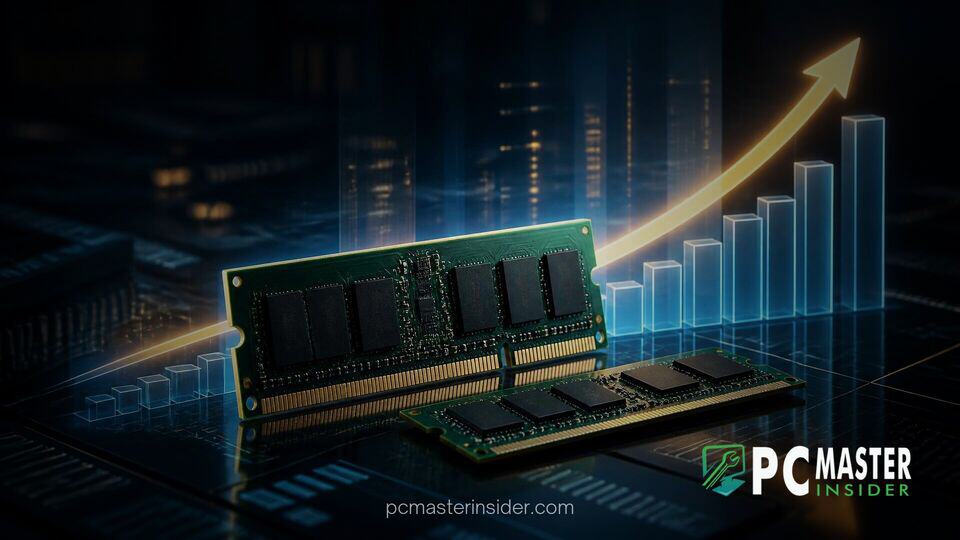
Global memory semiconductor markets are preparing for another sharp price increase in the final months of the year as major DRAM manufacturers continue to pivot production capacity toward enterprise data centers and artificial intelligence servers. Market research firm TrendForce has significantly revised its quarterly forecasts, projecting that PC DRAM contract prices could rise by 13 to 18 percent in the fourth quarter of 2026.
The revised figures highlight a persistent structural shortage across the memory industry. Although consumer demand for personal computers remains subdued due to broader economic pressures and elevated hardware costs, semiconductor suppliers retain strong pricing leverage as available supply for standard desktop and notebook memory continues to shrink.
pc dram contract price forecast q4 2026
According to the latest industry research from TrendForce, PC DRAM contract prices are expected to rise between 13 and 18 percent quarter over quarter in Q4 2026. This updated forecast represents a substantial upward adjustment from earlier baseline estimates, which previously anticipated modest single digit increases. The surge is primarily driven by primary DRAM suppliers prioritizing advanced fabrication processes for high-performance server memory and High Bandwidth Memory (HBM) modules required for AI workloads, effectively reducing the output of conventional DDR4 and DDR5 memory chips intended for consumer personal computers.
TrendForce Forecasts Accelerating Q4 PC DRAM Price Hikes
The upward adjustment in fourth quarter projections underscores how tightly constrained the memory ecosystem has become throughout 2026. Earlier in the year, market analysts anticipated that price growth might stabilize during the second half of the year as PC shipments normalized. However, the continuous expansion of cloud computing infrastructure has forced major chipmakers to keep their production lines focused on high margin enterprise products.
TrendForce notes that while conventional DRAM contract prices across all sectors are projected to grow by 10 to 15 percent overall, the PC segment is facing sharper upward pressure. Computer manufacturers attempting to secure quarterly allocations for desktop and laptop manufacturing are meeting stiff resistance from suppliers who have limited output reserved for client hardware. Consequently, OEM buyers are accepting higher contract rates to guarantee sufficient inventory heading into the 2027 calendar year.
Industry data shows that Micron warned the memory shortage could persist well into the coming years as capital expenditure remains tightly tied to enterprise and server expansion. This long term tight supply environment gives chipmakers little incentive to discount consumer components, even when end user device sales experience seasonal lulls.
Contract Price Trends and September Record Highs
The acceleration expected in Q4 follows a period of historic price growth through the end of the third quarter. Industry tracking data from DRAMeXchange revealed that average fixed transaction prices for commodity PC DRAM modules reached new record highs in September 2026. For example, standard DDR4 8Gb modules rose to an average of $26, marking an ongoing upward trend that has spanned 18 consecutive months.
Although the month over month rate of growth temporarily slowed in September due to a brief lull in contract negotiation schedules between memory producers and PC OEMs, the fundamental supply and demand balance did not ease. During July and August, suppliers and system builders finalized third quarter contract pricing, shifting active negotiations toward fourth quarter and full year 2027 commitments. With those talks now underway, chipmakers are establishing higher price baselines for both legacy DDR4 and current generation DDR5 memory kits.
Production Capacity Shifted Toward Server DRAM
The core catalyst behind the ongoing shortage in consumer hardware remains the aggressive reallocation of silicon wafer capacity. Major memory suppliers including Samsung Electronics, SK Hynix, and Micron have directed significant portions of their advanced manufacturing nodes toward high capacity RDIMMs and specialized HBM units for server architectures. Because high density server modules require higher wafer real estate and yield lower overall bit output per wafer, the volume of standard DRAM available for PC system builders drops proportionately.
Server CPU availability has improved significantly throughout 2026, prompting major cloud service providers and enterprise server OEMs to increase bit procurement rapidly. To meet demand for agentic AI workloads and general cloud infrastructure, memory manufacturers are producing enterprise modules at maximum capacity. However, back end packaging and testing constraints continue to prevent supply from fully catching up with enterprise demand, keeping the entire DRAM sector in an undersupplied state.
Impact of AI Datacenter Demand on Commodity Memory
The structural shift toward AI infrastructure has fundamentally disrupted traditional memory pricing models. In previous semiconductor cycles, consumer PC volumes set the baseline for DRAM production costs, with excess capacity occasionally creating sharp price drops during downturns. In 2026, the unprecedented value density of server hardware has inverted this relationship.
Because enterprise buyers are willing to pay significant premiums for high density memory configurations, memory makers are disincentivized from maintaining excess capacity for low margin commodity desktop hardware. Furthermore, system builders working on specialized local computing platforms, such as Gigabyte with its local AI desktop systems, are increasingly competing directly with standard consumer builds for large capacity memory configurations, compounding supply friction across all retail channels.
What PC Manufacturers and Hardware Buyers Should Expect
For system manufacturers and consumer electronics brands, the sustained rise in memory contract prices is impacting profit margins and end market pricing strategies. PC OEMs are seeing notebook bills of materials rise steadily, which is gradually being reflected in final retail prices for prebuilt systems and laptops.
Hardware brand reactions are already taking shape across the consumer landscape. System integrators and boutique manufacturers have begun adjusting laptop prices to absorb rising component costs. Recently, XMG announced price hikes on its laptops directly attributing the adjustment to rapid increases in DDR5 SO-DIMM procurement costs. Major global computer manufacturers are issuing similar warnings. Executives at Acer warned PC prices could rise substantially in Q4 as high component costs filter through supply chains.
In addition to memory pressures, PC builders are facing cost adjustments across other core components. Reports indicate that AMD plans price adjustments on GPUs and chipsets, compounding overall desktop build costs during the holiday shopping season.
For DIY builders and enterprise IT procurement teams, analysts recommend securing necessary memory upgrades early or anticipating higher retail costs through early 2027. While spot market prices may experience minor short term fluctuations depending on retail inventory levels, contract prices set by primary fabricators indicate that the underlying cost of RAM will remain elevated for the foreseeable future.
In summary, TrendForce's revised forecast confirms that the global memory market remains firmly locked in a seller favored dynamic. With chipmakers prioritizing AI server infrastructure and enterprise data centers, PC DRAM contract prices will continue their upward trajectory in Q4 2026, forcing device manufacturers and consumers alike to adapt to higher memory procurement costs.