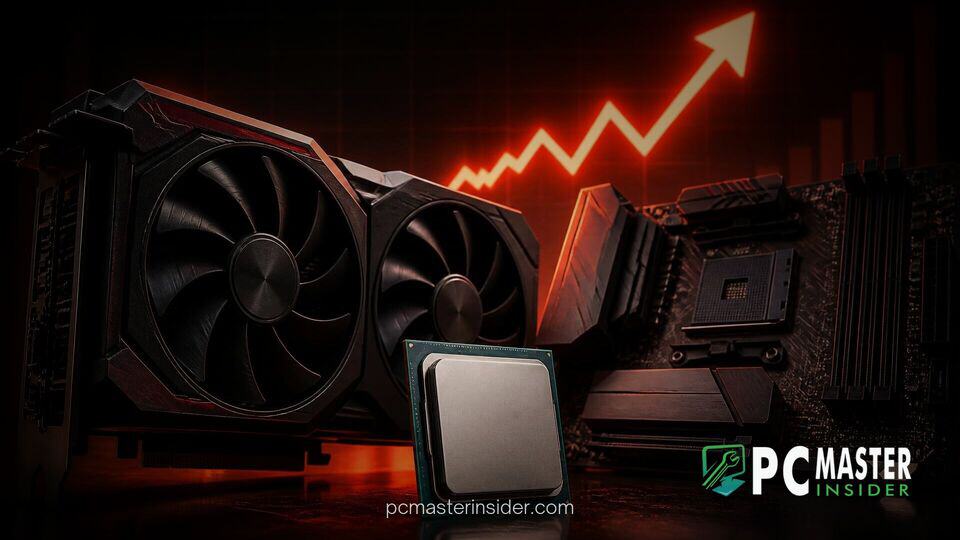
AMD is instructing its hardware manufacturing partners to prepare for an approximate 10 percent price increase across several key component categories starting in the fourth quarter of 2026. The wholesale cost adjustments specifically target AI accelerators, consumer Radeon graphics processors, and motherboard chipsets, leaving desktop Ryzen CPUs untouched for the time being.
Industry reports from supply chain channels indicate that the price adjustments stem directly from escalating manufacturing fees passed down by primary foundry partner TSMC. As advanced semiconductor fabrication nodes grow more costly to operate, fabless chip designer AMD is moving to preserve its operational gross margins across consumer and enterprise hardware divisions.
AMD GPU Chipset Price Hike Q4 2026 Details and Scope
Reports originating from Asian supply chain monitoring groups indicate that AMD notified add-in board (AIB) partners and motherboard manufacturers of the incoming 10 percent cost increase ahead of final fourth-quarter contract renewals. The adjustments will directly influence supply agreements for Radeon graphics processing units, enterprise accelerator modules, and the core chipset silicon supplied to motherboard brands.
While price adjustments on graphics cards are relatively common in response to component fluctuations, an upward price revision on motherboard chipsets is far rarer. Motherboard manufacturers rely on stable chipset pricing from AMD to plan multi-tier product lineups across entry-level, mid-range, and enthusiast platforms. A 10 percent bump in chipset costs means third-party vendors will face immediate pressure on production margins, likely resulting in slightly higher retail prices for AM5 motherboards entering the market in late 2026.
This development follows a broader trend of rising bill-of-materials costs across the personal computer hardware landscape. System builders are already navigating historical pricing spikes in other sectors, as seen when DDR5 RAM prices surged to a new record high earlier this fall due to shifts in global DRAM allocation.
TSMC Manufacturing Cost Pressures Drive Graphics and Chipset Adjustments
The primary catalyst for AMD's revised pricing structure is the rising cost of wafer allocation at Taiwan Semiconductor Manufacturing Company (TSMC). TSMC has reportedly adjusted its wafer pricing schedules upward by around 10 percent to offset substantial capital expenditures. These include rising costs for raw semiconductor materials, advanced extreme ultraviolet (EUV) lithography equipment, and international fabrication expansion projects.
Because AMD operates as a fabless semiconductor designer, it relies entirely on external foundries like TSMC to manufacture its physical silicon. When TSMC raises its per-wafer manufacturing charges, AMD must choose between absorbing the financial contraction or passing the extra production expense to downstream partners. To protect gross margins across its graphics and enterprise segments, AMD has opted to pass on the elevated costs.
The graphics segment has faced heightened supply pressure throughout the year. Even as desktop GPU shipments hit a four-year high earlier in the year, high-density video memory costs and node manufacturing expenses have continued to build up, forcing manufacturers to recalibrate their wholesale structures ahead of the holiday shopping surge.
Ryzen CPU Pricing Remains Unchanged Ahead of Holiday Season
Conspicuously missing from the list of Q4 price adjustments is AMD's flagship consumer product line: Ryzen desktop and laptop processors. Despite using similar advanced TSMC manufacturing nodes for processor compute dies, AMD has chosen to keep wholesale pricing for Ryzen CPUs flat for the time being.
Holding Ryzen pricing steady appears to be a calculated strategy to protect consumer demand ahead of the crucial holiday retail quarter. By absorbing wafer cost increases on consumer processors while adjusting prices on graphics cards and chipsets, AMD can preserve its competitive momentum in the desktop processor market.
However, analysts warn that this stability might be temporary. Because Ryzen processors rely heavily on the same foundry nodes experiencing price jumps, sustained cost pressures at TSMC could eventually spill over into processor pricing if supply chain conditions do not stabilize in early 2027.
Competitive Positioning Against Intel Market Strategy
AMD's decision to maintain flat Ryzen pricing stands out when contrasted with competitive moves across the broader industry. Reports indicate that rival chipmaker Intel is reportedly preparing a 10 percent PC CPU price hike of its own to bolster overall operating margins.
By keeping Ryzen prices firm while Intel adjusts its CPU lineup, AMD stands to gain a pricing advantage in pre-built systems and the DIY desktop market. Nevertheless, consumers building complete systems will still feel the broader market squeeze. The combined impact of elevated GPU wholesale costs, pricier motherboards, and elevated component prices continues to push pre-built and custom system costs higher, building on earlier trends where US PC average selling prices exceeded $1,000.
At the same time, specialized form factors continue to evolve around AMD architecture. Enterprise hardware and compact mobile devices, such as the recently announced COLORFIRE Ryzen AI Max workstation mini PC, showcase how integrated chips are increasingly used to bypass separate motherboard and dedicated graphics costs.
Impact on Hardware Manufacturers and Retail Component Prices
The 10 percent wholesale increase on GPUs and chipsets will take effect during Q4 2026, though retail consumers may not see immediate shifts on store shelves. Board partners usually hold existing inventory under prior contract pricing, meaning the price adjustments will gradually filter through as new production runs hit distributors and retailers.
For custom PC builders, graphics cards in the upper-midrange and enthusiast tiers will see the most noticeable dollar increases, as a 10 percent wholesale bump adds up on higher-priced silicon. Motherboard vendors are expected to adjust retail pricing on upcoming board revisions or absorb portion of the cost on entry-level models to remain competitive.
As the fourth quarter unfolds, hardware buyers planning system upgrades should monitor retail listings closely. While consumer CPUs remain shielded for now, rising foundry costs across GPUs and chipsets signal that the overall cost of building a desktop PC will continue its upward trend into the new year.