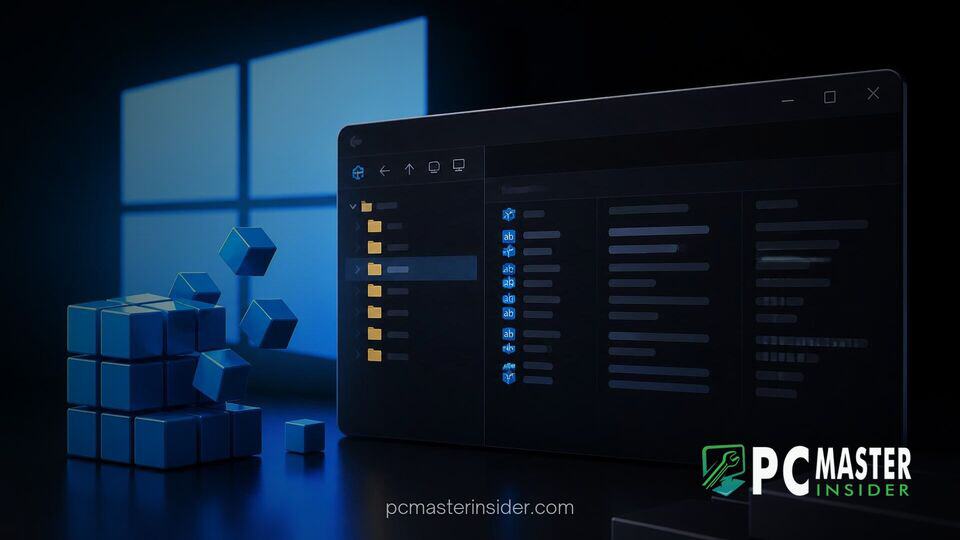
Microsoft has officially clarified the status of a modernized Registry Editor application that recently surfaced online, confirming that the tool is an experimental developer sample rather than an upcoming replacement for the classic Windows utility. The clarification follows widespread speculation across technical forums and social media after reports highlighted a native WinUI 3 application capable of reading live system registry keys with modern visual elements like dark mode.
Senior company representatives intervened after online commentary misconstrued the repository code as an early preview of an official Windows 11 feature update. Executives emphasized that the code exists solely to demonstrate the capabilities of Microsoft's UI framework tooling and carries no connection to the internal engineering teams responsible for maintaining core operating system administrative utilities.
Microsoft Addresses Modern WinUI Registry Editor Rumors
Speculation surrounding a potential overhaul of the Windows Registry Editor escalated after tech blogs compiled and ran code published within Microsoft's open-source repositories on GitHub. The demonstration showcased a dual-pane interface built on the modern WinUI 3 framework, featuring rounded corners, fluent design elements, native dark theme support, and roomier layout margins that contrast sharply with the traditional Win32 interface used since earlier Windows generations.
Because the compiled sample interacted directly with the system's live registry keys rather than operating as a static graphic mockup, early reports led many users to believe that Microsoft was preparing to deploy the new interface to Windows Insider channels. However, the missing features in the sample application—such as key permission management, elevated privilege controls, and full binary editing capabilities—prompted user criticism over its perceived incompleteness as a system tool.
To curb growing confusion and online feedback, Microsoft Vice President Scott Hanselman stepped in on social platform X to set the record straight. Replying to media posts, Hanselman noted that the application is strictly a sample. Windows Insider Program Lead and Corporate Vice President Marcus Ash echoed the statement, clarifying that the project was not a developer preview of a new regedit utility.
Background on the Internal WinUI 3 Regedit Sample
The code in question originates from Microsoft's developer outreach initiatives, specifically sample code associated with Microsoft's expansion of native WinUI 3 frameworks across Windows utilities. The specific sample was posted within the microsoft-ui-reactor open-source repository on GitHub alongside other demonstration projects like simple games and utility prototypes.
Reactor is an experimental declarative C# framework designed to simplify state management and component creation for developers targeting WinUI 3 desktop applications. The framework mimics reactive component architecture, allowing desktop developers to build native Windows 11 experiences using familiar programming paradigms like state hooks and component reconciliation.
Microsoft developer documentation associated with the project explicitly flags the Reactor framework as experimental, indicating that the code comes with no official support policy or API stability guarantees. The sample app was created to demonstrate how legacy two-pane desktop structures can be expressed using modern declarative C# code rather than serving as a production-ready application specification.
Distinguishing UI Prototypes from System Tool Replacements
The confusion highlights an ongoing tension within the Windows community regarding the pace of visual modernization. While core elements like Task Manager, Notepad, and Paint have received modern WinUI 3 interfaces in recent Windows 11 updates, legacy administrative tools such as Services (services.msc), Device Manager, and the traditional Registry Editor (regedit.exe) retain legacy Win32 user interfaces.
Transitioning critical system components to modern frameworks involves complex trade-offs. Primary administrative tools demand absolute stability, rapid launch speeds, low memory footprints, and complete backward compatibility with automated management workflows. Replacing regedit.exe with a new framework introduces technical risks, especially when handling system recovery scenarios or Safe Mode operations where advanced UI rendering pipelines might not be fully operational.
While Microsoft continuously updates user-facing settings components—such as ongoing tests for a unified third-party app updates page in Windows 11 Settings—deep administrative tools are maintained under stricter stability criteria. Consequently, developer samples hosted on public repositories are often exploratory exercises by developer relations teams rather than early builds from core Windows platform engineers.
Future Outlook for Windows 11 Administrative Utilities
Although the recent WinUI 3 registry sample is not slated for release, it provides insight into how Microsoft approaches modern interface design. The sample demonstrated that modern desktop design language can maintain traditional workflows, preserving standard keyboard shortcuts and hierarchical tree-view navigation while updating visual styling and accessibility.
Microsoft continues to encourage third-party and internal developers to adopt WinUI 3 for desktop application development. Similar modernization initiatives have yielded positive results across other system tools, such as performance optimizations seen when the company overhauled the Xbox PC app for faster launch speeds, or security enhancements like per-app privacy controls for Windows 11 desktop apps.
For now, classic regedit.exe remains the official, supported tool for registry modifications across all versions of Windows 11. System administrators and power users can expect the traditional Win32 interface to remain intact while Microsoft focuses its platform migration efforts on broader shell experiences and end-user productivity applications.
In summary, the modern Registry Editor seen online serves as an educational sample for developers exploring the WinUI 3 framework rather than an upcoming system feature. Microsoft has reassured users that traditional management tools will not be replaced without formal announcements and thorough testing through official Windows Insider preview channels.