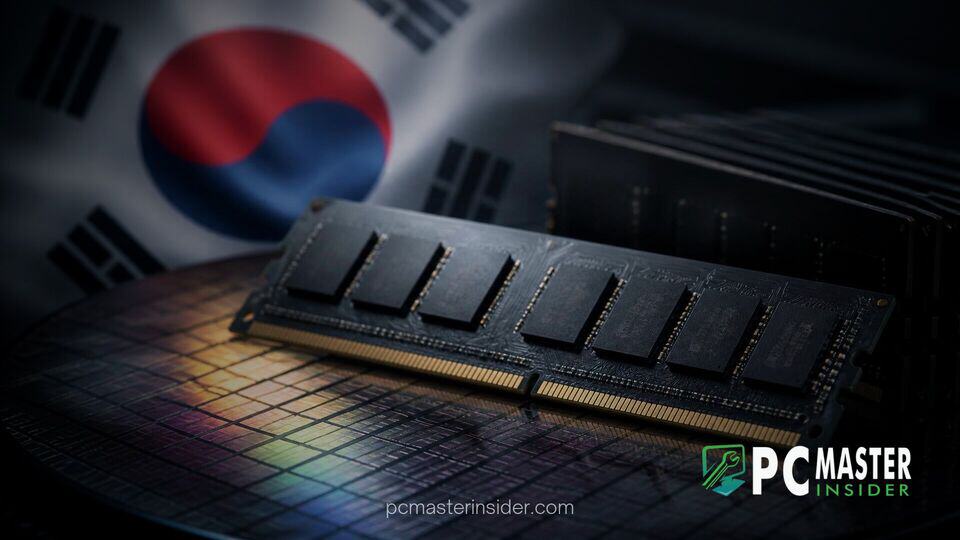
South Korean dynamic random access memory export values have breached historical benchmarks, climbing to a record $92,183 per kilogram according to recent trade customs data. The surge highlights an aggressive structural shift toward high-density memory products, enterprise artificial intelligence hardware, and high-performance system architectures.
While physical volume shipments have remained steady, the revenue generated per unit weight has escalated sharply. This increase is largely driven by memory manufacturers reallocating silicon wafers to produce high-margin enterprise products, leaving consumer hardware channels exposed to constrained allocation.
South Korea DRAM Export Prices Hit Unprecedented Heights
The statistical milestone of $92,183 per kilo reflects a massive transformation in the underlying composition of semiconductor exports. Rather than representing mere inflation on legacy silicon, the metric illustrates how memory suppliers in South Korea, primarily Samsung Electronics and SK Hynix, are prioritizing advanced wafer processing for specialized enterprise hardware.
Industry analysts point out that high bandwidth memory and dense server-grade modules weigh roughly the same as traditional consumer memory chips per package, yet command vastly higher contract pricing. As global data centers ramp up infrastructure deployment for large language model inference, the average selling value per gram of processed silicon has ballooned.
This dynamic has created a pronounced ripple effect across global markets. As manufacturers allocate premium cleanroom space to enterprise orders, general supply channels face persistent tightness. Even as competitor fabs ramp output, such as reported cases where CXMT achieved high yield on 17nm DDR5 DRAM, the overwhelming global appetite for top-tier memory keeps valuation elevated.
DDR5 Migration and AI Demand Drive Export Price Surge
The transition from older memory generations to DDR5 standards serves as a primary driver behind the valuation increase. DDR5 die layouts are physically larger and more complex than DDR4 components, incorporating on-die power management integrated circuits and expanded error-correcting code logic. Consequently, each wafer yields fewer net dies, naturally driving up per-kilogram valuations.
Simultaneously, hyperscale cloud providers continue to buy up high-capacity DDR5 server modules alongside HBM stacks. Industry warnings have noted that DDR5 memory prices surged amid a data center crunch, creating stiff competition between enterprise clients and consumer hardware vendors. Memory makers have naturally pivoted their fabrication pipelines toward these lucrative server contracts.
Furthermore, legacy production capacity has rapidly contracted. Earlier financial projections indicated that shift when Morgan Stanley warned DDR4 prices would jump 50% due to fab line reallocations. With legacy lines retiring faster than standard DDR5 lines can saturate the market, the monetary valuation per unit of exported weight has climbed steadily across all memory classifications.
Impact on Global Memory Supply Chains and Consumer PC RAM
For system integrators, system builders, and everyday consumers, record export prices translate directly into elevated bill-of-materials costs. High export values signal that memory fabricators face limited incentive to discount standard unbuffered memory modules when data center clients are willing to pay significant premiums for high-density components.
Retail channels for system memory are feeling the strain directly. In several regional markets, shortages of specialized memory kits have led to aggressive purchasing behavior. Similar inventory pressures were seen when DDR5 scalper bots overwhelmed PC retail sites during initial supply dips. Current export trends indicate that retail inventory levels will likely stay lean through the coming quarters.
Pre-built personal computer manufacturers are also adjusting their pricing strategies. System OEMs face rising production expenses across multiple hardware fronts, particularly as total platform costs increase. Related sector shifts have already pushed system costs upward, such as when Microsoft raised Windows 11 OEM license prices for PC makers, creating compound margin pressure for desktop and laptop vendors.
Long-Term Price Forecasts for PC Builders and Enterprise Buyers
Looking toward the remainder of the year, trade analysts expect South Korean memory export values to remain near record territory. Wafer allocation plans at major foundries suggest that high bandwidth memory and high-capacity DDR5 will continue to consume the majority of advanced fabrication nodes well into next year.
While additional cleanroom capacity is slated to come online in late operating cycles, lead times for advanced lithography tools prevent an immediate drop in export valuations. Enterprise buyers are projected to maintain high absorption rates as next-generation server architectures roll out, keeping base DRAM contract prices firm.
For consumer PC builders and IT procurement departments, current conditions demand strategic planning. Upgrading system memory or deploying new workstation fleets will require accounting for sustained premium pricing. While physical shipments remain stable, the premium placed on high-performance silicon ensures that memory modules will remain one of the most cost-intensive components in modern computing hardware.