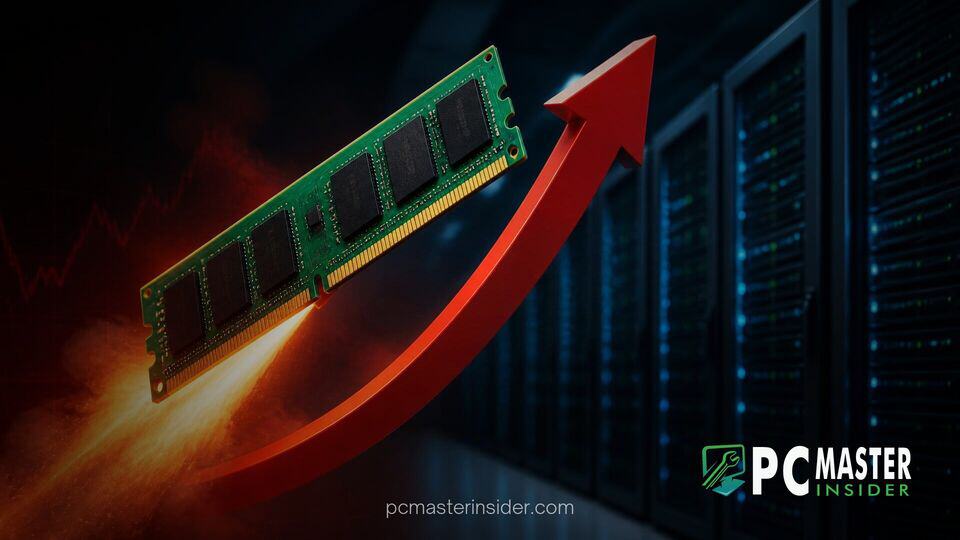
Global computer memory markets are experiencing an unprecedented pricing crisis, with standard DDR5 system memory costs surging up to 500% over the past 12 months. The severe price hikes have been sparked by an overwhelming demand for artificial intelligence hardware, forcing major semiconductor foundries to reassign production lines toward high-density data center components.
As enterprise hyperscalers rush to secure memory bandwidth for massive AI clusters, everyday consumers, system integrators, and enterprise buyers are confronting a severely constrained supply chain. Retail channels across North America, Europe, and Asia have seen popular memory configurations triple and quadruple in price in a matter of months, with higher-end modules reaching record highs.
DDR5 memory prices surge 2026 amidst record enterprise allocations
The global computer hardware market is currently navigating a sharp price escalation driven by massive infrastructure investments in enterprise AI compute. According to multi-region tracking data from retail monitors, standard dual-channel DDR5 desktop kits that previously retailed at modest budget price points have undergone increases ranging from 300% to nearly 500% year-over-year. Enterprise and workstation-grade modules have faced even steeper markups due to widespread channel scarcity.
Market tracking across major tech hubs confirms that the trend is a unified global phenomenon. In North America and Europe, standard 32GB and 64GB DDR5 kits have seen prices jump dramatically, leaving prospective PC builders and IT departments with few affordable options. The shift stems directly from a structural change in how semiconductor fabricators allocate silicon wafer capacity across their leading-edge cleanrooms.
The Anatomy of the Current Memory Crisis
At the center of the current memory shortage is the rapid adoption of High Bandwidth Memory (HBM) by hardware manufacturers powering artificial intelligence workloads. Unlike standard unbuffered DDR5 modules used in desktop computers and traditional cloud servers, HBM requires highly complex 3D-stacked silicon architectures. These advanced designs demand vastly more physical silicon wafer space and specialized packaging procedures.
Industry analysts point out that manufacturing a single HBM stack consumes approximately three to four times the physical wafer area needed for a standard DDR5 DRAM die. Because the total production capacity of global silicon foundries is finite, every square millimeter of silicon allocated to enterprise HBM directly reduces the supply of standard consumer and enterprise DRAM.
Major memory producers including Samsung Electronics, SK Hynix, and Micron Technology have shifted significant manufacturing resources to meet the lucrative long-term contracts offered by hyperscale AI operators. With enterprise clients willing to pay premium rates for high-performance memory stacks, standard DDR5 output has fallen sharply behind baseline global demand.
DDR5 Price Trends and Historical Lows
The current price trajectory stands in stark contrast to the conditions observed during the early adoption phase of DDR5 technology. When DDR5 initially entered the consumer market, manufacturing yields were still maturing, resulting in early premium pricing. However, as production lines stabilized, prices steadily declined, reaching historic affordability levels and establishing 32GB and 64GB kits as standard configurations for mainstream desktop systems.
That era of cheap, abundant memory has dissolved. Retail tracking shows that high-frequency 64GB DDR5 kits, which were once readily available at accessible price points, now command prices comparable to high-end graphic cards or entire mid-range personal computers. The price spikes have pushed capacity out of reach for budget-conscious buyers, forcing many consumers to settle for lower capacities or linger on legacy DDR4 platforms.
Impact on Consumer PC Builds and Local AI
The implications of this supply bottleneck reach far beyond standalone RAM upgrades. System integrators and boutique PC builders report that the soaring cost of memory is inflating the overall price of pre-built desktop systems, laptops, and workstation hardware. Hardware buyers planning custom desktop builds are having to adjust their budgets downward for other crucial components like central processors and graphics cards just to afford basic system memory.
Additionally, the surge in DDR5 pricing creates an unintended obstacle for independent software developers, researchers, and hobbyists running local AI models. Running large language models or complex machine learning frameworks on local hardware requires substantial amounts of fast system memory. As high-capacity DDR5 kits become prohibitively expensive, small-scale developers are encountering higher financial barriers to running open-source models on personal workstations.
Industry Outlook and Supply Expectations
Industry observers and market analysts warn that rapid relief is unlikely. Constructing new semiconductor fabrication plants requires tens of billions of dollars in capital expenditure and several years of construction, equipment installation, and testing before commercial yields can be realized. Consequently, global memory production capacity cannot expand overnight to absorb the combined demands of consumers and enterprise data centers.
Furthermore, major memory suppliers have reportedly committed vast portions of their upcoming wafer capacity through long-term supply agreements with primary AI cloud providers. As hyperscale data centers continue to expand their infrastructure footprints worldwide, consumer retail channels are expected to remain secondary priorities for raw DRAM supply.
While component manufacturers are working to optimize yields and bring additional fab space online, analysts anticipate that elevated price levels will persist throughout the near term. Until global manufacturing capacity expands sufficiently to satisfy both high-density enterprise demand and standard consumer needs, DDR5 memory will likely remain one of the most expensive and tightly controlled components in the technology supply chain.