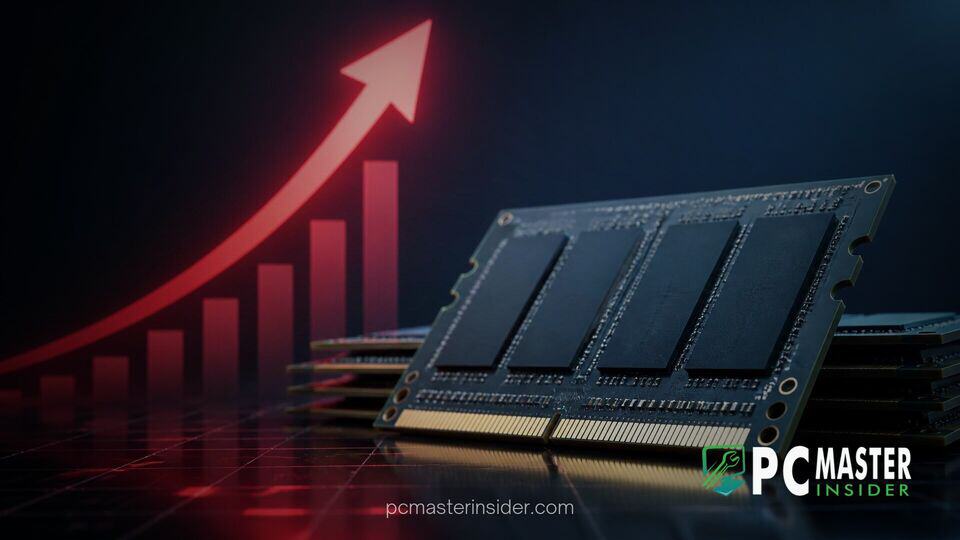
Global financial giant Morgan Stanley has issued a new research note warning technology buyers and hardware manufacturers that DDR4 memory prices are set to surge by up to 50 percent in the third quarter of 2026. The abrupt price spike is expected to disrupt the mainstream computing ecosystem as the supply of legacy double data rate memory tightens dramatically worldwide.
The anticipated price hike comes as major semiconductor manufacturers reallocate their production lines away from older memory technologies to meet unprecedented global demand for high-bandwidth memory and newer DDR5 modules. Consumers and enterprise buyers alike are advised to prepare for higher hardware procurement costs during the second half of the year.
Morgan Stanley DDR4 Price Jump Q3 2026
In a comprehensive market assessment released to institutional investors, analysts at Morgan Stanley highlighted a rapidly worsening supply-demand imbalance in the DRAM sector. According to the investment bank, the projected Morgan Stanley DDR4 price jump Q3 2026 forecast stems from accelerated capacity reallocation by leading DRAM foundries, which has depleted excess channel inventory far faster than initial industry projections suggested.
As chipmakers convert existing manufacturing equipment to support next-generation memory standards, output for standard DDR4 chips is experiencing a sharp decline. Consequently, contract prices for legacy memory modules are expected to escalate steadily through July, August, and September, creating widespread cost pressures across consumer electronics, enterprise server maintenance, and embedded systems markets.
Legacy DRAM Supply Squeeze Ahead
The global memory market is entering a distinct transitional phase where older standards face constrained production despite remaining in high demand. While DDR5 has established itself as the primary standard for modern client platforms and server hardware, millions of existing systems worldwide still rely on DDR4 memory modules for everyday operations and maintenance.
Industry analysts point out that many enterprise data centers, industrial automation networks, and budget-conscious consumer platforms continue to operate on legacy DDR4 architectures. Because these platforms cannot simply accept DDR5 modules without complete motherboards and processor overhauls, buyers have few alternatives other than absorbing the higher costs of remaining DDR4 stock.
Market research indicates that channel distributors have already begun tightening order allocations to prevent panic buying and hoarding. Wholesale contract negotiations for third-quarter shipments reflect rising seller leverage, with suppliers offering shorter price guarantee windows and requiring buyers to commit to long-term purchasing agreements to secure inventory allocations.
Memory Makers Shift Focus to HBM and DDR5
The primary driver behind the legacy memory supply crunch is the ongoing artificial intelligence infrastructure boom. Major semiconductor fabricators, including Samsung Electronics, SK Hynix, and Micron Technology, have systematically reallocated silicon wafer capacity away from mature DDR4 nodes toward advanced High Bandwidth Memory (HBM) and high-density DDR5 products.
HBM manufacturing requires significantly more wafer area and advanced packaging processes compared to traditional DRAM production. Furthermore, the profit margins associated with AI-grade memory chips far exceed those achievable with legacy consumer hardware. As a result, memory manufacturers have prioritized advanced nodes to maximize operating profits and satisfy long-term commitments with cloud service providers and AI chip designers.
This strategic migration has effectively orphaned a substantial portion of legacy DDR4 production lines. Fab conversion cycles mean that once cleanroom space and lithography tools are upgraded for DDR5 and HBM production, returning those facilities to older manufacturing processes is neither practical nor financially viable for semiconductor companies.
Impact on Budget PC Builds and Upgrades
The forecasted 50 percent price jump will have immediate ramifications for mainstream consumer markets, particularly budget PC builders, system integrators, and entry-level laptop manufacturers. Over the past two years, low DDR4 pricing has served as an affordable buffer for consumers looking to build or upgrade personal computers without spending premium sums on newer platforms.
With a 50 percent price increase on the horizon, the cost gap between building a system on a legacy DDR4 platform and upgrading to a modern DDR5-compatible system will narrow significantly. System integrators may soon find it difficult to market low-cost desktop configurations, while repair centers and individual builders face higher bills when expanding memory on existing machines.
Additionally, small and medium-sized enterprises relying on older server infrastructure for internal networking and database hosting will experience elevated operational expenses. IT managers attempting to extend the lifecycle of current hardware deployments through incremental memory upgrades will be forced to choose between paying premium prices for legacy DRAM or accelerating their hardware refresh cycles to transition to DDR5 architectures sooner than planned.
Market Forecast for the Rest of 2026
Looking beyond the third quarter, financial analysts predict that DDR4 pricing will remain elevated rather than returning to previous historical lows. While price volatility may stabilize slightly toward the fourth quarter of 2026 as demand naturally tapers off, overall supply will remain restricted indefinitely as memory fabricators finalize their platform shifts.
Hardware market observers suggest that component procurement teams should evaluate their short-term inventory needs immediately to mitigate the impact of the upcoming price increases. Securing necessary memory inventory prior to the full implementation of Q3 contract rates may offer temporary relief for businesses and system builders.
Ultimately, the impending price spike signals the final phase of the market transition away from legacy DDR4 memory. As cost dynamics favor newer technologies, the computing industry will experience an accelerated push toward full DDR5 adoption across both consumer and enterprise computing environments.