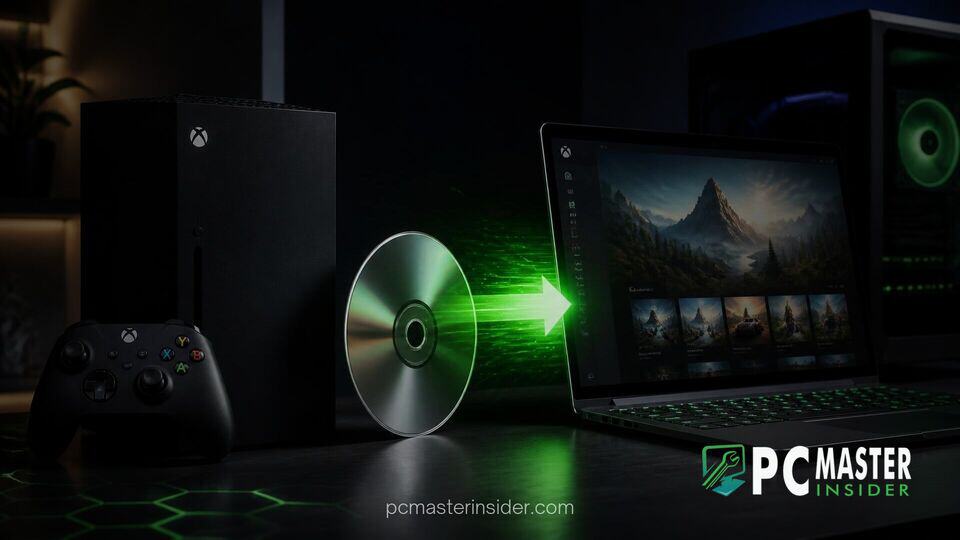
Microsoft has officially launched a new disc-to-digital program for the Xbox ecosystem, allowing players to convert physical game discs into account-bound digital entitlements. This initiative grants gamers digital ownership rights across supported platforms, enabling access to Windows PC versions of compatible Xbox Play Anywhere titles without extra cost.
The feature began rolling out to Xbox Insiders in late August 2026, marking one of the most significant shifts in physical software licensing for console and PC gamers in years. Under the new system, inserting a physical disc into a supported Xbox console registers a digital license directly to the user's Microsoft account. If a physical title supports the cross-platform Xbox Play Anywhere standard, players instantly gain access to the Windows 11 PC build through the Xbox app for Windows.
Xbox Disc-to-Digital Program Launch Details
The xbox disc to digital windows pc play anywhere feature bridges the gap between traditional disc collection habits and modern digital-only ecosystems. Xbox Insiders enrolled in the Alpha or Beta preview rings can take advantage of the system by scanning their discs on an Xbox One or Xbox Series X console. Once claimed, the account retains digital ownership, allowing the game to be downloaded on secondary devices, all-digital handhelds, and desktop computers.
Microsoft framed the launch around game preservation and player convenience. By converting legacy discs into platform-wide licenses, players who move away from optical drive hardware can retain their entire software libraries. Additionally, this allows physical media enthusiasts to experience upgraded performance features on desktop hardware, similar to how PC gamers routinely tune settings when Playground Games reveals Fable PC system requirements or when major publishers update hardware baselines.
How Physical Disc Redemptions Work for PC Libraries
Redeeming physical software for digital access relies on specific optical disc metadata built into Xbox One and Xbox Series X media. Each disc manufactured over the past decade contains a distinct structural identifier. When a user inserts an eligible disc into a connected Xbox console and selects the "Claim Digital License" option, Microsoft verifies the metadata and grants a digital license to the logged-in Microsoft profile.
To prevent duplicate licenses from spreading unchecked across accounts, Microsoft implemented a dynamic ownership check. While physical discs remain fully functional for trade-ins or borrowing, inserting a previously claimed disc into a different console under a separate Xbox account transfers the active digital entitlement to the new user. The original owner retains their save files and achievement history but will lose digital launch rights unless they re-insert the disc or purchase a standalone digital copy.
For PC gamers, this dynamic entitlement model offers significant advantages. As long as an individual holds the physical media or remains the sole claimant of the disc license, they can launch the corresponding PC port through the Xbox Windows app. This setup integrates smoothly alongside existing Windows features, such as granular OS permissions seen when Microsoft tests individual desktop app privacy controls in Windows 11.
Supported Titles and Play Anywhere Integration
The program supports thousands of disc-based titles from the Xbox One and Xbox Series X generations. However, the ability to play these games natively on PC depends on whether the underlying software supports Xbox Play Anywhere or features a native Windows Store listing. When a game carries the Play Anywhere tag, a single digital license unlocks native builds for both Xbox consoles and Windows PCs, complete with shared save states, cross-platform multiplayer, and synced achievement lists.
Early testers reported immediate PC access for first-party blockbusters and select third-party releases like State of Decay 2, Super Lucky's Tale, and RoboCop: Rogue City. For physical games that lack a native Windows PC store version, digitizing the disc still offers remote benefits. Players can stream their claimed physical library to PCs, mobile devices, or handheld devices via Xbox Cloud Gaming, provided the title is supported on the cloud platform.
Gamers running optimized Windows systems can expect full PC feature support, including unlocked frame rates, ultrawide monitor resolutions, and custom hardware settings. Ensuring hardware drivers remain updated is critical for smooth playback, especially during heavy gaming sessions where legacy software interference can cause system crashes, much like when users learn how to fix game crashes caused by incompatible RGB drivers in Windows 11.
Limitations and Publisher Participation Outlook
Despite positive early reactions from the gaming community, the disc-to-digital initiative includes several technical and legal limitations. First, older physical media for original Xbox and Xbox 360 consoles cannot be digitized through this method. Those legacy discs lack the per-disc unique metadata required by Microsoft's digital verification backend, meaning backward-compatible 360 titles still require physical disc insertion to play.
Second, active hardware is still required for the initial disc verification step. Users cannot simply insert a disc directly into an external USB PC disc drive to claim a license, as the redemption process requires an Xbox One or Xbox Series X console to read the disc security sector and handle the license registration. Owners of disc-free hardware like the Xbox Series S or handheld devices must use a primary disc-equipped console to convert their physical library before accessing it on their secondary digital machines.
Furthermore, publisher opt-outs could affect long-term library availability. While Microsoft's first-party lineup fully supports cross-platform Play Anywhere access, third-party publishers retain control over their PC storefront distribution rights. In some instances, physical console games that received separate PC releases without Play Anywhere integration will not automatically generate free PC entitlements. Surprises have also emerged during early testing, such as players discovering that physical discs for delisted software could still generate active digital licenses for account holders.
Despite these caveats, Microsoft's disc-to-digital expansion represents a progressive compromise between physical ownership and digital flexibility. By unifying disc licenses with the Windows PC ecosystem, the company offers a practical pathway for players transitioning to modern digital platforms without abandoning their physical game collections.