
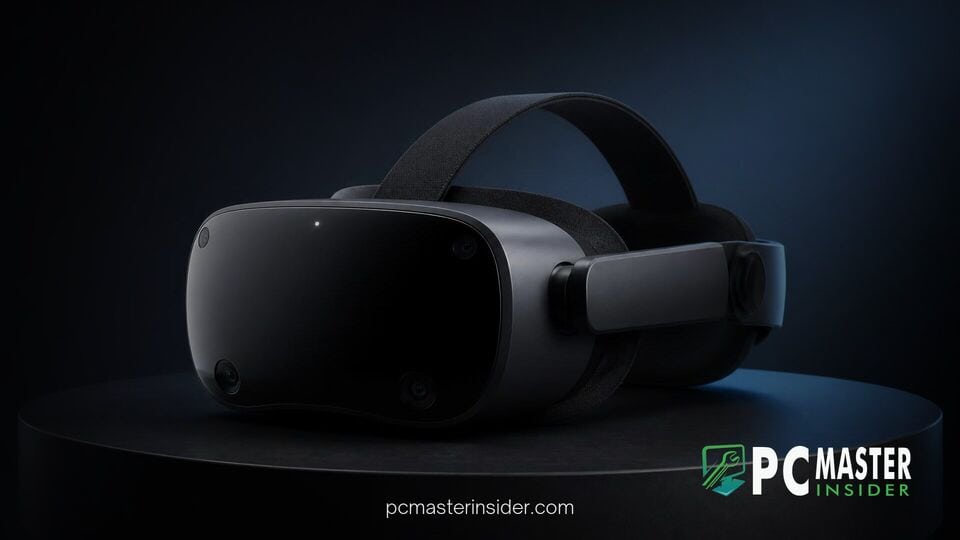
Valve has officially opened purchase reservations for the Steam Frame, its new standalone wireless virtual reality headset starting at $1,059 for the base 256GB model. Designed as a streaming-first headset running SteamOS 3, the device offers both untethered standalone gameplay and low-latency PC VR streaming through an included wireless adapter.
The hardware launch marks Valve's major return to virtual reality hardware, serving as the spiritual successor to the tethered Valve Index. To tackle scalpers and manage initial supply demand, Valve is using a reservation lottery system where customers can opt into a waiting list before purchase invitations are dispatched.
Valve Steam Frame VR Headset: Standalone Power and Wireless Streaming
The valve steam frame vr headset represents a significant strategic pivot for Valve, moving away from room-scale base stations and bulky tether cables in favor of an all-in-one standalone architecture. Powered by a 4-nanometer Qualcomm Snapdragon 8 Gen 3 processor coupled with 16GB of unified LPDDR5X RAM, the headset operates independently on a specialized version of Linux-based SteamOS 3.
Unlike traditional tethered PC headsets, the Steam Frame is built to handle multiple types of media. It supports standalone VR titles, mobile-optimized Android games via a translation layer named Lepton, and full PC VR experiences streamed directly from a host computer using an included 6GHz wireless dongle. It also allows gamers to stream standard flat PC titles directly onto a massive virtual screen inside the headset.
As Valve celebrates 30 years in PC gaming, the introduction of the Steam Frame highlights how aggressive the company has become in shaping custom hardware ecosystems around its software store.
Valve Formally Unveils Wireless VR Hardware
First teased late last year alongside Valve's new Steam Machine mini PC, the Steam Frame has finally transitioned from preview status to an active consumer release. The design emphasizes physical comfort and modular portability. The complete device weighs roughly 440 grams with its strap and rear-mounted 21.6Wh lithium-ion battery, while the central visor module alone weighs just 185 grams.
Tracking is handled entirely on-device via four inside-out grayscale tracking cameras, removing the need for external Lighthouse sensors. The included controllers feature full six-degrees-of-freedom motion tracking, capacitive finger sensing, and a physical layout that incorporates classic gamepad buttons, thumbsticks, and a D-pad to comfortably navigate non-VR titles in your collection.
Hardware Specifications and Display Details
On the optical front, the headset features dual 2160 x 2160 LCD panels, providing 4.67 million pixels per eye with custom multi-element pancake lenses. The displays support variable refresh rates ranging from 72Hz to 120Hz, along with an experimental 144Hz mode. The field of view stretches up to 110 degrees both horizontally and vertically, complemented by a manual interpupillary distance dial.
To optimize wireless bandwidth when streaming high-fidelity PC games, the Steam Frame integrates internal eye-tracking infrared sensors. This enables eye-tracked foveated rendering and streaming, directing maximum compression efficiency and detail precisely where the user is looking. Storage options are available in 256GB and 1TB UFS configurations, both expandable using a standard microSD card slot identical to those found on the Steam Deck.
SteamOS Expansion to Arm Architecture
Underneath the hood, the headset represents an important software evolution for Valve. Because the Snapdragon 8 Gen 3 relies on an ARM architecture, Valve utilizes its Proton compatibility layer alongside an x86-to-ARM binary translator called FEX. This software stack enables the device to run x86 Linux and Windows applications natively on ARM hardware without requiring developers to completely rewrite their existing codebases.
This software flexibility arrives during a broader wave of system utility upgrades across the PC industry. Similar to how tools like Auto Super Resolution in Windows 11 attempt to streamline rendering workloads, Valve's operating system relies on intelligent software layers to make heavy desktop titles accessible on mobile chipsets. Gamers facing issues with external platforms when launching titles on hybrid software can also refer to guides on how to fix Steam games failing to launch on secondary launchers.
Every Steam Frame purchase includes a native standalone port of Valve's acclaimed title Half-Life: Alyx, re-engineered specifically to run directly on the headset without needing a connected desktop PC.
Pricing and Availability Details
The Steam Frame is priced at $1,059 for the 256GB edition, while the 1TB model costs $1,299. In international regions, the base model retails for £889 in the United Kingdom and €1,049 across Europe. Valve attributed the premium price point in part to recent global RAM costs and component pricing pressures.
Notably, neither model includes a wall charger in the standard retail box, though a charging cable is provided. Valve sells an optional official 45W power supply for $29. Other official launch accessories include an Ergonomic Accessories Kit priced at $59, which includes hand straps and an extended light blocker, and an Accessory Replacement Kit for $49 containing a replacement face gasket and cushions.
To prevent scalping, Valve opened a reservation queue that remains open through September 17. The system will randomize interested applicants, and initial email invitations to complete purchases will go out on September 18. Deliveries for the first wave of orders are scheduled to follow shortly after.
By blending standalone capabilities with seamless wireless PC streaming, Valve is attempting to define the next era of high-end virtual reality. While the premium price point keeps it firmly in enthusiast territory, the Steam Frame stands out as one of the most flexible and ambitious VR devices released to date.