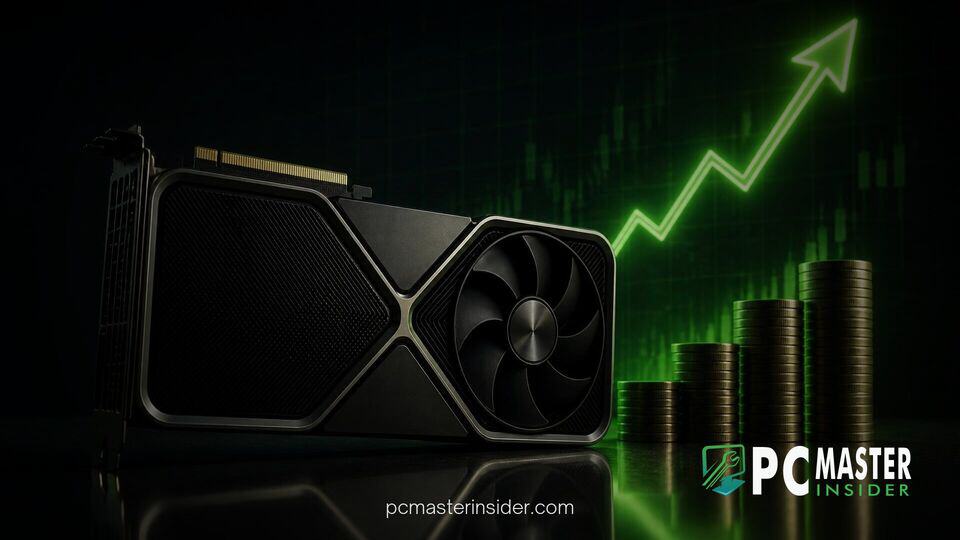
Graphics card costs are escalating for PC builders as manufacturing partners begin adjusting distributor pricing across Nvidia's current line of consumer GPUs. Reports indicate wholesale costs for the Blackwell generation are rising by as much as $500 on high-end models, with price adjustments impacting nearly every tier of the product stack.
Nvidia RTX 50 Series GPU Price Increase Drives Up Hardware Costs
Add-in card partners, including major regional manufacturers like Colorful and Galax, have started revising distributor price sheets for the entire lineup. The adjustments stem from persistent imbalances between market demand and component supply, compounded by escalating raw material and video memory expenditures. While official suggested retail prices remain unchanged on paper, these revised wholesale rates mean retail shelf prices will reflect noticeable increases for end buyers over the coming weeks.
Nvidia Announces Price Hikes Across RTX 50 Series GPUs
According to internal distribution updates from manufacturing partners, the current price adjustments cover both upper-tier enthusiast hardware and mainstream consumer graphics cards. The changes mark another wave of cost revisions for the architecture as board partners pass higher production and component procurement expenses down through the retail channel.
Unlike previous isolated markups, this pricing shift is hitting primary distribution networks in Asia before spreading internationally. Retail inventory currently sitting in store channels may temporarily retain older pricing, but incoming shipments dispatched from factory partners are subject to the revised cost structures.
Impact on Flagship and Budget Graphics Cards
The severity of the price increase varies significantly across the model lineup, with top-tier SKUs seeing the most drastic absolute adjustments. Flagship models based on the GeForce RTX 5090 revision lead the surge with wholesale increases ranging between 2,200 and 3,300 RMB, which translates to roughly $330 to $495 higher cost per unit. The high-end GeForce RTX 5080 is similarly impacted, seeing distributor price raises between 2,500 and 2,800 RMB ($375 to $420).
Mid-range and budget options are not entirely insulated from the adjustments. The GeForce RTX 5070 Ti sees a flat increase of around 1,000 RMB (approximately $150), while the standard RTX 5070 rises by 600 to 900 RMB ($90 to $135). Even entry-tier hardware reflects the upward trend: 16GB variants of the RTX 5060 Ti are up by $37 to $60, 8GB variants rise by $15 to $22, and standard RTX 5060 models absorb a $22 to $30 baseline increase.
Global Memory Shortages Drive GPU Manufacturing Costs
Industry analysts point to severe supply chain constraints as the fundamental driver behind the revised pricing. High global demand for high-bandwidth and high-speed GDDR memory modules, heavily consumed by enterprise AI infrastructure, has constrained the general memory supply pool. When combined with climbing spot prices for essential manufacturing raw materials like copper, board partners face significantly elevated bill-of-materials costs for every completed card.
These supply pressures mirror broader hardware market trends where enterprise demand directly competes with consumer component fabrication. For context, corporate hardware vendors are experiencing similar margin pressures; recently, Blackmagic Design raised product prices citing skyrocketing memory costs across its digital video hardware lines. Similar hardware allocation struggles were previously highlighted when Nvidia RTX 50 GPU prices surged in Japan amid memory shortage conditions earlier in the production cycle.
Component availability is further squeezed by global substrate manufacturing capacity. As documented when AI infrastructure demand triggered a global PCB shortage for PC hardware, circuit board fabrication facilities have faced persistent backlogs that increase production lead times and operational overhead for graphics card vendors.
What Higher GPU Prices Mean for PC Builders and Retailers
For custom PC builders, the latest distributor price increases make system planning increasingly difficult. The higher wholesale costs inevitably filter down to consumer e-commerce platforms and brick-and-mortar storefronts as existing stock sells through. System integrators may also be forced to adjust pre-built desktop pricing or substitute lower-tier hardware to maintain advertised price points.
Retailers face the challenge of managing tighter margins while attempting to keep shelf prices reasonable for consumers. With alternative options limited, buyers seeking modern feature sets like advanced AI-driven upscaling or enhanced ray tracing capabilities may have to absorb the higher hardware investment. However, long-term market forecasts suggest potential relief in future years; industry reports like the Counterpoint Research memory price decline projection indicate that memory supply balances could eventually normalize as new fabrication plants come online.
In the short term, price increases are expected to take full effect across global retail channels within the next one to two weeks as distributor stock refreshes. System builders planning upcoming upgrades will likely need to adjust their hardware budgets accordingly to account for the elevated market rates.