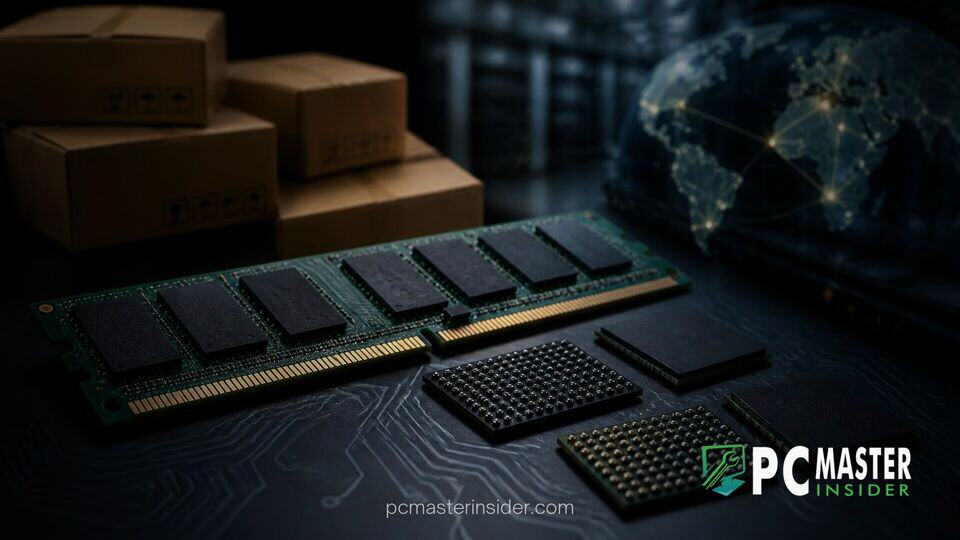
The global memory industry is experiencing an unprecedented structural shift as leading chipmakers lock in multiyear supply agreements with key enterprise buyers. Facing a prolonged global deficit driven by artificial intelligence infrastructure demand, memory manufacturers are changing how system memory is allocated, priced, and delivered across the globe.
Major semiconductor firms including Samsung Electronics, SK Hynix, and Micron Technology have reportedly committed substantial portions of their future output through long-term contracts extending up to five years. This fundamental realignment leaves non-contracted buyers and consumer device sectors facing heightened price volatility and supply constraints.
multiyear dram supply deals memory shortage
The acceleration of multiyear dram supply deals memory shortage agreements marks a dramatic transformation in how DRAM silicon is bought and sold. Historically, memory buyers relied on spot market trades or short-term quarterly agreements to procure dynamic random-access memory. Today, ongoing inventory constraints have forced hyperscalers, cloud infrastructure providers, and consumer electronics builders to sign multiyear binding contracts to ensure production continuity. Top chipmakers have secured commitments covering a major fraction of their production capacity for several years ahead, effectively reshaping the supply chain.
Tech Giants Lock in Multiyear Contracts for Server and PC Memory
As artificial intelligence models expand in complexity, data centers require immense memory capacity to feed processing nodes. To protect their hardware roadmaps, hyperscale cloud vendors have rushed to solidify supply agreements directly with silicon foundries. SK Hynix announced that it has signed multiyear contracts with 14 major global customers, securing sales channels for more than half of its total production capacity through 2028. Similarly, Samsung Electronics confirmed long-term supply agreements with 10 major enterprise clients while actively negotiating terms with additional partners.
Even major hardware vendors traditionally known for aggressive, short-term contract pricing are altering their procurement tactics. Industry reports indicate that companies like Apple are negotiating four- to five-year DRAM procurement deals to safeguard supply for upcoming device lines. This structural turn toward multiyear commitments demonstrates that securing physical volume has temporarily superseded traditional price flexibility.
Rising Prepayments and Factory Cost-Sharing Terms
The severe shortage has fundamentally shifted bargaining power toward chip producers. Standard supply agreements used to allow buyers to renegotiate unit costs quarterly based on spot market fluctuations. Under current conditions, memory manufacturers are instituting stricter terms, including significant upfront prepayments and capital assistance for fabrication facilities.
Industry analysts note that purchasers are now frequently required to commit initial cash prepayments of 25 percent to 30 percent or contribute directly toward future wafer fab expansion to secure high-volume allocations. In many instances, contracts set baseline volume guarantees while allowing final pricing to adjust according to future market benchmarks. High-frequency trading firms and system integrators building custom AI clusters have consistently accepted post-contract cost adjustments rather than risk empty server racks.
AI Infrastructure Demand Consumes Global Memory Output
The principal catalyst behind this market tightness is the soaring demand for High Bandwidth Memory (HBM) and enterprise server DRAM. Advanced AI accelerators rely on stacked HBM architectures, which consume substantially more silicon wafer capacity compared to standard DDR4 or DDR5 modules. Because manufacturing one bit of HBM requires up to three times the physical wafer area of conventional DRAM, cleanroom capacity across major fabs has been severely reallocated.
Market research data indicates that server DRAM's share of overall memory production continues to expand rapidly, diminishing the available pool for conventional computing applications. For hardware builders, this shift has caused sharp price surges for memory-dense server nodes. Organizations deploying large compute clusters report that server configuration bills have increased by up to 45 percent between initial contract signatures and physical delivery, largely driven by component premiums on system memory.
This dynamic has also accelerated software-level efforts to mitigate physical hardware limits. For example, software implementations such as AMD's AI-predictive memory management technology aim to optimize memory usage by dynamically paging data to solid-state storage. Concurrently, enterprise storage ventures like Kioxia and Nvidia's petabyte-scale GPU memory expansion leverage high-speed NVMe arrays to offset hardware memory scarcity.
Implications for Consumer PC Memory Price Trends
The prioritization of server allocations and long-term enterprise commitments has triggered clear spillovers into the consumer hardware sector. Contract rates for standard desktop and laptop DDR5 modules have climbed dramatically over recent quarters, leaving system builders and retail channels squeezed for inventory.
Recent market data shows that high-capacity consumer memory adoption has slowed as pricing pressures mount. Statistical reports such as the CPU-Z validator market share figures reveal a slight retreat in 32GB and 64GB desktop RAM configurations as component costs escalate. System vendors have expressed concern over pricing trends; hardware makers such as ASUS have warned that memory costs could force budget laptops back to 8GB RAM baselines to maintain affordable retail prices. Furthermore, graphics card manufacturers have faced similar pressure, leading to adjustments like Nvidia reportedly altering high-VRAM GPU configurations due to escalating GDDR costs.
While memory producers are investing heavily in expanding manufacturing capacity, new fabrication facilities typically require two to three years to become fully operational. Until new production facilities come online in late 2027 and 2028, multiyear contracts will continue to lock in available output, leaving uncontracted buyers exposed to tight supply conditions.
As top chipmakers prioritize long-term stability and high-margin AI memory, the broader technology supply chain faces a extended period of disciplined supply management. The prevalence of multiyear agreements highlights a permanent shift in how memory silicon is valued, securing critical infrastructure for cloud providers while ensuring elevated price floors across consumer electronics markets for the foreseeable future.