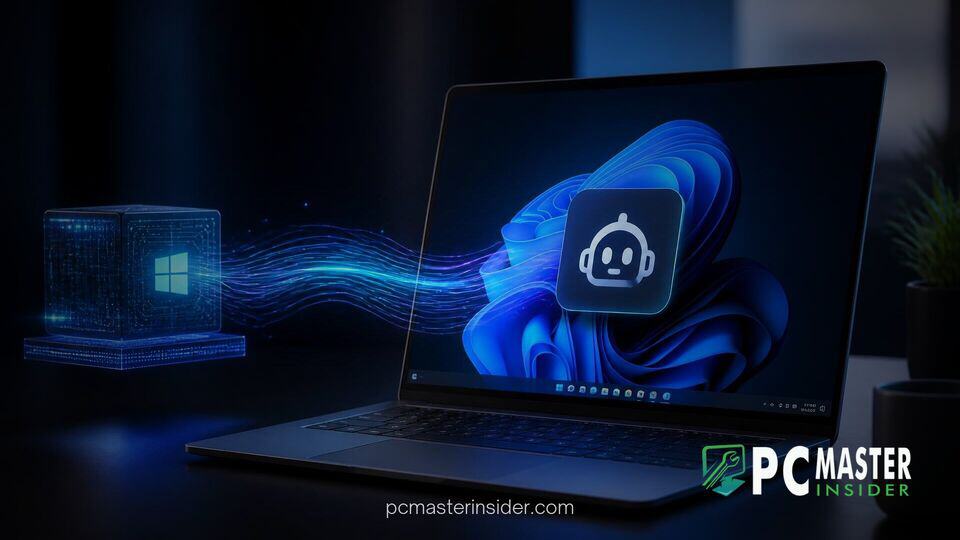
At Microsoft Ignite, Microsoft announced the expansion of Hybrid Intelligence by detailing GitHub Copilot Fusion local model routing for Windows 11 developer workstations. This system enables developers to dynamically execute AI coding tasks either locally on on-device hardware or via cloud-based frontier models, optimizing cost, privacy, and system responsiveness.
The updated framework bridges the gap between hardware compute resources and cloud AI orchestration, giving engineering teams flexibility over how model context and token consumption are managed.
github copilot fusion local models windows 11
Microsoft has introduced local model routing within GitHub Copilot Fusion, enabling developer workstations running Windows 11 to execute coding tasks on local hardware while retaining seamlessly integrated cloud fallback capabilities. This Hybrid Intelligence feature allows supported Windows PCs to process routine code completions, documentation queries, and background refactoring locally without spending remote AI credits or transmitting code outside the device.
Microsoft Details GitHub Copilot Fusion Hybrid Local Model Routing at Ignite 2026
During the Ignite keynote and technical sessions, Microsoft leadership presented GitHub Copilot Fusion as a cornerstone of its broader platform strategy. Rather than treating local inference and cloud AI as separate silos, Copilot Fusion acts as an intelligent runtime orchestrator. It analyzes the scope of each incoming prompt, the current workspace context, and available system resources before routing execution to the most suitable engine.
The feature builds upon Project HydraFusion, Microsoft's cloud orchestration system designed to balance performance, latency, and operational expense. By extending this architecture down to the local operating system level, Windows 11 PCs gain the ability to handle daily development workloads without relying entirely on remote data centers.
Microsoft Chairman and CEO Satya Nadella highlighted the core architectural strategy of balancing distributed compute, noting that enterprise AI adoption requires aligning system intelligence with organizational governance and hardware capability. The shift toward Hybrid Intelligence ensures developers maintain fine-grained control over where sensitive codebase data resides during automated coding sessions.
Offloading Developer Workflows to Local NPU and GPU Hardware
By routing simpler automation tasks to local execution, GitHub Copilot Fusion helps organizations reduce API credit consumption and eliminate cloud round-trip latency. Tasks such as explaining code blocks, generating unit test scaffolding, and running real-time inline suggestions can be assigned entirely to on-device hardware.
This offloading capability operates across a range of local runtimes. Copilot Fusion automatically discovers local endpoints managed via Ollama, Microsoft Foundry Local, or native Windows ML frameworks. Furthermore, enterprise IT administrators can manage compliance policies to mandate that specific proprietary repositories only interact with on-device models, preventing confidential intellectual property from leaving the workstation.
How Hybrid Intelligence Optimizes Token Usage and Coding Latency
Traditional AI development assistants rely heavily on cloud APIs for every interaction, regardless of task complexity. Copilot Fusion changes this dynamic by categorizing user prompts into distinct effort levels, matching execution patterns to task demand.
When set to standard effort, Copilot Fusion can route straightforward queries directly to lightweight local models. For complex multi-file refactoring, systemic bug hunting, or architecture design, the orchestrator seamlessly escalates requests to frontier cloud models such as Claude Sonnet or GPT series variants. This multi-tiered approach allows development teams to preserve high-tier cloud tokens for high-impact problems while executing routine edits locally.
The local model ecosystem on Windows 11 also integrates with secure runtime environments. Microsoft emphasized that agentic tasks operating on local hardware benefit from Microsoft Execution Containers (MXC), providing isolated process boundaries for shell commands and system utility scripts. Developers managing system environments can also consult guides such as how to clear DirectX shader cache in Windows 11 to keep host graphics resources performing efficiently during heavy local inference sessions.
Integration with Visual Studio Code and Windows AI Hardware
Local model routing in Copilot Fusion is available across the GitHub Copilot CLI, the standalone Copilot app, and Visual Studio Code. Within Visual Studio Code, developers can select Copilot Fusion from the model picker and configure local routing settings. Once enabled, the extension automatically routes eligible prompts to local providers without requiring manual toggling between different model engines.
This hybrid feature joins recent operational enhancements across the OS ecosystem, such as how Microsoft consolidates Windows 11 Autopatch administrative controls to streamline corporate endpoint deployments. However, enterprise administrators must balance feature rollout against system visibility. Security researchers recently noted concerns when a Windows 11 component tracking coding agents was identified in preview builds, underscoring the importance of transparent administrative toggles for AI developer tooling.
Deployment Timeline and Supported Hardware Requirements
Local model routing in GitHub Copilot Fusion is currently available in public preview for Windows 11 users. To leverage native Windows ML local models such as MAI Code 1.1 Flash, systems must meet specific hardware requirements. Supported configurations require a modern Windows 11 build, an active discrete GPU or dedicated NPU processor, and sufficient system RAM and storage reserves to host quantized model parameters locally.
For workstations without dedicated Windows ML model packages, developers can bring their own local models by configuring OpenAI-compatible local server endpoints, including Ollama or vLLM deployments. This flexible hardware support allows developers on custom workstation builds or advanced laptops to take advantage of hybrid routing immediately.
Beyond developer environment enhancements, Microsoft continues updating core system management capabilities across client devices, ranging from security updates to administrative workflows, including expanding passkey management for FIDO2 keys for enterprise authentication.
As AI coding assistants transition from pure cloud services to hybrid execution models, GitHub Copilot Fusion local model routing provides a practical framework for balancing compute expense, privacy, and responsiveness directly within Windows 11.