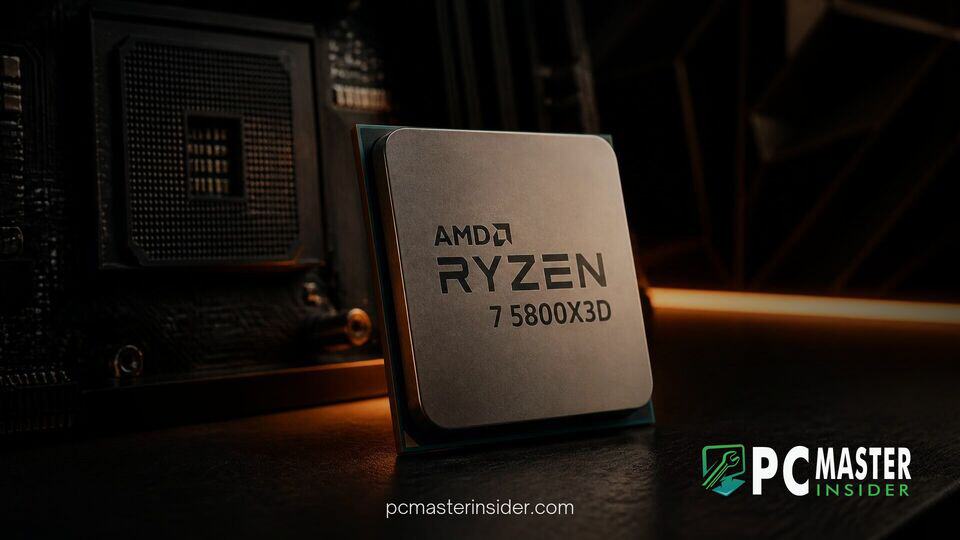
AMD has officially reintroduced the Ryzen 7 5800X3D processor, giving builders on the long-standing Socket AM4 ecosystem a dedicated high-performance upgrade path. The return of the iconic chip provides existing system owners with high-end gaming frame rates while allowing them to retain their current motherboards and DDR4 system memory.
AMD Revives Ryzen 7 5800X3D for AM4 Platform Users
The amd ryzen 7 5800x3d am4 socket relaunch delivers the same high-performing 8-core, 16-thread architecture featuring 96MB of L3 3D V-Cache that originally shook the processor market during its initial debut. AMD confirmed that the revived processor is designed to serve as an accessible path for users wanting modern gaming performance without incurring the expense of swapping out their entire core ecosystem.
The processor runs at a base clock speed of 3.4 GHz with boost clocks reaching up to 4.5 GHz, sitting cleanly within a 105W thermal design power (TDP) envelope. By bringing back this specific SKU, AMD offers a drop-in processor upgrade for millions of desktop setups worldwide that run on older Zen, Zen+, Zen 2, or lower-tier Zen 3 architectures.
Origin of the Relaunch Pitch from CEO Lisa Su
The decision to bring back the chip came directly from executive leadership. In a recent interview with Japanese publication MyNavi Tech+, Travis Kirsch, Senior Director of Client Product Management at AMD, revealed that AMD Chief Executive Officer Dr. Lisa Su personally pitched bringing back the processor.
According to Kirsch, Dr. Lisa Su viewed the product as a final gift to loyal users who supported the Socket AM4 architecture over its remarkable nearly decade-long lifecycle. Rather than forcing every desktop enthusiast onto the newer Socket AM5 ecosystem, Su advocated for offering a definitive high-performance endpoint for those preferring to maximize their existing hardware investments.
Executing on Su's vision required significant technical preparation behind the scenes. Because original production lines for the processor had already been spun down and decommissioned at manufacturing facilities, AMD worked alongside foundry partner TSMC to re-engineer production processes. This effort ensured that newly manufactured processors matched the exact performance specifications, power characteristics, and stepping tolerances of the original 2022 release.
Timing and Strategy Behind the AM4 Socket Revival
While industry analysts initially speculated that the relaunch was a rapid tactical response to recent volatility in global memory supply chains, AMD clarified that the project had been planned far in advance. Restarting a retired silicon manufacturing line and coordinating substrate packaging requires substantial lead time, confirming that the initiative was conceptualized long before memory pricing fluctuations occurred.
The strategy aligns with AMD's broader corporate philosophy of extended platform support. While competing desktop processor platforms historically changed socket standards every two generations, Socket AM4 has maintained active hardware support across multiple CPU generations. This long-term commitment has built strong brand loyalty among PC builders who value gradual upgrade capability over total system overhauls.
Recent developments across hardware and software show that extended support remains vital across the broader industry. For instance, maintaining older hardware environments often helps enthusiasts manage major operating system migrations, such as tracking updates around Windows 11 deployment milestones or adjusting software setups when legacy features change.
Balancing DDR5 Memory Costs and Legacy AM4 Support
Although the relaunch was planned independently, its release landed during a period of rising DDR5 memory pricing. Building an entirely new Socket AM5 system requires purchasing not only a new processor and motherboard, but also a brand-new kit of high-speed DDR5 RAM. For budget-conscious gamers, these combined costs create a high barrier to entry.
By bringing the Ryzen 7 5800X3D back to retail shelves at an attractive price point, AMD gives builders a way to bypass the expensive DDR5 transition entirely. Gamers can keep their high-capacity DDR4 kits, existing liquid or air coolers, and power supplies, allocating more of their upgrade budget toward graphics hardware updates.
This strategy complements AMD's other recent efforts to extend the lifespans of existing graphics and platform products. For example, AMD recently broadened software feature availability by bringing FSR 4.1 upscaling to Radeon RX 6000 GPUs, demonstrating a clear focus on value across older-generation hardware ecosystems.
Market Implications for Budget PC Builders and Upgraders
The return of the flagship AM4 gaming chip carries wide implications for the desktop retail ecosystem. Motherboard manufacturers have responded by refreshing motherboard BIOS updates across B450, X470, B550, and X570 chipsets, ensuring full out-of-the-box compatibility for buyers acquiring freshly minted chips.
For budget-focused PC builders, the chip re-establishes a competitive middle tier in the desktop CPU landscape. While newer architectures deliver faster single-threaded productivity performance, the massive 96MB 3D V-Cache on the 5800X3D neutralizes CPU bottlenecks in modern, cache-sensitive video games, matching or exceeding the performance of many newer midrange processors.
Market reactions reflect strong demand for affordable drop-in upgrades. Initial inventory batches of the revived processor sold out quickly at major hardware outlets, demonstrating that a substantial portion of the desktop market prioritizes sensible upgrade paths over adopting bleeding-edge platform standards.
At the same time, AMD continues to push the frontier of modern high-end computing on newer sockets. As seen in developments where the company outlines its agentic PC vision powered by Ryzen AI Max processors, the chipmaker continues to innovate on high-end platforms while keeping legacy options accessible. Furthermore, unreleased engineering samples like the Ryzen 9 5900X3D CPU with 128MB L3 cache show how deeply AMD experimented with stacked cache technology during the Zen 3 era.
In summary, the re-release of the Ryzen 7 5800X3D stands out as a unique moment in modern PC hardware history. By reviving one of its most celebrated gaming processors, AMD honors its commitment to Socket AM4 users, delivering a final high-performance upgrade option that prolongs the lifespan of millions of gaming desktop systems.