
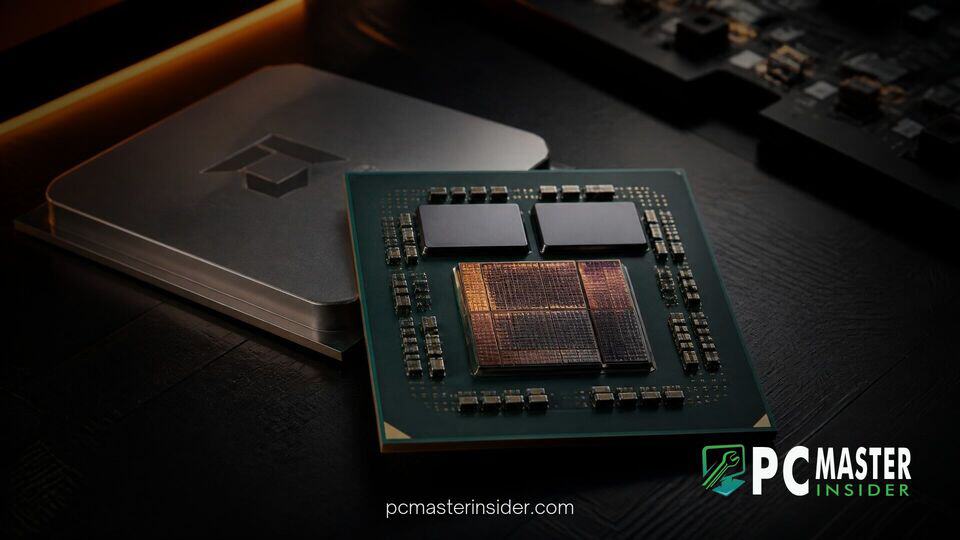
A rare engineering sample of AMD's cancelled Ryzen 9 5900X3D processor has surfaced on Chinese hardware forums, giving hardware enthusiasts a look at an early AM4 prototype. The leaked 12-core, 24-thread CPU features a unique 128MB L3 cache arrangement, shedding light on how AMD tested its 3D V-Cache technology before settling on retail configurations.
Images and diagnostic tool benchmarks show that the prototype chip operates with a single vertical cache stack on one core complex die (CCD) while leaving the secondary chiplet unmodified. The discovery provides concrete evidence regarding early product planning for the Socket AM4 generation, demonstrating that dual-CCD 3D V-Cache variants were actively evaluated internally long before the technology matured across subsequent processor architectures.
amd ryzen 9 5900x3d sample leak and Core Configuration
The amd ryzen 9 5900x3d sample leak originated on the Chiphell discussion platform, where a user uploaded detailed CPU-Z screenshots and technical specifications of the unreleased processor. Carrying the OPN ordering code 100-000000652, the engineering sample operates on the Zen 3 architecture with 12 physical cores and 24 threads. Unlike standard high-end desktop offerings, this specific silicon instance exhibits an asymmetric cache structure split across two compute dies.
According to reported system diagnostics, the primary CCD features 32MB of standard L3 cache supplemented by a 64MB 3D V-Cache die, reaching 96MB. The secondary CCD maintains a standard 32MB L3 layout without additional stacked SRAM, resulting in a combined total of 128MB L3 cache. This configuration contrasts sharply with earlier 192MB prototypes previously showcased to industry observers, which incorporated stacked cache dies on both compute chiplets.
Discovery of the Unreleased Ryzen 9 5900X3D Processor
The emergence of this specific engineering sample confirms that AMD experimented heavily with mid-tier cache distribution models prior to completing its Zen 3 lineup. When AMD originally brought 3D V-Cache to consumer desktops, the company released the single-CCD eight-core Ryzen 7 5800X3D as its flagship gaming offering. Higher core-count prototypes were kept internal due to thermal, clock speed, and scheduling constraints associated with first-generation vertical stacking.
Community members analyzing the motherboard compatibility of the leaked engineering sample noted that specialized motherboard support was required to boot the chip. The processor reportedly failed to complete POST on current AM4 firmware versions, displaying motherboard error code 90. System stability was only achieved after flashing an older BIOS revision containing System Management Unit (SMU) firmware version 56.70.0, highlighting the experimental nature of early microcode releases.
Engineering Sample Specifications and Cache Architecture
- Core Count: 12 Cores / 24 Threads
- Microarchitecture: Zen 3 (Socket AM4)
- Primary CCD Cache: 32MB Base L3 + 64MB 3D V-Cache (96MB total)
- Secondary CCD Cache: 32MB Base L3 (No V-Cache stack)
- Total L3 Cache: 128MB
- Thermal Design Power (TDP): 105 Watts
Performance Metrics and Technical Testing Details
Initial system logs shared alongside the engineering sample highlight clock speed behavior under desktop workloads. While initial dual-stacked 192MB prototypes topped out at peak boost clocks around 4.4 GHz due to thermal density, this single-stacked 128MB variant reached boost frequencies up to 4.73 GHz in diagnostic utilities. Leaving one CCD unstacked enabled higher single-core boosting on the bare chiplet, mirroring clock management strategies AMD later refined for its multi-CCD desktop processors.
Despite these respectable frequency targets, early scheduling challenges likely influenced AMD's decision to bypass a commercial release. Operating systems at the time lacked specialized driver routines to dynamically route latency-sensitive games to the cached CCD while directing multi-threaded background processing to the non-stacked CCD. Without sophisticated OS-level thread provisioning, performance in non-uniform cache environments could vary significantly depending on task assignment.
Historical Context and Impact on AMD AM4 Platform Design
The technical solutions tested on this 128MB prototype directly laid the groundwork for future product generations. AMD eventually commercialized single-cache dual-CCD designs on its newer platform socket, introducing processors that paired one high-cache die with a high-frequency die. Industry trends have since pushed cache sizes even higher, with recent hardware leaks detailing rival designs like Intel's Nova Lake processors featuring up to 288MB of cache.
While the Ryzen 9 5900X3D never reached retail store shelves, its discovery highlights the longevity and flexibility of the AM4 platform. AMD maintained AM4 support for many years, releasing late-lifecycle updates alongside specialized system software refinements. Meanwhile, performance tweaking techniques for modern setups continue to evolve, with companies releasing dedicated products like ultra-low latency EXPO memory kits to optimize modern system throughput.
Ultimately, the leaked Ryzen 9 5900X3D sample offers an intriguing historical glimpse into AMD's internal validation process. By evaluating asymmetrical cache configurations on Zen 3 silicon, engineers gathered critical telemetry that helped establish 3D V-Cache as a mainstay of modern desktop processor design.