
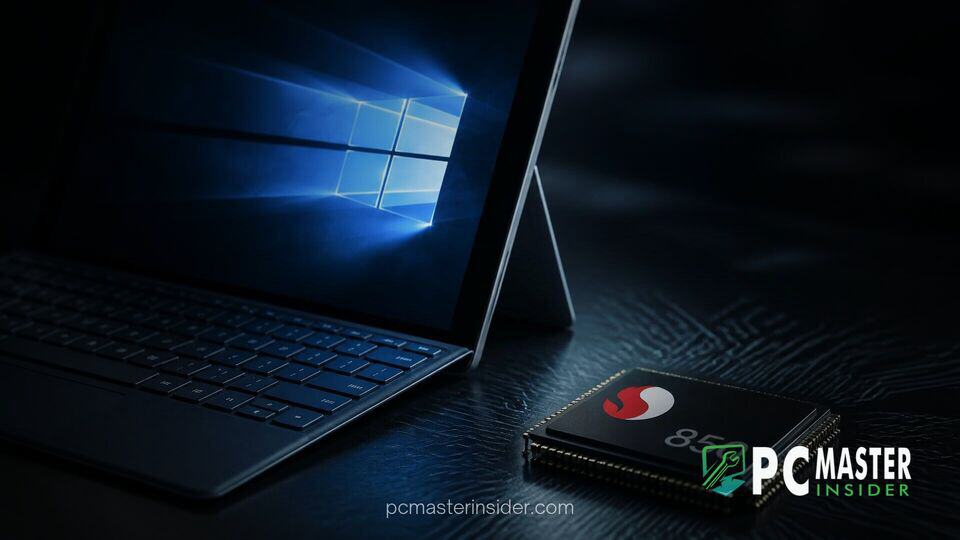
Microsoft has officially updated its support lifecycle policies to confirm that future feature updates of Windows 11 will no longer target laptops powered by the Qualcomm Snapdragon 850 processor. The announcement establishes Windows 11 version 26H2 as the final officially supported operating system release for machines built around the legacy silicon.
Snapdragon 850 Support Deprecation Details
According to documentation published on the official Microsoft Lifecycle Policy page, devices powered by Qualcomm's Snapdragon 850 System-on-Chip (SoC) have reached their terminal feature update milestone. While these early ARM-based systems can successfully run Windows 11 version 26H2, they will be excluded from subsequent major releases.
Microsoft noted that owners of Snapdragon 850 hardware will continue receiving servicing updates for the standard lifecycle period. Version 26H2 will receive monthly security patches and stability fixes for 24 months on Home and Pro editions. This timeline gives users approximately two years of continued protection before security servicing comes to a complete halt.
End of Support Timeline for Legacy Windows on Arm
The decision to retire Snapdragon 850 compatibility represents the next logical phase in sunsetting original ARM64 hardware support. Microsoft previously phased out compatibility for the first-generation Snapdragon 835, which relied on modified smartphone architecture. The Snapdragon 850, launched in 2018, was Qualcomm's first dedicated processor designed specifically for Windows laptops, making its phase-out a major milestone in the history of Windows on ARM.
Unlike standard x86 systems that can sometimes bypass CPU requirements with manual workarounds, older ARM architectures face hardware-level instruction bottlenecks. Recent operating system updates require specific instruction sets like ARM v8.1, causing older chips without these instruction capabilities to experience severe kernel panics or boot failures.
Impact on Older ARM Laptops and Tablets
The deprecation directly impacts early 2-in-1 convertibles and ultraportable laptops released between 2018 and 2020. Popular consumer devices affected include the Lenovo Yoga C630, Samsung Galaxy Book2, and Huawei MateBook E 2019. Owners of these laptops will not receive upcoming feature branches or the latest AI-driven user experience additions.
Because these legacy systems suffer from hardware constraints, attempts to install newer unsupported builds can lead to severe system instability. Affected users are advised to stay on Windows 11 version 26H2 throughout its two-year security lifecycle to maintain a stable operating environment.
Windows on Arm Hardware Requirements Evolution
The decision to limit future support reflects a fundamental shift in how Microsoft handles ARM silicon requirements. During the early years of the Windows on ARM ecosystem, the software giant prioritized backward compatibility to help build an initial user base. However, recent development trends show a clear shift toward optimizing modern hardware. Users comparing operating system reliability over recent years have noticed that modern platform changes often prioritize newer hardware instructions to prevent update stability issues.
Focus on Modern Copilot+ ARM Platforms
Microsoft has redirected its engineering resources toward modern neural processing unit (NPU) platforms. Updates such as Windows 11 version 26H1 were built specifically for newer chipsets like Qualcomm's Snapdragon X series. These modern platforms offer dedicated NPU hardware designed to execute localized generative AI tasks, advanced power management routines, and high-performance instruction translation layers.
Older processors lack the vector capabilities and matrix math extensions required by modern Windows components. Dropping support for six-year-old hardware allows developers to clean up the HAL (Hardware Abstraction Layer) and remove legacy emulation pathways.
Upgrade Recommendations for Affected Device Owners
For users who currently rely on a Snapdragon 850 device, there is no immediate emergency. Because version 26H2 remains fully functional and will receive monthly patches until late 2028, these devices remain secure for daily productivity tasks, media consumption, and web browsing.
However, users seeking access to modern desktop functionality, such as advanced accessibility enhancements like the new pointer indicator feature or expanded taskbar options, will eventually need to replace their hardware. Tech analysts recommend evaluating replacement options within the next 18 to 24 months, particularly as new entry-level ARM laptops hitting the market deliver substantially higher performance per watt.