SpaceX is laying the groundwork to manufacture gas turbine components internally at a new specialized facility in Bastrop, Texas. The strategic initiative aims to produce precision turbine blades and vanes directly, bypassing severe global supply chain bottlenecks that currently delay off-grid power installations for xAI data centers.
By bringing casting operations in-house, the aerospace company intends to streamline power generation for large-scale artificial intelligence clusters. The move reflects a broader trend across the technology sector, where massive compute demands are forcing firms to reconsider traditional power sourcing and hardware logistics. As global technology expenditure reaches unprecedented levels, with Goldman Sachs forecasting global AI spending will exceed $1 trillion, access to continuous electricity has emerged as the principal operational constraint.
SpaceX Turbine Blade Manufacturing XAI Data Centers
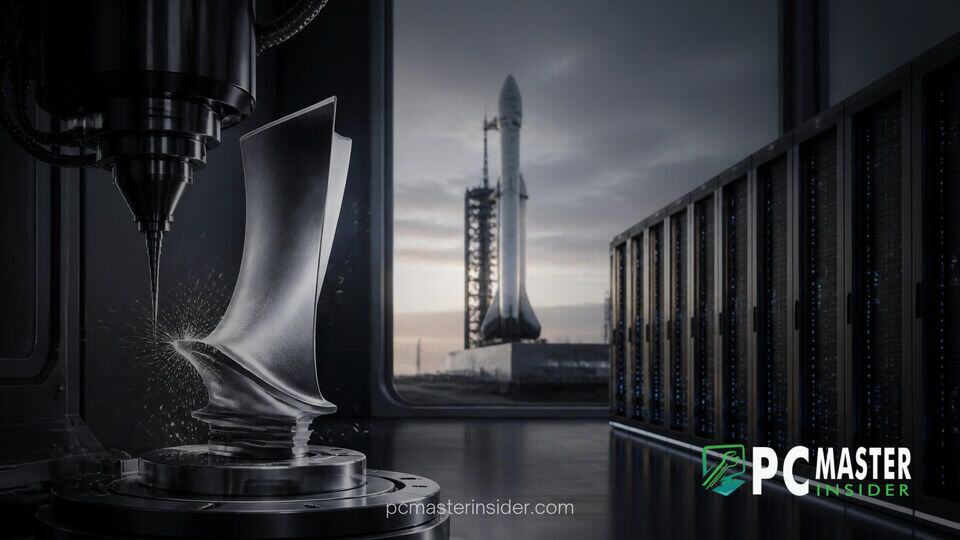
SpaceX is developing a dedicated blades and vanes foundry in Bastrop, Texas, specifically designed to cast nickel-superalloy components for heavy industrial gas turbines. Elon Musk confirmed the initiative, stating that manufacturing these components internally could accelerate the deployment of natural gas turbines by up to 18 months. The facility addresses critical component shortages that have stalled site preparation for xAI compute clusters.
Bypassing Power Grid Constraints and Generator Supply Bottlenecks
The decision to build an internal foundry stems from severe capacity limitations among traditional equipment manufacturers. Leading power generation suppliers, including GE Vernova, have reported that their production capacity for major gas turbines is effectively sold out through 2030. The primary physical choke point in turbine assembly is the production of hot-section blades and vanes, which require complex single-crystal casting inside vacuum furnaces to withstand extreme operating temperatures. Globally, only a handful of specialized foundries possess the equipment and expertise necessary to cast these high-precision components.
Connecting massive new compute facilities to regional utility grids often involves multi-year delays due to transmission upgrades, environmental reviews, and grid interconnection queues. Consequently, major technology companies operating frontier models have increasingly pivoted toward behind-the-meter, off-grid power solutions. Similar infrastructure challenges have surfaced across the sector, such as when the Microsoft-backed AI data center project faced New Jersey environmental backlash over regional grid strain and energy impacts.
Musk noted on social media that while SpaceX and Tesla are aggressively scaling solar production capacity, natural gas generation remains necessary to supplement and bootstrap power availability in the short term. Sourcing complete generators directly from established manufacturers can take years, but manufacturing the most constrained internal parts allows SpaceX to refurbish, build, or assemble turbine units far faster than standard procurement timelines allow.
Impact on xAI Compute Infrastructure and Expansion Plans
The localized power strategy directly supports xAI's rapid expansion plans for its supercomputing sites. The artificial intelligence company has operated extensive mobile and stationary gas turbine fleets to supply immediate energy to its Colossus supercomputer complex in Memphis, Tennessee. SpaceX regulatory filings previously disclosed billions in financial commitments allocated toward gas turbine procurement and infrastructure buildouts to support xAI's growing server footprint.
Beyond resolving energy hurdles for data centers, analysts point out significant cross-over potential between aerospace operations and power generation equipment. Financial analysts at Morgan Stanley highlighted that the high-temperature nickel superalloys and single-crystal casting techniques used for industrial gas turbine blades are nearly identical to the metallurgy required for Starship Raptor rocket engine turbopumps. Constructing a single advanced foundry in Texas allows SpaceX to share capital expenses, material science engineering, and operational personnel across both space exploration and AI power projects.
The intense requirement for server hardware and power generation equipment comes at a time when underlying silicon and memory supply chains are similarly strained. As hardware makers shift production lines toward high-performance computing, memory markets have felt the pressure; notably, DDR5 memory prices surged up to 500% amid data center crunch conditions over recent quarters. Furthermore, long-term supply agreements indicate that memory chipmakers have sold out 2027 DRAM supply due to relentless enterprise demand.
However, the rapid deployment of natural gas generation facilities for computing clusters has drawn scrutiny from environmental organizations and local community groups. Temporary and permanent gas turbine deployments in urban and rural areas have raised questions regarding air quality permits and local emissions impacts. While companies view off-grid gas generation as a bridge solution toward long-term renewable integration, regulatory bodies continue to evaluate the environmental footprint of rapid data center expansion.
SpaceX's decision to manufacture gas turbine blades internally underscores the extreme measures technology leaders are taking to overcome physical supply constraints. By vertically integrating critical power equipment manufacturing alongside rocket hardware, SpaceX aims to eliminate multi-year infrastructure delays and secure the continuous power necessary to fuel xAI's long-term growth.