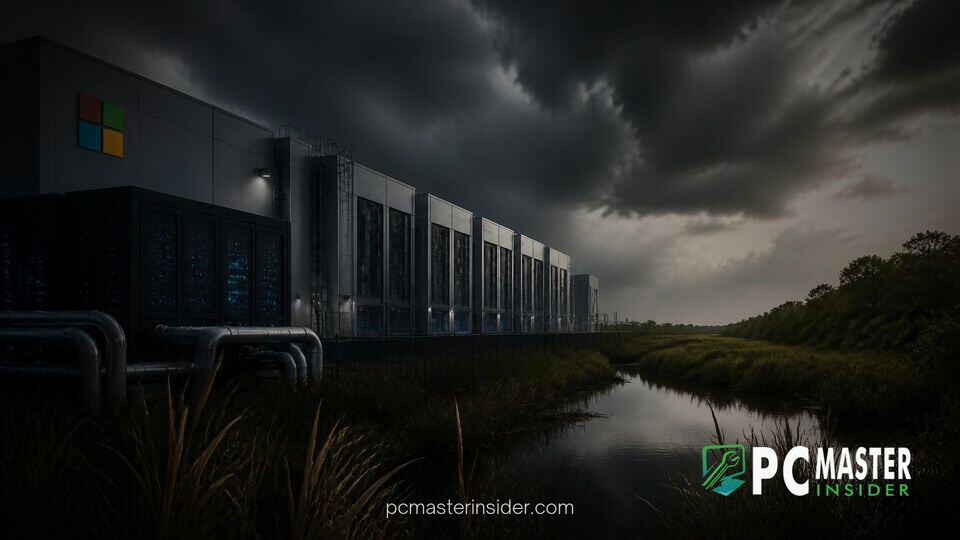
A high-stakes artificial intelligence infrastructure project in Vineland, New Jersey, is facing severe scrutiny from local residents, civic groups, and environmental advocates over its reliance on off-grid fossil fuel generation. The facility, designed to supply compute power for enterprise workloads, has become the center of a growing national debate regarding the ecological cost of expanding artificial intelligence infrastructure.
As technology hyper-scalers race to construct specialized facilities capable of powering massive machine learning models, public pushback is intensifying over municipal noise levels, air quality degradation, and local power grid strain. The situation in Vineland highlights the friction between aggressive corporate expansion timelines and community environmental standards.
Local Resident Groups File Complaints Against Vineland AI Facility
Tensions in Cumberland County have escalated into formal legal and regulatory challenges after community organizations documented continuous operational disruptions near the data center site. Residents living adjacent to the development have reported persistent low-frequency noise and exhaust emissions stemming from temporary power generation equipment installed during the facility's construction and early testing phases.
Advocacy groups contend that the operational setup bypasses traditional municipal zoning oversights and environmental review standards. Complaints submitted to state regulators highlight concerns that the facility operated high-capacity generators for extended periods without securing full environmental clearance, leading to friction between local neighborhood representatives and project developers.
Unpermitted Turbines and Liquefied Natural Gas Storage Concerns
At the core of the regulatory challenge is the deployment of utility-scale combustion turbines and temporary fuel supply systems on site. Environmental filings indicate that project operators brought in multiple mobile gas turbines to provide primary power while waiting for permanent interconnect agreements with the regional electrical grid. These turbines are supported by large-scale on-site storage of liquefied natural gas (LNG) and liquid diesel fuel.
Local environmental organizations allege that these combustion assets were operated without complete air quality permits required under New Jersey state law. The presence of substantial fuel reserves near residential communities has raised concerns regarding volatile organic compound (VOC) emissions, nitrogen oxide (NOx) output, and potential safety hazards associated with bulk fuel storage.
Microsoft Data Center Environmental Controversy and Grid Realities
The situation in New Jersey reflects a broader microsoft data center environmental controversy emerging across North America as hyper-scalers scramble to meet unprecedented demand for generative AI compute. To support high-density server configurations running specialized accelerators, data center operators require megawatts of continuous power that traditional utility providers often struggle to deliver within tight project deadlines.
This surge in energy demand coincides with enterprise transitions toward advanced software capabilities. As organizations deploy tools like Microsoft 365 Copilot for complex data analysis, backend cloud infrastructure must handle significantly heavier processing loads. Consequently, cloud vendors often rely on third-party developers to construct turnkey server farms, sometimes leading to off-grid interim power solutions when utility interconnections face multi-year delays.
Environmental researchers note that relying on natural gas turbines to bridge power gaps conflicts with public corporate commitments to achieve carbon-negative operational footprints. While cloud providers regularly invest in long-term renewable energy purchase agreements, the immediate physical operation of interim fossil-fuel generators creates immediate localized pollution impacts for host communities.
Rising Energy and Noise Impact from Enterprise AI Infrastructure
The computing intensity of artificial intelligence applications differs substantially from conventional enterprise workload hosting. Advanced workloads, such as running local inference engines or tracking enterprise deployment pipelines through tools like the AI at Work Roadmap, demand continuous high-wattage power deliverability and active industrial cooling around the clock.
In Vineland, the continuous operation of large-scale cooling towers alongside industrial turbine exhausts has altered local acoustic environments. Community surveys conducted by local civic organizations reported widespread sleep disruption and concern over property values among households located within a two-mile radius of the facility.
Furthermore, regional environmentalists warn that high-density computing hubs place heavy demands on local water tables when utilizing evaporative cooling systems during peak summer periods. The combination of intense electrical draw, water consumption, and ambient sound has turned what was initially planned as an industrial economic development asset into a focal point of regional environmental policy discussions.
Regulatory Next Steps and Partner Responsibilities
In response to community complaints and regulatory inquiries, regional environmental protection officials have initiated formal reviews of the Vineland site's air emissions permits and noise containment compliance. State regulators are evaluating whether the temporary power generation arrangements violate existing state clean air guidelines or exceed allowable decibel thresholds for industrial operations.
While third-party infrastructure developers directly manage site operations and daily construction, major technology partners associated with the capacity face growing public calls to enforce stricter environmental oversight across their supply chains. Enterprise technology firms frequently audit hardware components, such as applying hardware-based device association for client security, but community leaders argue similar rigorous compliance standards must be extended to physical infrastructure partners.
Moving forward, municipal leaders in New Jersey are considering stricter zoning ordinances for future data center proposals, including mandatory public disclosure of interim power plans, noise impact modeling, and mandatory green space buffers. As state environmental regulators process public filings, the outcome of the Vineland facility dispute will likely establish an important legal precedent for how local governments across the United States balance rapid enterprise AI expansion against community health and clean air protections.