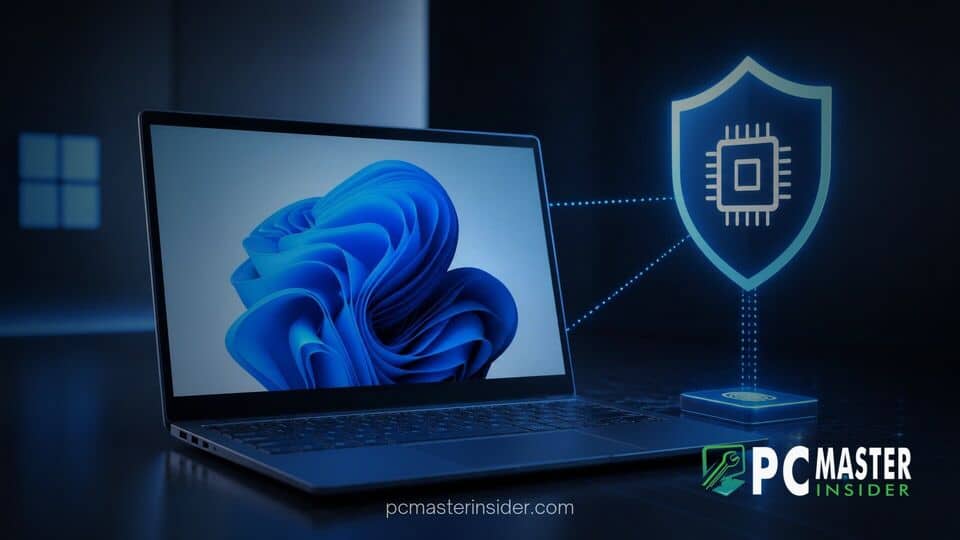
Microsoft has announced a significant security overhaul for its cloud-based deployment service, introducing hardware device association to bind physical machines firmly to corporate tenants. The updated mechanism leverages hardware-rooted trust to ensure that endpoints cannot bypass tenant management during initial setup or unenrollment attempts.
By shifting enrollment security deeper into the underlying hardware layer, enterprise administrators gain stronger protection against spoofed hardware hashes, stolen identity tokens, and unauthorized device onboarding across modern IT environments.
windows autopilot hardware device association and Next-Generation Provisioning
The core objective of the new feature set is to establish an immutable cryptographically backed link between physical PC components and an organization's Microsoft Entra ID (formerly Azure Active Directory) tenant. In previous iterations of Windows Autopilot, device registration primarily relied on capturing a standardized hardware hash generated during manufacturing or captured via PowerShell scripts. While effective for routine zero-touch deployments, malicious actors and compromised supply chain nodes occasionally found techniques to alter software signatures or reassign hardware hashes to unauthorized tenants.
Under the new model, Windows Autopilot hardware device association enforces cryptographic handshakes directly tied to system hardware identifiers. This ensures that even if a machine undergoes a complete local disk wipe or operating system reinstall, the cloud enrollment service recognizes the hardware cryptographic signature and automatically redirects the device back to its assigned organization tenant.
TPM-Backed Cryptographic Validation
Central to this architectural change is the requirement for onboard Trusted Platform Module (TPM) 2.0 chips. The deployment engine uses hardware-bound attestation keys stored within the TPM to verify the physical integrity of the endpoint before applying corporate profiles. Because the private keys never leave the secure boundary of the TPM silicon, remote attackers cannot replicate or forge the device attestation data sent to Microsoft's enrollment servers.
This approach complements ongoing security initiatives across the broader platform ecosystem. Organizations monitoring recent updates like Windows 11 Version 26H2 will recognize Microsoft's broader push toward enforcing strict hardware baseline requirements for enterprise governance.
UEFI Firmware Integration for Corporate Affinity
Beyond TPM attestation, Microsoft is working alongside major original equipment manufacturers (OEMs) to embed ownership markers directly within system UEFI firmware. This hardware affinity ensures that when a vendor builds custom enterprise laptops, the hardware serial numbers, board identities, and cloud signatures are bound before the device ever leaves the factory floor. When an employee unboxes the device, the firmware communicates directly with the cloud deployment engine to confirm corporate identity, blocking unauthorized personal account setups.
Security Benefits for Enterprise IT Deployment
Modern endpoint management infrastructure faces evolving security risks, ranging from stolen hardware resold on secondary markets to sophisticated insider threats. By cementing tenant ownership into physical components, Microsoft aims to eliminate common administrative loopholes that previously plagued enterprise IT teams.
Preventing Enrollment Bypasses and Unintended Onboarding
A primary vulnerability targeted by this update is the deployment bypass. Previously, if an attacker acquired an enterprise-owned device, they might attempt to disconnect internet access during Out-of-Box Experience (OOBE) setup, create a local administrator account, and bypass corporate security baselines entirely. Hardware device association prevents this by locking system initialization routines until a valid cloud handshake occurs.
Furthermore, this enhancement prevents rogue endpoints from attempting unauthorized access to corporate networks. Similar to how security measures protect against active exploit vectors, such as Microsoft SharePoint zero-day vulnerabilities or malicious Mirage2FA session cookie phishing campaigns, hardware-backed verification blocks rogue devices before they can reach internal network resources.
Durable Ownership Across OS Resets
Historically, removing a machine from Windows Autopilot required explicit de-registration by an IT administrator inside the Microsoft Intune management console. However, if a device was lost or stolen before proper enrollment was completed, recovery was difficult. With hardware device association, corporate ownership persists across complete storage drives formatting, partition resets, and operating system reinstalls. Until an authorized global administrator explicitly unbinds the hardware identity within Intune, the hardware remains cryptographically locked to the tenant.
Integration with Intune and Availability
The upgraded hardware association capabilities are being integrated directly into Microsoft Intune and the Microsoft Entra admin center. IT administrators can review device binding statuses, verify TPM attestation logs, and manage hardware lifecycle operations from a centralized portal. Furthermore, Microsoft confirmed that existing OEM partners, including Dell, HP, and Lenovo, are updating their factory provisioning workflows to support hardware-level binding out of the box.
As organizations continue modernizing their cloud management stack, alongside adopting broader platforms like the AI at Work Roadmap, robust hardware-rooted security forms an essential foundation. By eliminating software-only enrollment reliance, Microsoft provides enterprise administrators with greater confidence that corporate endpoints remain secure, managed, and fully traceable throughout their entire lifecycle.