Nvidia has officially announced its upcoming Rubin HPC GPU architecture at the Supercomputing 2026 (SC26) conference. Tailored specifically for high-performance computing, scientific modeling, and complex analytics, the new processor introduces a record core count alongside specialized data-handling capabilities designed for modern agent-driven research.
The announcement underscores Nvidia's commitment to balancing raw compute power with high-speed memory movement across supercomputing workloads. Expected to arrive in 2028, the Rubin HPC GPU marks a distinct expansion of the broader Vera Rubin enterprise ecosystem.
Nvidia Unveils Rubin HPC GPU Architecture
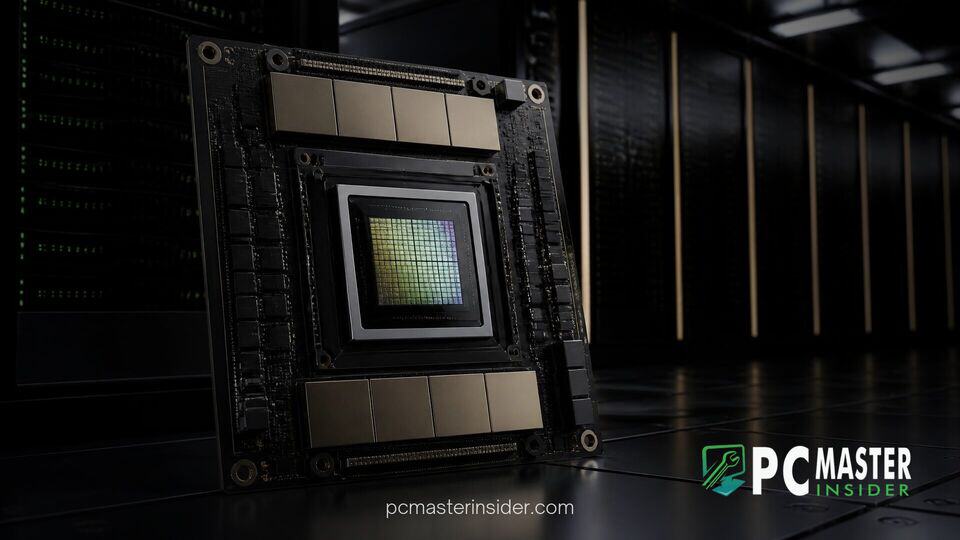
At the annual SC26 gathering, Nvidia unveiled the Rubin HPC GPU architecture, a specialized silicon design optimized for data-intensive computation and scientific simulations rather than pure generative AI inference. The company revealed that Rubin HPC will pack more than 50,000 CUDA cores on a single GPU package, setting an all-time record for Nvidia's processor designs.
Unlike standard enterprise GPUs tailored predominantly for matrix multiplication in large language models, the Rubin HPC architecture focuses on operations common in physical modeling, such as sparse matrix calculations, stencil computations, sorting, and reductions. By introducing sparse data acceleration features, Nvidia aims to eliminate computational bottlenecks by ensuring data moves seamlessly to keep the massive array of CUDA cores saturated.
Core Configuration and Die Design
The core configuration of the Rubin HPC processor represents a substantial architectural scaling effort. Packing over 50,000 CUDA cores onto a single GPU package requires advanced multi-die packaging techniques. Industry analysts suggest the design relies on a multi-chiplet layout built on cutting-edge TSMC fabrication nodes, expanding on the structural foundation laid out by Nvidia's preceding datacenter platforms.
To support this compute density, Rubin HPC upgrades interconnect connectivity to seventh-generation NVLink (NVLink 7) technology. This leap beyond the NVLink 6 interconnect used in standard Vera Rubin configurations provides enhanced scale-up bandwidth, facilitating direct, ultra-low-latency GPU-to-GPU communications across complex server clusters.
Target Applications for Supercomputing and AI
The shift toward autonomous AI agents in scientific research has driven a rapid increase in simulation demands. AI agents exploring new molecular structures, candidate materials, or aerodynamic prototypes require rapid computational feedback to evaluate ideas and determine subsequent testing phases. Rubin HPC is explicitly designed to accelerate these verification feedback loops.
Key target workloads for the architecture include climate modeling, genomic sequencing, engineering fluid dynamics, and financial risk assessment. The processor will integrate directly with Nvidia's CUDA-X software libraries, allowing developers to invoke optimized mathematical algorithms through automated scripts and agentic software frameworks.
Speaking on the launch, Ian Buck, vice president of hyperscale and high-performance computing at Nvidia, noted, "For agents tackling science and engineering, faster simulation means faster discovery. Rubin HPC accelerates the simulations agents use to test ideas and guide their next steps, helping scientists and engineers explore more possibilities and bring breakthroughs closer."
Expected Launch Schedule and Ecosystem Impact
Nvidia targets a commercial release for the Rubin HPC GPU in 2028. This timeline situates the processor after the initial rollout of the core Vera Rubin datacenter platform, which began deploying across partner clouds and server vendors in late 2026. While full technical specifications regarding exact memory capacity, clock speeds, and thermal design power (TDP) remain under wraps, the hardware will slot into Nvidia's modular MGX server systems and rack-scale supercomputing platforms.
The announcement arrives during a dynamic period for hardware architecture across the technology sector. As competitive shifts reshape the processor landscape, such as when Intel reclaimed desktop CPU market share from AMD in Q3 2026 reports, chipmakers are aggressively tailoring specialized architectures for dedicated enterprise sectors. Meanwhile, software platforms are expanding GPU utilization locally; for instance, Microsoft released Foundry Local to run Qwen3.8-27B AI models on Nvidia GPUs on workstation-class hardware.
At the same time, hardware providers must navigate broader industry challenges. Datacenter deployment budgets continue to adapt to component pricing shifts, mirrored in client markets where global PC shipments fell 21 percent as memory prices soared. Despite supply constraints affecting consumer lines, including reports where Nvidia reportedly canceled 24GB RTX 5080 models over soaring memory costs, investments in top-tier high-performance computing architectures like Rubin HPC continue unabated.
As scientific research becomes increasingly reliant on automated AI workflows and rapid data throughput, Nvidia's Rubin HPC architecture establishes a clear roadmap for next-generation supercomputing centers. With over 50,000 CUDA cores and NVLink 7 bandwidth, the platform promises to significantly shorten the distance between theoretical modeling and real-world scientific breakthroughs.