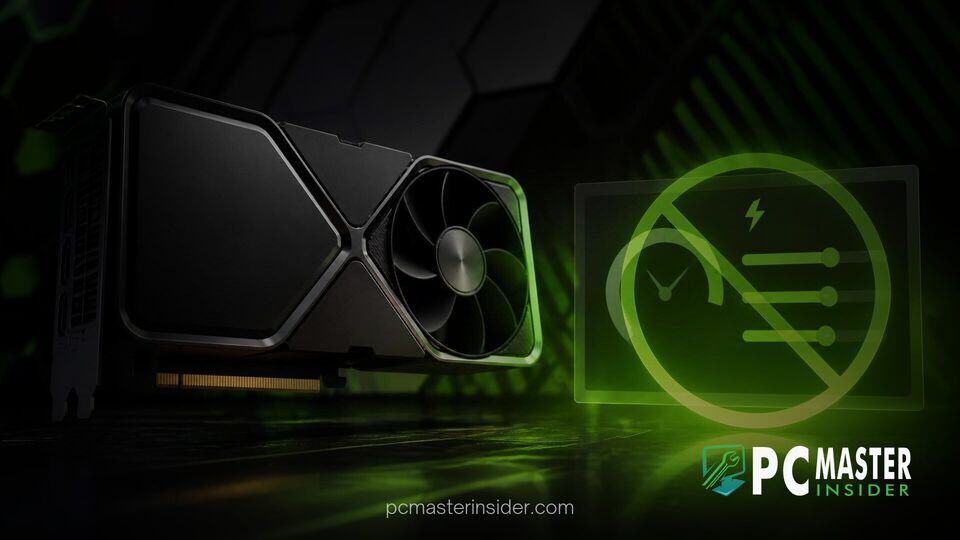
NVIDIA has rolled out its latest GeForce Display Driver update, introducing security and firmware communication changes that effectively disable custom power limit modifications across its lineup. The driver update prevents popular third-party overclocking utilities and custom scripts from overriding factory board power targets on desktop graphics cards.
While the company frames the driver adjustment as a protective measure to ensure long-term hardware reliability, the enthusiast community has reacted with frustration. Users who rely on unlocked power targets to push higher clock speeds are finding their custom profiles reset or locked out entirely.
NVIDIA Driver 615.56 Blocks Custom GPU Power Limit Tools
The core of the change resides in driver version 615.56, which modifies how the operating system driver communicates with the GPU's internal Power Management Unit (PMU). Previous driver packages permitted third-party utilities to bypass standard VBIOS power caps under specific system conditions. Tools such as MSI Afterburner, EVGA Precision, and specialized voltage utilities can no longer write custom values to the power target registers on modern cards.
Earlier this year, hardware enthusiasts frequently turned to custom software tools to push past default thermal and power limits. Software such as the mVolt tool bypassed VBIOS power limits on Nvidia RTX 50 GPUs to provide extra headroom for liquid-cooled setups. Under the new driver release, any attempt by background applications to inject custom voltage offset tables or elevated wattage caps is immediately rejected by kernel level protections.
Reports of Driver Crashes and Black Screens
Early adopters of driver 615.56 report mixed experiences depending on their active overclocking configurations. Users who updated while running active third-party power profiles experienced sudden system freezes, temporary black screens, and automatic driver resets as Windows restored default hardware parameters. In severe cases, driver installation routines failed until users completely uninstalled background tuning software.
Similar system stability challenges have plagued low-level software interactions on modern operating systems recently. Microsoft addressed similar kernel-level hardware conflicts when Microsoft disabled the Inpoutx64 driver to fix Windows 11 gaming crashes caused by unauthorized ring-0 hardware calls. Enthusiasts report that NVIDIA's updated display driver actively monitors registry keys and memory addresses used by legacy monitoring tools, immediately dropping the graphics card into a safe fallback state if unauthorized tampering is detected.
Impact on RTX 5000 Overclocking and Community Workarounds
The primary target of these firmware-level restrictions appears to be the flagship desktop architecture. The nvidia rtx 5000 driver power limit overclock block directly limits how much excess current can be drawn through 12V-2x6 power connectors. For standard users, basic slider adjustments within official partner software remain operational up to the board manufacturer's predefined maximum limit, typically capped between 105 percent and 115 percent of stock power.
However, extreme overclockers who push high-end graphics cards using custom power profiles or modified VBIOS images now hit a hard wall. Attempts to run custom scripts result in immediate power throttling back to nominal TDP levels. Some community members have attempted to roll back to older display drivers, but newer game titles requiring updated driver branches make staying on legacy software impractical for everyday gaming.
Hardware monitoring enthusiasts are also keeping a close eye on system telemetry across platforms. Linux users, for instance, recently gained specialized tools after a new Linux driver enabled 12VHPWR power monitoring for ASUS ROG Astral GPUs, showing how critical accurate power tracking has become for modern high-draw hardware.
NVIDIA's Stance on GPU Firmware Protections
While NVIDIA has not issued a detailed breakdown of every register change in driver 615.56, statements from technical support forums point to hardware safety and longevity as the primary motivations. High-wattage graphics cards demand tight electrical tolerances, and overriding board protections can accelerate component degradation or lead to unexpected thermal shutdowns.
By centralizing power limit enforcement within signed driver modules and protected PMU microcode, NVIDIA aims to reduce warranty returns and eliminate damage caused by improper voltage configuration. However, critics argue that restricting end-user control limits the potential of high-end custom add-in board designs that feature robust power delivery systems specifically engineered for heavy overclocking.
As driver 615.56 becomes the new baseline for upcoming game releases, PC hardware enthusiasts will need to rely on conventional core clock and memory frequency tuning rather than raising total power delivery limits past factory specifications.