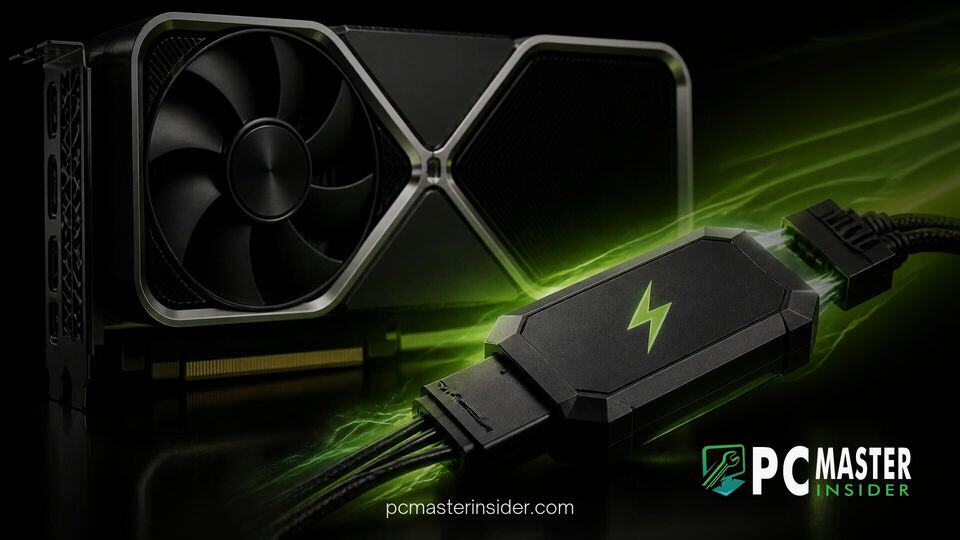
A newly released software utility named mVolt is gaining widespread attention in the hardware community for its ability to bypass standard factory power constraints on Nvidia GeForce RTX 50 series graphics cards. By exposing hidden firmware controls embedded within the Blackwell architecture, the application allows enthusiasts to push power targets beyond traditional limits without needing complex hardware modifications.
This development marks a notable shift in GPU overclocking practices, where strict vendor limits typically prevent users from fully utilizing their graphics hardware. Standard software tools like MSI Afterburner have long been bound by the hard caps set inside a card's video BIOS. With mVolt, enthusiasts can now tap into additional headroom previously locked behind vendor firmware profiles.
mVolt Nvidia RTX 50 VBIOS power limit: Breakthrough Software Unlocks Hidden GPU Potential
The mVolt utility provides advanced control over Nvidia RTX 50 series graphics cards by exposing software registers that bypass standard VBIOS power limiters, enabling higher power delivery and enhanced clock stability during heavy workloads.
Overclocking Utility Pushes RTX 50 Series Beyond Factory Limits
For several GPU generations, Nvidia has enforced strict board power caps to maintain thermal safety, power efficiency, and long-term hardware reliability. While these limits ensure stable everyday operation for general consumers, extreme overclockers have historically viewed them as artificial performance ceilings. Flashing third-party firmware or applying custom VBIOS files often carried severe risks, including bricked graphics cards and voided manufacturer warranties.
The release of mVolt changes this dynamic by interacting directly with the GPU driver interface and power controller telemetry. Rather than replacing the firmware itself, the tool alters how power restrictions are reported and processed in real time. Early testers report that cards restricted to factory targets can now draw significantly more wattage under sustained synthetic benchmarks and gaming sessions. For instance, flagship GPUs like the RTX 5090 have reportedly been pushed well past their standard rated thermal design power, yielding measurable gains in peak core clock frequencies.
How mVolt Modifies Voltage and Power Targets Without Shunt Mods
In previous graphics card generations, hardware enthusiasts seeking to bypass power restrictions relied heavily on shunt modding. This physical modification involved soldering low-resistance resistors over the onboard power monitoring shunts, effectively tricking the GPU's power controller into reading lower current draw than was actually flowing into the silicon. While effective, physical mods required steady soldering skills, invalidated warranties instantly, and ran the risk of permanently damaging expensive graphics cards.
mVolt achieves a similar outcome entirely through software. The application exposes secondary internal constraints, such as the Core Power Limit and separate rail voltage offsets, which remain hidden in generic tuning tools. By adjusting these parameters, users can unlock additional power headroom while maintaining accurate real-time telemetry readouts for voltage, current, and total board draw. This approach removes the guesswork and hardware danger associated with physical circuit modifications.
Risks and Extreme Power Draw Concerns for Gamers
Despite the excitement surrounding mVolt among competitive benchmarkers, hardware experts warn that overriding factory power targets carries inherent risks. Higher power consumption translates directly into increased thermal output, placing greater demands on GPU coolers, power supply units, and motherboards.
Sustained operation at elevated wattage can accelerate voltage regulator module wear, leading to potential thermal throttling or long-term component degradation if cooling is inadequate. Furthermore, power spikes on high-draw Blackwell cards require high-quality power supplies equipped with modern 12V-2x6 or 12VHPWR connectors to prevent cable strain or power cutoffs. Tech analysts recommend that casual gamers exercise caution, as average performance gains in real-world titles may not always justify the steep rise in electricity usage and heat production.
Availability and Overclocking Community Response
The overclocking community has responded enthusiastically to mVolt, with users posting updated benchmark scores and tuning profiles across technical forums and community repositories. Enthusiasts have praised the utility for democratizing advanced GPU tuning, allowing experienced users to extract maximum value from their hardware investment without resorting to hazardous soldering irons.
As mVolt continues to receive software updates and broader community testing, focus turns to how graphics card vendors and Nvidia might react. Future driver releases or microcode updates could potentially close the software avenues utilized by mVolt. For now, however, the tool stands as one of the most powerful tuning solutions available for the Nvidia RTX 50 series lineup, giving PC enthusiasts unprecedented control over their graphics performance.
In summary, mVolt offers an innovative, software-based solution for breaking through standard RTX 50 series power limits. While extreme power consumption demands proper cooling and caution, the tool unlocks a new tier of flexibility for the modern PC tuning ecosystem.