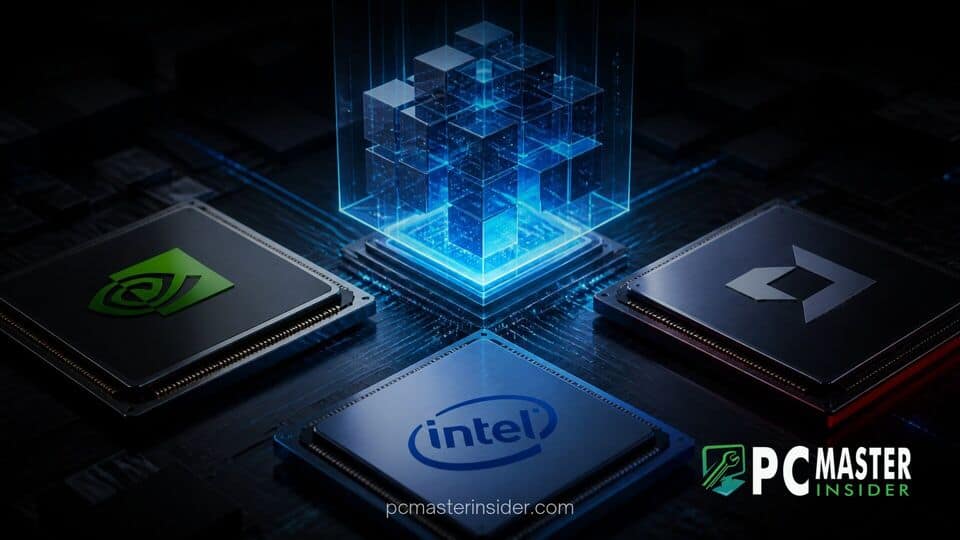
LMSYS Org has officially launched the SGLang Consortium, bringing together hardware and cloud computing leaders including Nvidia, AMD, Intel, Google, and Meta. The new alliance aims to accelerate open-source AI inference development across heterogeneous computing platforms.
Announced during the inaugural SGLang Summit in San Francisco, the consortium establishes a collaborative framework between major industry players and the open-source software project's core maintainers. By coordinating on optimization standards, memory efficiency, and distributed runtime features, the participating organizations seek to create a unified ecosystem capable of deploying generative models smoothly across diverse silicon architectures.
lmsys sglang consortium open source ai inference
The formation of the SGLang Consortium represents a strategic pivot for open-source AI infrastructure as commercial reliance on enterprise inference shifts rapidly. Developed under the umbrella of Large Model Systems Organization (LMSYS Org)—the research collective behind popular AI benchmarks and tools—SGLang has rapidly evolved into a critical serving framework for complex model architectures. As enterprise demand for high-throughput, low-latency execution scales, founding members including Nvidia, AMD, Intel, Google, Meta, Cloudflare, Modal, and RadixArk have joined forces to prioritize cross-hardware engineering and standard roadmap planning.
Major Tech Industry Leaders Join Open-Source AI Inference Push
The participation of silicon rivals like Nvidia, AMD, and Intel under a single open-source umbrella highlights how fundamental inference runtime optimization has become to the artificial intelligence hardware ecosystem. Rather than competing through completely isolated software silos, chipmakers recognize that hardware adoption hinges on zero-day support within leading execution engines.
As semiconductor manufacturers push next-generation accelerators into data centers, hardware integration at the software layer dictates end-user efficiency. Recent hardware cycles have highlighted rapid performance gains across vendors, such as AMD's initial open-source kernel groundwork for future GPU architectures, while data center platforms face ongoing challenges regarding component costs and pricing pressures, visible in developments like Nvidia RTX 50 series GPU price adjustments. The consortium ensures that emerging silicon innovations translate directly into runtime performance for software developers without vendor lock-in.
In addition to hardware makers, cloud platform providers and AI deployment specialists like Cloudflare, Modal, and RadixArk are actively participating. The collaboration comes at a time when major enterprise cloud strategies are constantly adapting to balance raw computing needs with software reliability, mirroring broader industry trends such as how Microsoft manages its data center cloud operations.
Technical Focus Areas and Roadmap Collaboration
The technical mandate of the SGLang Consortium addresses several key bottlenecks currently plaguing large language model (LLM) serving and multimodal inference. Primary technical working groups will target:
- RadixCache and Prefix Management: Optimizing reusable memory states for complex agentic workflows, long-context prompts, and multi-turn conversational interfaces.
- Multi-GPU and Distributed Scaling: Enhancing pipeline and tensor parallelism techniques to split massive frontier models seamlessly across large node clusters.
- Multimodal and Reasoning Models: Standardizing kernel execution paths for vision-language models, reasoning architectures, and speculative decoding methods.
- Cross-Architecture Optimization: Building standardized abstraction layers that streamline day-zero hardware compiler features across CUDA, ROCm, and Intel oneAPI platforms.
While founding members designate technical representatives to shape biannual roadmap goals, LMSYS Org confirmed that independent code maintainers retain complete architectural authority and pull-request approval powers to preserve the project's open-source neutrality.
How SGLang Optimizes Workloads Across Hardware Ecosystems
Unlike standard model serving stacks that process prompts as isolated requests, SGLang utilizes specialized scheduling algorithms and memory management structures to handle complex workflows efficiently. Its signature RadixAttention mechanism treats attention Key-Value (KV) caches as a dynamic tree structure. This design automatically reuses warm memory states across repetitive prompts, structured outputs, and multi-step computational agents, reducing redundant GPU recalculations drastically.
For data center operators managing heterogeneous server farms, hardware agility is paramount. Recent cross-industry security disclosures, such as those where Intel and AMD issued hardware updates, demonstrate how closely data center security and system maintenance are tied across vendor lines. SGLang provides a flexible, unified execution layer that runs effectively across Nvidia Blackwell GPUs, AMD Instinct accelerators, Google TPUs, and Intel Data Center GPUs. This flexibility ensures that software applications remain portable regardless of backend hardware choices.
The platform also plays a crucial role for localized enterprise deployments and edge infrastructure. As developers experiment with specialized hardware, ranging from high-end desktop workstations equipped with consumer software tools to compact local builds—such as systems powered by Microsoft Foundry Local software stacks—having a predictable, open-source execution runtime minimizes deployment latency and memory overhead.
Future Outlook for Enterprise Open-Source AI Infrastructure
The creation of the SGLang Consortium signals a maturing ecosystem where open-source serving runtimes are recognized as essential foundation infrastructure. Industry analysts project that inference workloads will account for the vast majority of operational AI compute spending moving forward. By standardizing runtime optimizations through an open, vendor-neutral consortium, LMSYS Org and its industry partners are helping prevent ecosystem fragmentation.
Looking ahead, the consortium's collaborative development model will enable faster integration of breakthrough model architectures and specialized hardware instructions. By aligning silicon engineers directly with open-source software maintainers, the AI community takes a major step toward sustainable, accessible, and high-performance inference at global scale.