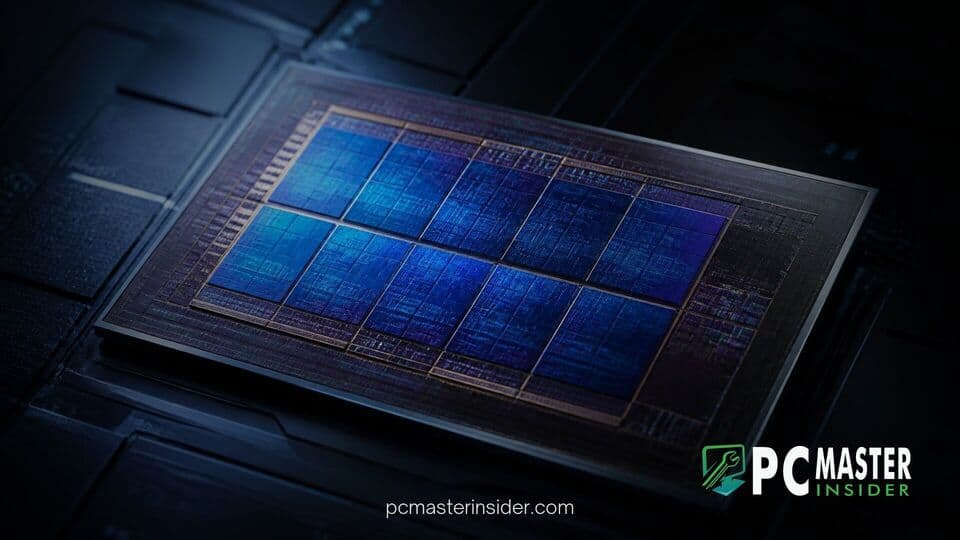
A recent leak from hardware industry sources indicates that Intel is working on a specialized 12 P-core compute die for its upcoming Razor Lake processor family. According to preliminary technical details, this specific design leverages Intel's enhanced 18A-P manufacturing process and integrates large last-level cache (bLLC) technology tailored for high-performance workloads.
Unlike standard desktop processor designs that rely heavily on hybrid architectures combining performance cores (P-cores) and efficient cores (E-cores), this leaked Razor Lake configuration appears to drop traditional E-cores on the main compute die entirely. The design presents a notable shift in Intel's architecture strategy for enthusiast desktop processors target market segments.
Intel Razor Lake Leak Details 12 P-Core Compute Die
Information originating from reliable hardware leakers, including Jaykihn, indicates that Intel is testing a unique Razor Lake compute die configuration identified as a 12 P-core design. Rather than using the dual-cluster approach of P-cores paired with E-cores on a single compute tile, this die allocates its thermal and physical silicon area strictly to high-frequency P-cores.
Reports point out that while the primary compute die lacks E-cores, low-power efficiency cores (LP E-cores) may still exist within the system-on-chip (SoC) or I/O tile to manage background operating system tasks. This pure performance core approach echoes dedicated gaming and heavy single-threaded workstation designs where maximum IPC (instructions per cycle) and high clock frequencies take priority over total multi-threaded efficiency gains offered by dense E-core clusters.
Single Compute Tile and 18A-P Process Node
The leaked silicon configuration is produced on Intel's 18A-P process node. As an enhanced derivative of the original 18A node, 18A-P provides architectural refine-ments such as optimized power delivery networks and higher clock frequency headroom under sustained workloads. Intel has previously highlighted 18A-P as a key internal node for future computing architectures, aiming to deliver tangible performance-per-watt benefits.
While mainstream Razor Lake variants have been rumored to explore external foundry nodes like TSMC's N2P for high-volume consumer models, this specific 12 P-core variant brings high-end desktop compute production back onto Intel's domestic foundry lines. Utilizing 18A-P allows Intel to closely tightly integrate its RibbonFET gate-all-around transistors and PowerVia backside power delivery system for maximum switching speeds.
bLLC Cache Integration for Desktop Performance
Another major technical highlight uncovered in the leak is the inclusion of bLLC (Big Last Level Cache). Intel's implementation of bLLC acts as an expanded, high-capacity L3 or L4 cache layer designed to drastically reduce memory latency during data-intensive applications like 3D rendering, scientific simulation, and modern PC gaming.
This cache architecture serves as Intel's direct answer to rival stacked-cache solutions in the desktop market. By pairing 12 dedicated high-performance P-cores with a substantial bLLC pool, the CPU aims to eliminate frame-time stuttering and memory bandwidth bottlenecks in demanding games. The combined compute tile footprint remains optimized for high thermal dissipation efficiency under extreme desktop cooling setups.
Impact on Intel Desktop CPU Roadmap
The appearance of a 12 P-core Razor Lake die highlights dynamic adjustments in Intel's long-term processor platform strategy. Following announcements around Intel confirming high-end Nova Lake desktop CPUs, industry observers have closely monitored how subsequent generations would address enthusiast demand.
Historically, Intel transitioned heavily to hybrid computing starting with 12th Gen platforms, but modern desktop software and gaming engines often benefit more from uniform high-speed core arrays paired with low-latency cache structures. This 12 P-core leak suggests Intel is willing to break away from uniform hybrid ratios when designing targeted enthusiast products.
This roadmap development also arrives alongside broader market realignments. Recent industry data shows competitive pressure across desktop platforms, as documented in reports detailing Intel reclaiming desktop CPU market share from AMD. Developing specialized high-end silicon dies gives Intel flexibility when competing for top-tier desktop gaming builds.
However, semiconductor manufacturing constraints remain an ongoing consideration across the industry. Intel has faced packaging and logistics headwinds in recent quarters, including documented challenges such as the organic substrate shortage limiting CPU supply. Leveraging the refined 18A-P process for specialized dies provides manufacturing diversity across Intel's internal fabrication plants.
Expected Timeline and Socket Compatibility
The Razor Lake processor family represents a future iteration in Intel's Core Ultra desktop lineup, positioned to follow the upcoming Nova Lake architecture. Early ISA documentation updates and system diagnostic tools, such as CPU-Z software additions, have already begun incorporating preliminary Razor Lake instruction sets and model definitions.
Current leaks indicate that desktop Razor Lake processors will targeted platforms utilizing modern socket infrastructures with PCIe Gen 5 and high-speed DDR5 memory standards. While formal release dates remain unannounced by Intel leadership, hardware analysts expect Razor Lake details to mature as internal foundry deployment of 18A-P scales up across 2027 and 2028.
If these leaked specifications transition into final retail silicon, enthusiasts can look forward to a dedicated desktop processor that prioritizes raw single-thread performance, expansive cache bandwidth, and clean P-core execution without the scheduling complexity of heterogeneous core clusters.