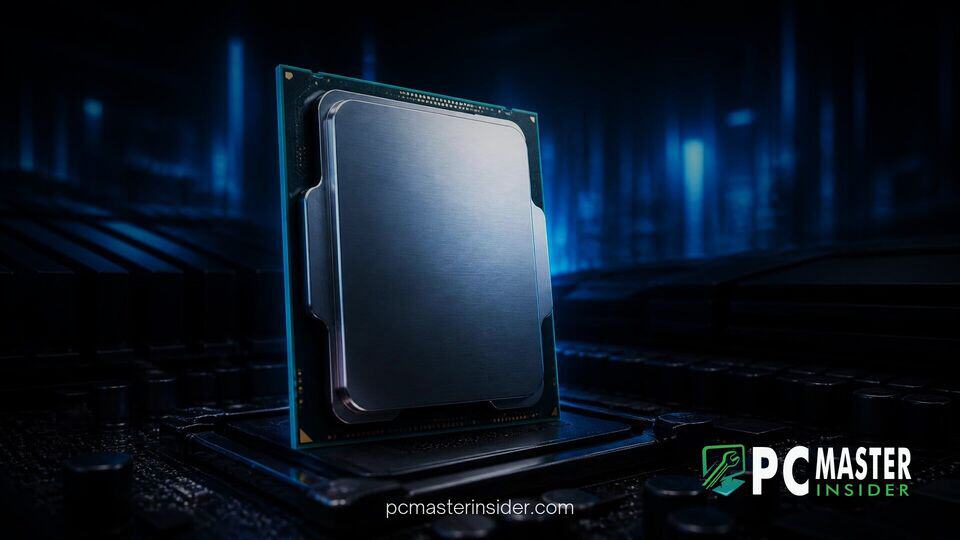
Intel has inadvertently revealed plans for another series of desktop processors after an internal driver package carrying the label RPL-NEXT was uploaded to its software database. The publication of the test driver offers official evidence that Intel is working on a family of processors codenamed Raptor Lake Next, aimed at extending the lifespan of existing motherboards.
Alongside the internal driver upload, detailed entries in international trade manifests have surfaced, giving hardware enthusiasts their first clear look at hardware specifications. The disclosures indicate that Intel intends to maintain support for its LGA 1700 socket, providing an accessible upgrade path for users looking to preserve their current motherboard and memory investments.
Intel Raptor Lake Next CPU LGA 1700 Details Confirms Extended Platform Support
>The leaked software release, uncovered by hardware sleuths in Intel's public database, references an internal Smart Sound Technology driver build specifically tagged for RPL-NEXT hardware. While the download file remains restricted behind internal corporate authentication, its listing confirms that silicon testing for the upcoming desktop family is well underway inside Intel's validation labs. This software trace acts as direct evidence following months of industry trade rumors regarding another refresh of the 13th and 14th Gen architecture.
Matching the driver revelation, export records from assembly and testing facilities in Vietnam show shipments of microprocessors marked with the Raptor Lake Next label. These logs detail early engineering samples sent out for internal evaluation, featuring concrete clock speeds, cache allocations, and power targets. By keeping these processors on the socket, Intel ensures builders retain access to affordable DDR4 system memory during a period of market volatility for newer memory standards.
RPL-NEXT Driver Details and LGA 1700 Compatibility
The driver package identified in Intel's software index relates to the Smart Sound Technology digital signal processor integrated directly into modern Intel platform controllers. This audio subsystem offloads background processing duties, such as noise cancellation and voice recognition, away from primary CPU cores to conserve system energy. The explicit mention of RPL-NEXT within these audio driver manifests confirms that the underlying chipset infrastructure for the new processors remains fully aligned with existing LGA 1700 motherboard designs.
Motherboard partners have already started laying the groundwork for this extended support. Major hardware vendors like Gigabyte recently distributed updated motherboard BIOS firmware across their budget B760 and entry-level H610 product lines. These firmware updates include microcode adjustments designed to recognize upcoming LGA 1700 processor revisions, confirming that system builders will not need to buy new motherboards to use the upcoming chips.
Expected CPU Models and Memory Support
Trade manifest listings detail four distinct processor part numbers linked to the Raptor Lake Next family. The highest-performing variant uncovered in the logs, listed under part number 99DLMV, features a 3.5 GHz base clock speed, 30 MB of L3 cache, and a 125 W thermal design power rating. These parameters correspond to a 16-core configuration consisting of 8 Performance cores and 8 Efficiency cores, positioning it as a direct successor to mid-range options like the Core i5-14600K.
A second model, identified as 99DLMT, operates at a 2.1 GHz base frequency with 33 MB of L3 cache and a 65 W power target, matching the cache footprint of a 20-core design with 8 Performance cores and 12 Efficiency cores. Two additional part numbers, 99DLMW and 99DLMX, are listed with 2.6 GHz base clocks and 24 MB of L3 cache. Crucially, all of these upcoming desktop chips maintain dual-channel support for both DDR4 and DDR5 memory modules, offering builders flexibility when budgeting their system upgrades.
Impact on PC Upgrades and Socket Lifespan
Extending the LGA 1700 socket gives PC builders a cost-effective path to modern performance without requiring a complete system overhaul. The decision mirrors recent software infrastructure efforts across the industry to optimize performance on established platforms, such as when Microsoft integrates Intel APX support into Windows 11 preview builds to improve architectural efficiency. For budget-conscious users, upgrading an existing system avoids the expenses associated with buying fresh motherboard platforms and high-priced DDR5 memory kits.
The desktop market continues to see sustained demand for older memory standards due to pricing pressures on newer components. While enthusiasts chasing maximum performance look toward flagship hardware like the Intel Core Ultra 9 4995HX Nova Lake mobile CPU or upcoming desktop architectures, mainstream builders often prioritize value. Maintaining a dual-memory controller on desktop chips allows Intel to address mainstream retail markets while keeping platform entry costs down.
What to Expect Next for Intel Desktop Processors
Intel's strategy of running parallel desktop platforms allows the company to cover multiple price tiers simultaneously. While cutting-edge architectures advance under the Core Ultra branding, products like Raptor Lake Next serve system integrators and value-focused builders. Intel has also aligned branding schemes across its mobile and desktop segments, as seen when Intel Nova Lake-HX chips adopt Core Ultra 4000 series naming conventions for top-tier systems.
Reports suggest that Raptor Lake Next processors will likely launch under a streamlined Core 200 naming convention, omitting the Ultra suffix to reflect the absence of dedicated Neural Processing Units. Industry estimates point toward an official market introduction in early 2027, providing a stable desktop option alongside next-generation platforms. Further details regarding final boost clock speeds and retail pricing are expected as motherboard vendors finalize their upcoming BIOS updates.
The leak of the RPL-NEXT test driver and shipping logs confirms that Intel remains committed to maximizing the value of its LGA 1700 platform. By offering upgraded core configurations alongside flexible DDR4 and DDR5 memory support, Intel provides a practical option for builders seeking cost-effective desktop upgrades.