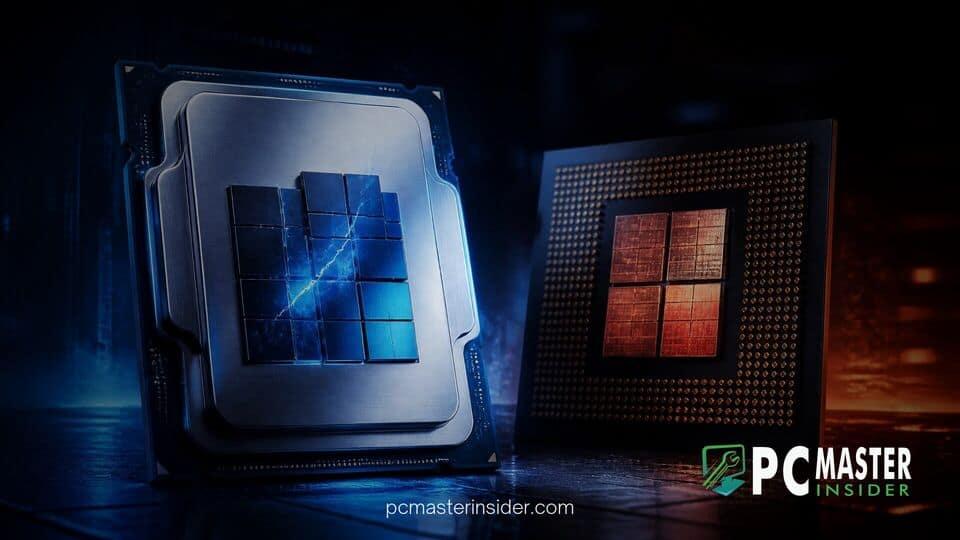
Intel executives have officially confirmed that the upcoming Nova Lake processor lineup will directly target the high-end enthusiast desktop market, filling a critical gap in the chipmaker's flagship portfolio. Speaking during the company's third-quarter earnings call, corporate leadership highlighted that the new architecture is designed to compete directly against AMD's dominant Ryzen X3D processors in gaming and heavy desktop workloads.
Intel Nova Lake to Fill High-End Desktop CPU Gap
Intel leadership acknowledged during its financial presentation that recent processor releases left an obvious void at the top tier of its desktop offerings. Chief Financial Officer David Zinsner stated on the record that the company had experienced a hole in its portfolio for high-end desktop hardware, but emphasized that the intel nova lake desktop cpu architecture is tailored to fill that gap directly.
The announcement comes at a pivotal period for the silicon manufacturer. While prior generation desktop chips focused heavily on power efficiency improvements and architectural redesigns, they struggled to maintain clear gaming performance leads over competing hardware. Intel aims to reverse that trend with Nova Lake, positioning the family as its most competitive desktop lineup in years. Market analytics firm Mercury Research noted that AMD's share in the desktop CPU space grew to 34.9 percent in recent quarters, largely propelled by strong demand for 3D V-Cache processors, making Nova Lake's arrival a crucial milestone for Intel's client computing group.
Process Technology and 18A-P Node Target
A core technical revelation from the executive commentary is that Nova Lake will be Intel's first client product family built on the advanced 18A-P manufacturing process. Chief Executive Officer Lip-Bu Tan revealed that development on the 18A-P node is tracking ahead of internal schedules, with design wins from OEM partners expected to be double those seen during the initial rollout of mobile Panther Lake chips.
The 18A-P node offers performance-per-watt refinements and improved transistor density over standard 18A, providing higher operating frequencies and tighter thermal controls. Hardware enthusiasts are closely watching these process enhancements, particularly as supply chain bottlenecks have created industry-wide friction. For instance, reports highlighting how an organic substrate shortage limiting CPU supply affected previous rollouts underscore why manufacturing maturity on 18A-P is vital for stable desktop volume.
Targeting Gaming Performance Against AMD X3D
The primary battleground for the high-end desktop segment remains gaming performance. AMD has established a formidable advantage with its Ryzen 7 and Ryzen 9 X3D series processors, utilizing stacked vertical cache to boost frame rates in cache-sensitive PC titles. Intel's upcoming Nova Lake architecture is intended to dismantle that lead.
Industry details and leaks point to large-level cache designs inside specific Nova Lake desktop SKUs. Industry chatter suggests Intel may incorporate expanded cache implementations, frequently referred to as big Last Level Cache (bLLC), offering dramatically elevated L3 cache sizes to match or exceed the gaming advantages provided by AMD's 3D V-Cache technology. Early projection estimates suggest double-digit single-thread and gaming instruction uplift compared to earlier tile-based desktop architectures.
Architecture and Platform Expectations
Beyond memory cache enhancements, Nova Lake processors are anticipated to arrive alongside a new motherboard socket platform and updated chipset designs. This ecosystem shift aims to support high-frequency memory specs, natively pushing out-of-the-box support for DDR5-8000 and above. Broad platform updates will also leverage next-generation instruction set extensions. Operating system integration for such advancements is already underway; recent developments show Microsoft testing native hardware capabilities, including how Intel APX support in Windows 11 Build 29695 expands general-purpose register availability to boost execution efficiency on future x86 chips.
PC enthusiasts should also consider hardware interaction issues under high processing loads. As software workloads scale across massive core counts, desktop responsiveness under full load remains a critical factor, similar to findings where engineers detailed why Task Manager freezes under heavy Windows 11 CPU load despite high priority thread allocation.
Intel Strategy and Market Impact
Intel's strategy with Nova Lake indicates a renewed focus on winning back enthusiast desktop market share rather than relying solely on mainstream volume chips. Executive comments confirm that while mobile and data center chips remain massive revenue drivers, maintaining flagship leadership in PC gaming serves as a vital halo for the broader brand.
However, broader macroeconomic and component market conditions could shape the rollout. System builders continue to navigate volatile memory pricing and component availability. Market analyses, such as reports warning that expanding AI inference workloads cause DDR5 component shortages, suggest that high-end platform adoption in late 2026 and 2027 will depend on motherboard and RAM pricing alongside pure CPU performance. Meanwhile, enterprise data infrastructure shifts have led memory manufacturers to commit long-term supply elsewhere, as seen when SK Hynix confirmed DRAM production sold out through 2029.
Despite memory industry challenges, Intel remains confident in its upcoming release schedule. Executive leadership confirmed that more comprehensive architectural details, platform specifications, and model line-ups for Nova Lake desktop CPUs will be disclosed at CES in January.
Intel's official acknowledgment of Nova Lake's role in its high-end desktop roadmap signals an aggressive return to competitive enthusiast CPU design. By pairing the 18A-P process node with expanded cache solutions, Intel aims to deliver a true alternative to AMD's X3D dominance, setting up a major battle for desktop performance leadership in the coming generation.