
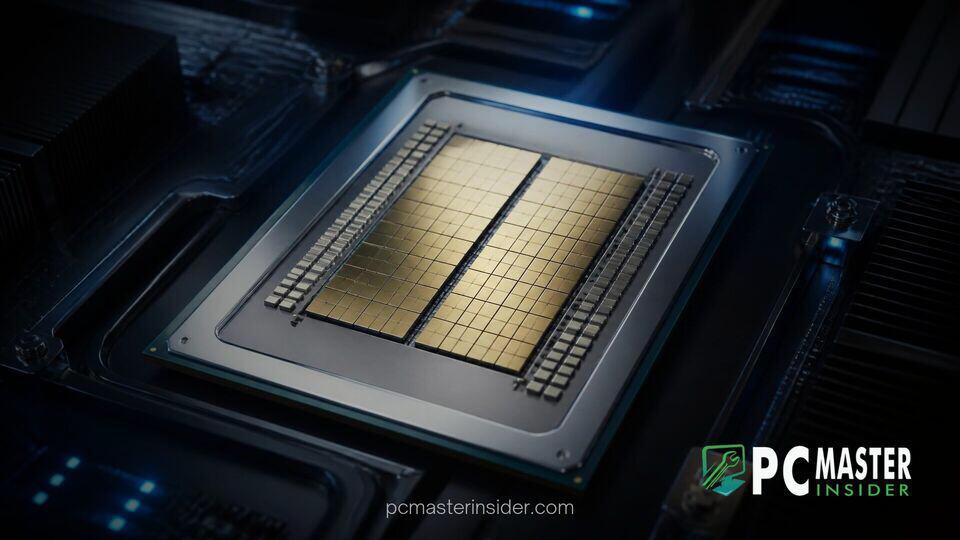
At the annual Hot Chips symposium, Intel delivered a comprehensive look at its next-generation data center architecture, code-named Diamond Rapids. Designed to replace existing Xeon lines, the new platform scales up to an impressive 256 Performance cores (P-cores) per socket, representing a massive leap forward in single-threaded power and compute density.
The announcement underscores Intel's renewed focus on reclaiming absolute leadership in high-performance computing, hyperscale cloud infrastructure, and enterprise artificial intelligence workloads. By leaning into pure performance silicon, the chipmaker aims to deliver unmatched parallel processing efficiency across modern data centers.
Intel Details Diamond Rapids Xeon Architecture at Hot Chips 2026
The presentation at Hot Chips focused heavily on the underlying architecture of the intel diamond rapids 256 p-cores hot chips revelation. Unlike dual-track approaches that mix efficiency and performance cores into hybrid configurations, the flagship Diamond Rapids enterprise processor is built purely with high-throughput P-cores. This design priority caters directly to compute-bound tasks such as complex mathematical simulations, real-time analytics, and large language model inference.
Intel achieved the staggering 256-core count by utilizing an advanced disaggregated chiplet approach. Leveraging the company's latest multi-die interconnect technologies, the processor links individual compute tiles to central I/O dies with minimal latency penalties. This modular setup allows Intel to maximize wafer yields while customizing chiplet combinations for specific market segments.
Key Specifications and 256 P-Core Configuration
Each individual P-core in the Diamond Rapids layout features significant architectural updates compared to preceding generations. Microarchitectural improvements include enlarged branch prediction buffers, expanded execution units, and optimized execution pipelines. These changes deliver higher instruction-per-clock (IPC) throughput while maintaining energy efficiency parameters required for enterprise server racks.
Furthermore, the 256 P-core architecture supports advanced instruction set extensions tailored specifically for machine learning acceleration. Enhanced matrix operations integrated directly into the core pipelines allow servers to run heavy AI training and vector operations without strictly relying on dedicated discrete accelerators.
Massive L3 Cache and Memory Bandwidth Enhancements
Scaling a processor to 256 performance cores requires an exceptionally robust memory subsystem to avoid bottlenecks. To address this challenge, Intel equipped Diamond Rapids with a massive shared L3 cache structure distributed across the compute tiles. This non-uniform memory access (NUMA) optimized interconnect ensures that each core maintains fast, low-latency access to cached datasets.
Complementing the expanded cache is next-generation system memory support. Diamond Rapids introduces multi-channel DDR5 memory controllers capable of reaching unprecedented transfer rates per channel. By significantly widening overall memory bandwidth, the platform guarantees that dense virtualized environments and in-memory databases receive steady, high-speed data feeds.
The expanded interconnect infrastructure also supports PCI Express 6.0 standards alongside the Compute Express Link (CXL) protocol. This enables seamlessly attached memory pools and accelerator expansion, aligning with the industry push toward composable server architectures.
Impact on High-Performance Computing and Data Center Markets
Intel's aggressive technical targets for Diamond Rapids arrive during a period of intense competition within the server processor landscape. Rival architectures have continually pressed for higher core counts, forcing silicon designers to rethink socket limits. With AMD reaching record market share numbers across various x86 segments in recent quarters, Intel's high-density server push is strategic.
Hyperscale cloud providers stand to benefit immediately from the core density offered by Diamond Rapids. Operating 256 P-cores on a single socket allows data center operators to consolidate hardware footprints, reducing rack space overhead, cooling requirements, and total cost of ownership. Enterprise customers running high-density virtual machines can host vastly more isolated instances per blade than previous hardware generations allowed.
Simultaneously, the industry focus on memory bandwidth directly addresses modern AI workloads where memory chip market growth dominates enterprise spending. By providing massive onboard cache and high-speed system memory access, Diamond Rapids positions itself as a strong standalone option for data-intensive processing.
Expected Availability and Next Steps for Intel Server Lineup
During the Hot Chips technical session, Intel representatives emphasized that Diamond Rapids represents a long-term foundation for the company's enterprise roadmaps. Engineering samples are expected to reach key hyperscale partners for early validation before broader commercial availability begins.
While system integrators prepare for the power and thermal profiles required by 256 P-cores, software ecosystems are already being optimized. Operating system developers and virtualization vendors are updating schedulers to cleanly manage hundreds of high-performance threads per socket without unnecessary thread migration overhead.
Ultimately, Intel's unveil at Hot Chips signals a clear statement of intent for the server market. By combining high IPC performance cores, advanced packaging, and massive memory bandwidth, the Diamond Rapids architecture sets a formidable benchmark for the future of enterprise compute.