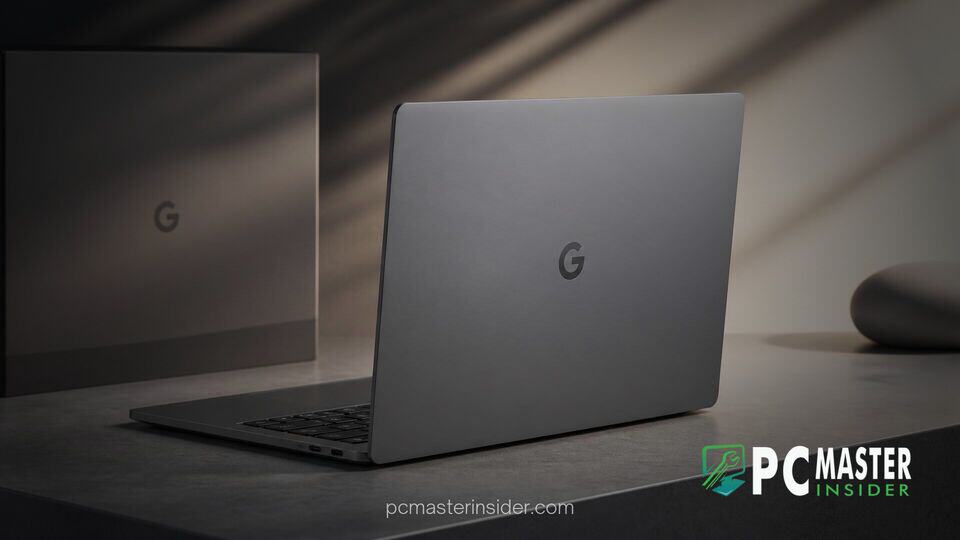
Google has officially confirmed that pre-orders for its highly anticipated Googlebook hardware category will open on September 21 at 9 a.m. Eastern Time. The announcement follows months of speculation after Google first unveiled its plans to transition into an Android-based laptop architecture deeply tied to Gemini artificial intelligence.
The company shared the date with users enrolled in product updates and updated its official landing page. While public orders will begin on September 21, Google continues to maintain secrecy around retail pricing and final delivery schedules for the first wave of consumer devices.
Google Sets September 21 Pre-Order Date for Googlebook Hardware
The confirmation of the googlebook pre orders launch date provides a clear timeline for consumers waiting to purchase Google's next-generation laptops. Following an initial preview at Google I/O earlier in the year, the platform represents a fundamental departure from traditional Chromebook designs. Rather than relying entirely on ChromeOS, Googlebook hardware runs on a modernized technology stack built directly on Android software.
Industry observers noted that the September 21 pre-order opening lands shortly after closed media showcases held in New York. While earlier press previews provided hands-on opportunities for tech journalists, public availability for retail reservations remains locked to the September 21 morning window. Buyers interested in placing orders will be able to do so directly through Google's online portal and through official manufacturing partner channels.
Key Features and Software Integration in the Googlebook Platform
At the center of the Googlebook platform is Gemini Intelligence, designed to operate natively across desktop tasks. Rather than functioning as a isolated web chatbot, Gemini features deeply integrated UI mechanisms. A primary highlight is Magic Pointer, a context-aware cursor feature that allows users to point directly at on-screen content and prompt Gemini to analyze, translate, or transform information without copying data into separate application windows.
Another major software feature introduced with the platform is Create My Widget. This tool enables users to generate custom desktop widgets through natural language prompts, pulling live data feeds from Google Workspace applications such as Gmail, Calendar, and Drive. To complement these cloud tools, Google launched a dedicated Gemini desktop app across competing desktop operating systems earlier this year, reinforcing its broader strategy to embed contextual assistant tools everywhere.
Cross-device connectivity also plays a prominent role in the software ecosystem. Through features like Cast My Apps and Quick Access, Googlebook hardware can mirror smartphone applications and access internal phone storage seamlessly, provided the connected mobile device operates on Android 17 or higher.
Hardware Ecosystem and Partner Manufacturers
Unlike proprietary single-vendor hardware launches, Google is launching the Googlebook initiative alongside prominent original equipment manufacturers (OEMs). The first wave of hardware partners includes Acer, ASUS, Dell, HP, and Lenovo. Early leaks and hardware filings reveal a wide spectrum of form factors, including thin-and-light ultrabooks equipped with Snapdragon X processors as well as higher-performance configurations powered by Intel chips.
A notable hardware signature across all official Googlebook devices is the return of the physical Lightbar, or Glowbar, positioned above the keyboard. Originally introduced on early Chromebook Pixel models, the light bar serves as a visual indicator for Gemini system activity, charging status, and contextual notifications.
While third-party hardware manufacturers are spearheading the initial device rollout, software optimization remains critical to the ecosystem's success. Tech companies across the industry continue to refine desktop and cloud experiences, much like how Microsoft expanded Windows 365 Cloud PC tools to streamline cloud workstation environments for enterprise users. Similarly, Google aims to make web, cloud, and mobile app workflows feel native on larger laptop displays.
Although hardware specifications point toward high-refresh-rate OLED screens and premium aluminum chassis for top-tier configurations, Google has yet to release full pricing structures for individual partner models. Detailed spec sheets and regional pricing tiers are expected to be fully disclosed when pre-orders go live on September 21.
Summary
The announcement of the September 21 pre-order date establishes the timeline for Google's ambitious laptop transition. By merging Android software foundations with native Gemini AI tools and broad OEM support from major PC vendors, Googlebook aims to establish a distinct category in the PC market. Complete details on pricing, regional availability, and shipping dates will become clear once pre-orders officially launch next week.