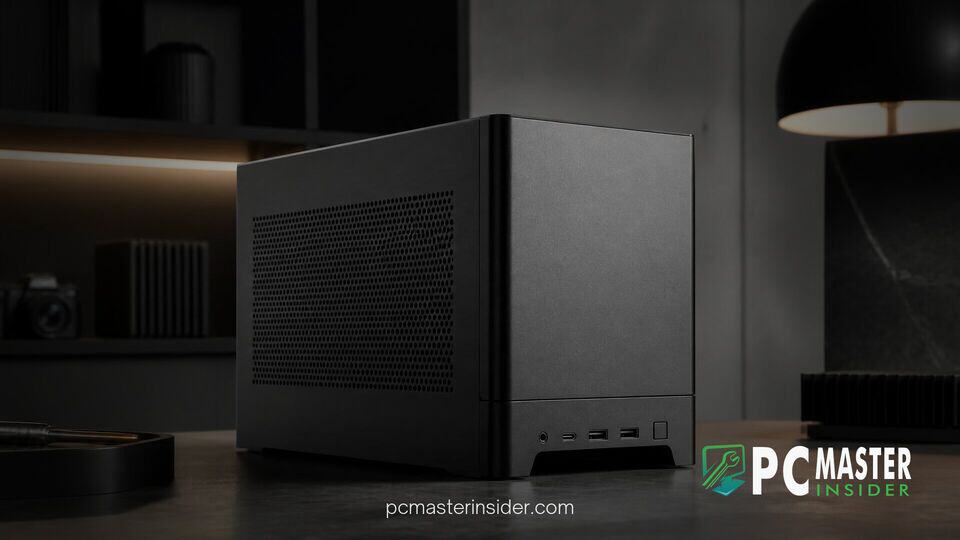
Framework has teased an upcoming desktop PC refresh featuring AMD's powerful Ryzen AI Max+ PRO processor paired with up to 192GB of unified memory. The announcement signals a significant performance boost for modular computing enthusiasts who require extreme hardware capabilities for local artificial intelligence and workstation tasks.
The upcoming system builds upon the company's commitment to user-repairable, customizable computing while pushing into high-end workstation territory. By integrating AMD's top-tier Strix Halo silicon, Framework aims to deliver massive compute density within a compact, maintainable chassis.
Framework Desktop Ryzen AI Max Pro 192GB Hardware Overview
Framework has teased a high-performance desktop PC refresh centered around AMD's flagship silicon and massive memory capacity. The preliminary details indicate a system capable of handling complex generative AI models, high-resolution video rendering, and intensive compile tasks right out of the box. By leveraging modern system-on-chip architectures, Framework offers workstation-grade capabilities without sacrificing modular repairability.
Framework Unveils Next-Gen Desktop PC Refresh
The teaser highlights Framework's ongoing push into higher-tier hardware segments. Originally recognized for modular laptops, the company has gradually expanded its ecosystem to support versatile desktop configurations and mainboard enclosures. This latest iteration targets demanding users who found earlier mobile-derived hardware constrained by power or memory limitations.
Industry observers note that offering a high-density desktop refresh reinforces Framework's position as a viable alternative to traditional pre-built workstations. Unlike rigid OEM configurations, Framework's modular layout allows owners to upgrade individual components, replace failing ports, and swap mainboards as future processing generations emerge.
Upgraded Ryzen AI Max+ PRO Chip and Memory Speeds
At the core of the new system is the AMD Ryzen AI Max+ PRO platform, built on advanced Zen 5 CPU cores combined with RDNA 3.5 graphics compute units and a dedicated XDNA 2 Neural Processing Unit (NPU). This integration provides hardware-level acceleration for complex machine learning tasks. Software optimization continues to improve across the ecosystem, particularly as software initiatives like AMD releases ROCm 10 with ROCm.AI framework bring enhanced tools to Windows and Linux desktop environments.
Equally notable is the platform's support for up to 192GB of high-speed unified RAM. Traditional desktop motherboards typically cap out at lower capacities when utilizing fast multi-channel memory modules, but the custom memory architecture used by Strix Halo enables massive pool allocations shared between CPU and GPU workloads. To maintain peak performance, memory selection will be critical, reminiscent of tuned desktop configurations where products like G.Skill Flare X5X DDR5 memory optimize bandwidth for AMD platforms.
Addressing Bandwidth Demands for Local AI Workloads
Running large language models (LLMs) and advanced image generation workloads locally requires both massive memory capacity and substantial memory bandwidth. Standard desktop PCs often suffer bottlenecks when offloading data from system RAM to dedicated graphics cards. The unified memory architecture of the Ryzen AI Max+ PRO eliminates this transfer penalty by allowing the integrated GPU to directly access the full 192GB memory pool.
This design makes local AI deployment far more accessible compared to multi-thousand-dollar enterprise hardware. While extreme enterprise systems like Nvidia's GB300 DGX Station workstation cater to massive corporate budgets, Framework's approach offers independent developers, researchers, and power users high capacity at a fraction of the hardware cost.
Furthermore, running these heavy workloads locally provides software flexibility across operating systems. Developers frequently rely on containerized environments or virtualization to run Linux-native machine learning pipelines, a trend echoed by reports that Ubuntu on Windows 11 WSL is outpacing native desktop growth among technical users.
Modularity and Upgradability Expectations
Consistent with Framework's core values, the new desktop system is expected to retain an easily accessible internal layout. Users can look forward to swappable expansion cards for display outputs, USB ports, and networking choices. The company's mainboard ecosystem also ensures that owners of previous chassis can potentially upgrade their internal mainboard without discarding existing power supplies, enclosures, or peripheral setups.
Security and enterprise management will also play a key role, as the PRO variant of AMD's silicon includes hardware encryption, remote management, and secure boot technologies designed for business deployments. Systems deployed in corporate settings will easily integrate into modern deployment suites, similar to how enterprise tools like Windows Autopilot hardware device association streamline IT administration.
While official pricing and detailed release dates remain under wraps, Framework's teaser confirms that complete specifications and pre-order availability will be shared in the coming weeks. The system represents a major milestone for modular computing, demonstrating that high-end AI performance and user repairability can coexist seamlessly in a modern desktop format.