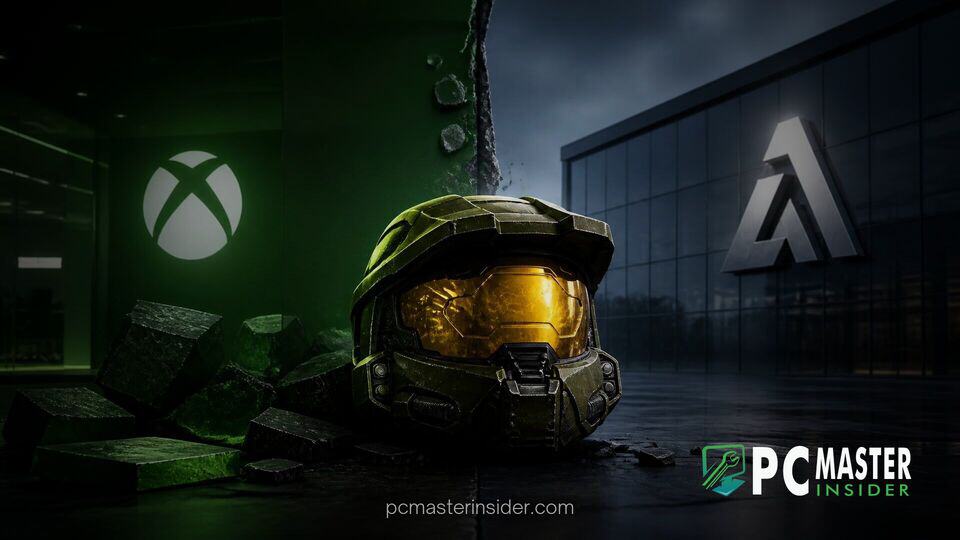
In a major realignment of its first-party publishing strategy, Microsoft has announced a broad structural reset of its Xbox gaming business. The initiative involves 268 position cuts across first-party teams and management, along with sweeping studio consolidations designed to streamline game development across key intellectual properties.
The headline change in this corporate transition is the transfer of Microsoft's iconic sci-fi shooter series, Halo, to Call of Duty publisher Activision. A newly formed, standalone unit within Activision will lead development on the next mainline entry in the franchise, while remaining core teams across Xbox Game Studios, Bethesda, and King undergo structural integration.
Xbox Studio Reorganization Halo Activision: Key Changes and Overview
Under the published restructuring plan, Microsoft is reducing 268 positions across Halo Studios, central Xbox Game Studios management, and shared corporate support teams. This marks the next phase of a larger business reset that began earlier in the year, which Microsoft confirms is now approximately 75 percent complete.
As part of the operational shift, Activision is taking over direct oversight of several established Xbox studios, including World's Edge (Age of Empires) and Rare (Sea of Thieves). Halo Studios, formerly known as 343 Industries, will transition into a reduced support role tasked with sustaining live service infrastructure, community operations, and esports for existing Halo titles. Development of the next major Halo project will be handled by a purpose-built Activision studio team operating entirely separate from the annual Call of Duty development pipeline.
The reorganization extends well beyond the Halo franchise. Key structural highlights include:
- Bethesda Integration: Obsidian Entertainment is being aligned directly under Bethesda Softworks. Obsidian will maintain work on its active catalog, including Grounded, while co-developing an upcoming project in the Fallout universe alongside Bethesda Game Studios.
- Racing and RPG Studio Mergers: Playground Games and Turn 10 Studios are merging into a unified organizational unit dedicated to managing both the Forza and Fable franchises.
- Mobile Expansion: King, the mobile gaming giant acquired through the Activision Blizzard purchase, will absorb Microsoft Casual Games to consolidate casual and mobile live-service publishing.
- Independent Divestitures and Studio Status: Compulsion Games, Double Fine, and Undead Labs have transitioned out of direct first-party management with their respective IP rights intact. Undead Labs will launch State of Decay 3 on Xbox Game Pass via an external publishing arrangement. Meanwhile, discussions regarding the future of Ninja Theory and Arkane Studios remain ongoing.
Major Xbox Restructuring Brings New Layoffs and Studio Mergers
The decision to consolidate operations follows months of evaluation across Microsoft's growing gaming portfolio. After acquiring ZeniMax Media in 2021 and finalizing the $68.7 billion purchase of Activision Blizzard in late 2023, Microsoft became one of the largest video game publishers in the world. However, managing dozens of disparate development studios created operational overlaps and organizational friction.
In an internal memorandum shared with staff, Xbox Chief Content Officer Matt Booty outlined the rationale behind the operational reset. Booty explained that operating fewer overarching business units allows leadership to streamline publishing pipelines, reduce administrative overhead, and align studios that already collaborate closely on shared technology.
"The actions completed, inclusive of studio divestitures, bring us roughly three-quarters of the way through our previously announced restructuring," Booty stated in the communication. "I am deeply grateful for what our colleagues have built, and I know how difficult today will be for those leaving and the teams around them."
This internal corporate streamlining mirrors broader trends across Microsoft's engineering divisions. Over the past year, the company has frequently updated core software products and enterprise tools, ranging from deployment changes like expanding Secure Boot certificate deployment in Windows 11 26H1 to fixes for productivity platforms like the Excel copy and paste bug fix in recent Windows updates. Across both consumer software and interactive entertainment, executive leadership has placed a heavy premium on resource efficiency and structural simplification.
Halo Development Shifts to a Dedicated Activision Team
The decision to transfer Halo development away from its dedicated first-party studio represents one of the biggest strategic shifts in Xbox history. Bungie originally created Halo before splitting from Microsoft in 2007. Microsoft subsequently established 343 Industries to manage the franchise, releasing Halo 4, Halo 5: Guardians, and 2021's Halo Infinite. While these titles achieved commercial success, prolonged development cycles, engine transitions, and live-service hurdles raised questions about long-term franchise management.
By leveraging Activision's extensive experience with large-scale first-person shooters, Microsoft aims to revitalize its core intellectual property. Activision President Rob Kostich emphasized that the new team will respect the heritage of the franchise while delivering a modern gameplay experience.
"For Halo, our goal is clear: make the greatest Halo game ever, worthy of its universe and legacy, while staying true to what made players love it in the first place," Kostich said in an official statement. "We have already begun assembling a purpose-built team, unique in capability and talent, ready and excited to deliver this next chapter."
Industry analysts note that assigning Halo to Activision allows Microsoft to utilize the high-capacity development infrastructure that built the Call of Duty franchise. However, executives reiterated that the team working on Halo will function as an isolated production unit to ensure Call of Duty schedules remain unaffected.
Forza, Fable, and Bethesda Studios Realigned Under Consolidation
Merging Playground Games and Turn 10 Studios formalizes a partnership that spans over a decade. Turn 10, creators of the Forza Motorsport series, originally built the proprietary ForzaTech engine that powered Playground Games' critically acclaimed Forza Horizon series. Unifying both developers under a single banner is expected to optimize engine development, asset sharing, and production workflows for future racing titles as well as Playground's upcoming Fable reboot.
Similarly, bringing Obsidian Entertainment under the Bethesda umbrella creates a unified structure for Western RPG development within Xbox. Obsidian previously developed 2010's fan-favorite Fallout: New Vegas while operating as an independent contractor. Uniting Obsidian with Bethesda Softworks creates a direct framework for collaborative development on future Fallout titles alongside ongoing support for Obsidian's proprietary franchises like Grounded.
Strategic Context Behind the Ongoing Xbox Business Reset
The restructuring comes amid a shifting broader video game industry landscape. Rising game development costs, extended production cycles lasting five to seven years, and flat hardware sales across the console market have forced platform holders to re-evaluate their operational costs.
Microsoft's multi-platform publishing strategy has evolved significantly following its major acquisitions. Rather than keeping all first-party titles strictly exclusive to Xbox hardware, the company has expanded its release footprint across PC, cloud platforms, and rival console ecosystems. Operating under broader publisher divisions like Activision Blizzard and Bethesda allows Microsoft to manage budget allocations and distribution pipelines more like a traditional multi-platform publisher.
At the same time, Microsoft's central technology investments continue to heavily influence its gaming ecosystem. Enterprise platforms, advanced server networks, and AI integration initiatives remain top corporate priorities. This focus on backend stability and performance is evident across Microsoft's desktop ecosystem, where engineers routinely test performance improvements such as Windows 11 26H1 Preview taskbar customization features, deploy updates to secure services, or work on Windows 11 legacy dialog box modernization. Applying that same focus on core architectural efficiency to Xbox Studios reflects a broader mandate across all Microsoft divisions.
What the Restructuring Means for Upcoming First-Party Games
For players and Xbox Game Pass subscribers, the immediate impact of the studio reorganization will vary by franchise. Active live-service titles like Sea of Thieves, Age of Empires, and Halo Infinite will continue to receive community updates, seasonal events, and technical maintenance under their updated support frameworks.
Unannounced projects in early production may see schedule adjustments as studio leadership realigns teams and production tools. The shift of the next Halo project to a new Activision group suggests that the next mainline game remains several years away from release. However, consolidations between Turn 10 and Playground, as well as Bethesda and Obsidian, are intended to protect active development timelines for anticipated releases like Fable and upcoming Fallout content.
As Microsoft completes the final phase of its organizational reset, Xbox's gaming division enters a new era defined by consolidated studio leadership, multi-platform publishing scale, and a unified approach to managing its most valuable entertainment franchises.