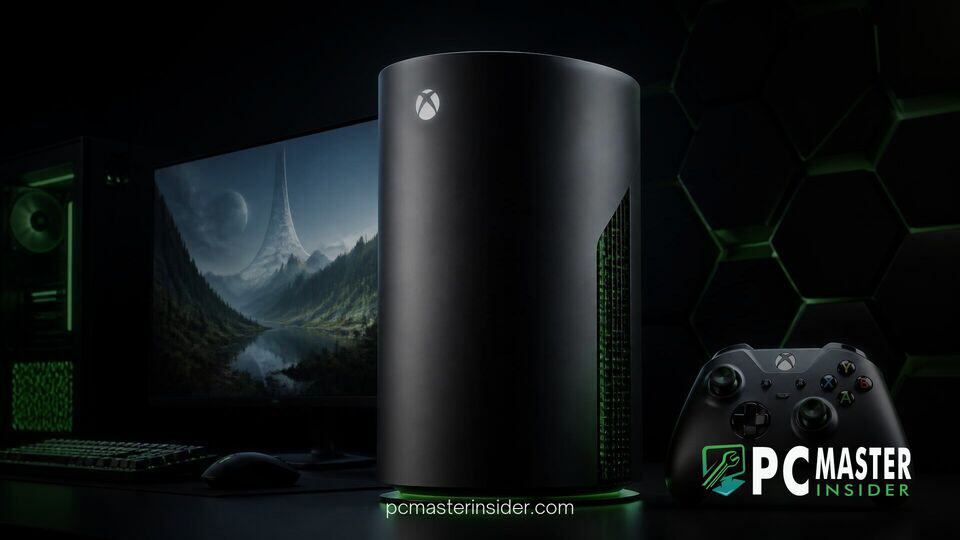
Microsoft has detailed new structural and architectural aspects of Project Helix, its upcoming next-generation gaming hardware. Executives confirmed that the device is being built primarily as a living-room console while integrating direct access to personal computer game libraries.
The clarification comes directly from official documentation published during company anniversary activities, resolving months of speculation regarding whether the upcoming hardware would operate as a conventional console or a dedicated Windows desktop machine.
Xbox Project Helix PC Game Support and Console Design Focus
Microsoft has clarified that Project Helix is engineered as a dedicated game console capable of playing PC titles, rather than a personal computer that happens to run console software. The hardware design aims to eliminate friction such as operating system maintenance, driver updates, and manual display configuration, preserving the instant plug and play experience typical of traditional console gaming.
In an interview featured in the Xbox 25th Anniversary Magazine, Jason Ronald, Vice President of Next Generation at Xbox, outlined the design philosophy behind the upcoming machine. Ronald emphasized that the primary goal of the development team is to create an intuitive experience that removes long-standing barriers between platform ecosystems.
"We are very clear on the design goal: Helix is designed to be a console that is also capable of playing games from your PC. It is not a PC that can also play console games," Ronald stated in the publication. "The goal is making it easy, intuitive, and instant to access my games. But if you are a hardcore gamer or a power user who wants to have that deeper level of customizability across settings and performance options, you can absolutely go do it."
Xbox Clarifies Console-First Vision for Project Helix
The explicit positioning of Project Helix as a console first addresses wide speculation within the interactive entertainment industry. Following initial announcements at the Game Developers Conference earlier in the year, many analysts and fans hypothesized that Microsoft might release a standardized Windows 11 PC enclosed in a console chassis. Instead, Microsoft is opting for a custom console operating environment designed to maintain quick boot times and seamless navigation.
This design direction builds upon feedback gathered from recent initiatives across mobile handhelds and desktop interfaces. While software improvements like the Xbox PC app update featuring 60% faster launch times helped streamline the desktop environment, Project Helix relies on a custom system architecture tailored specifically for TV and monitor output without forcing users into desktop management.
Console Interface and PC Storefront Compatibility
By prioritizing a console interface, Microsoft intends to shield casual players from technical hurdles such as background process contention or manual driver installations. However, Microsoft has not yet disclosed the exact mechanism through which non-Xbox storefronts or third-party digital distribution platforms will function on the machine.
Industry observers note that integrating PC games into a streamlined console dashboard requires robust virtualization or system-level translation layers. Microsoft has refrained from confirming whether specific storefronts like Steam or Epic Games Store will feature native apps or run via isolated container technology.
Performance Tuning and User Controls
Despite focusing on accessibility, Microsoft is not restricting advanced performance tweaking. Players who prefer to adjust graphical presets, cap frame rates, or tweak rendering resolutions will have access to granular settings menus. This hybrid software design aims to satisfy both casual players who expect immediate access and enthusiast gamers accustomed to PC level customization.
Maintaining high rendering performance across varied PC titles also hinges on system memory efficiency. Recent technical improvements in desktop environments, such as how Windows 11 memory updates boost 8GB PC multitasking, showcase Microsoft's broader effort to optimize software resource allocation for intensive gaming workloads.
Four-Generation Backward Compatibility and Library Progression
Beyond introducing PC software support, Project Helix is designed to preserve existing console investments. Microsoft confirmed that the upcoming system will support games spanning four previous generations of Xbox hardware, allowing players to carry forward their digital purchases, save data, and achievement history without interruption.
Ronald explained that unifying player libraries across both legacy hardware and PC platforms is central to the project's long-term value proposition. By removing arbitrary platform boundaries, players can access their catalog instantly upon logging into the device.
This commitment aligns with wider industry trends focused on game preservation and long-term library continuity. Similar preservation efforts can be seen across the industry, such as when EA released 25 classic PC games on Steam with modern operating system compatibility, ensuring older titles remain playable on new hardware setups.
Hardware Timeline and Expected Next Steps
Under the hood, Project Helix utilizes a custom system-on-chip developed in partnership with AMD. The architecture is designed to support advanced DirectX features, enhanced hardware-accelerated ray tracing, and next-generation neural rendering technologies like FidelityFX Super Resolution.
Microsoft previously indicated that early alpha development hardware is scheduled to reach game creators in 2027. The company has not yet announced a final retail release date, consumer pricing structure, or complete hardware specifications. Further details regarding software launcher integration and third-party developer support are expected as development hardware reaches external studios.
Project Helix represents a strategic shift for Microsoft as it seeks to bridge console accessibility with the expansive world of PC gaming. By establishing a console-first foundation that plays PC titles natively, the company aims to broaden its hardware appeal while preserving user simplicity.