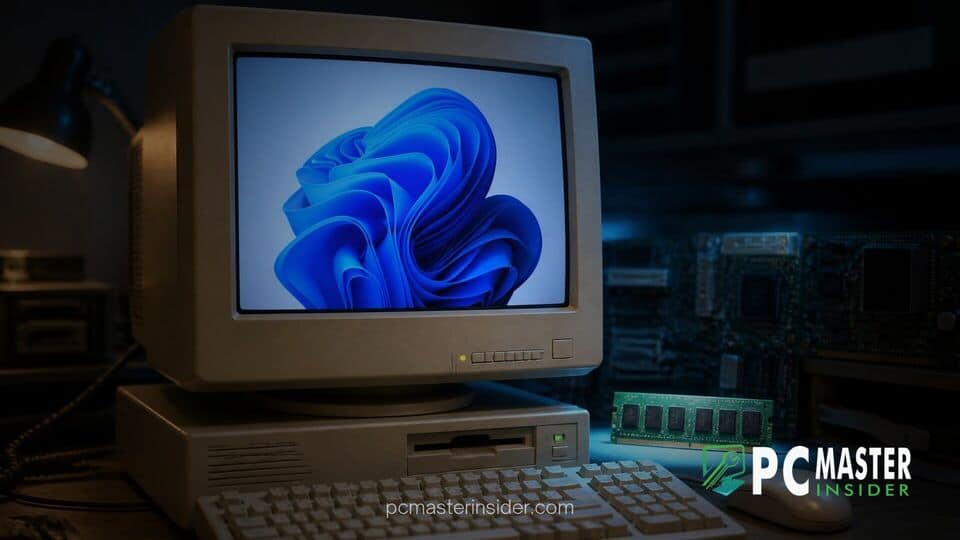
A software developer known for creating lightweight modifications of Windows operating systems has achieved a remarkable milestone by booting Windows 11 26H2 on a system equipped with only 128MB of RAM. The feat operates at roughly 3.125 percent of Microsoft's official minimum hardware requirement of 4GB.
The achievement, published by developer NTDEV, demonstrates how far the underlying core of the operating system can be reduced when non-essential background processes, services, and software packages are removed. Although far from practical for daily computing, the experiment highlights the architecture's core modularity under extreme constraints.
Developer Runs Windows 11 on 128MB RAM
The experiment involved booting a severely stripped-down modification of Windows 11 version 26H2 on a system with only 128MB of available system memory. Microsoft officially stipulates that Windows 11 requires a 64-bit processor, at least 4GB of RAM, and TPM 2.0 security features to run natively. NTDEV managed to bypass these baseline hardware checks and load the operating system into memory that is 32 times smaller than required by official guidelines.
Despite operating under severe resource scarcity, the system successfully initialized the core desktop interface, File Explorer, the Start menu, and basic native utilities such as Notepad. The project builds upon earlier low-memory records by the developer, who previously demonstrated Windows 11 running on 176MB of RAM. To achieve this new threshold, the OS was trimmed to its absolute essentials, removing vast portions of the standard user interface and background architecture.
System Modifications and Component Trimming
To reduce the memory footprint so drastically, the developer relied on aggressive component removal techniques similar to those used in the popular Tiny11 project. Windows Update services, servicing stack drivers, telemetry agents, and pre-installed modern UWP applications were entirely eliminated from the installation image. Furthermore, standard background tools like the modern Task Manager were replaced with legacy, lightweight equivalents to prevent excessive memory allocation during startup.
Resource management efforts like this often run parallel to official developer efforts to optimize memory footprints in software. For instance, tools like native WinUI controls help developers reduce desktop app memory footprints, proving that efficiency remains a core goal across the software ecosystem. In NTDEV's extreme experiment, removing non-critical system components allowed the kernel to initialize and allocate what little memory remained strictly for core operational processes.
Impact on System Usability and Desktop Performance
While the achievement is an impressive technical milestone, it comes with major trade-offs in terms of system usability. NTDEV acknowledged that running Windows 11 under such severe constraints makes the system painfully slow, with response times lagging significantly behind standard hardware configurations. Basic tasks like opening File Explorer or launching lightweight text editors take considerable time, as the system constantly struggles to manage kernel routines within the tiny memory pool.
Operating systems running with inadequate memory allocation frequently suffer from severe performance hits or system freezes. Microsoft engineers have previously explained why Task Manager freezes during heavy Windows 11 CPU load, noting how thread scheduling and resource starvation degrade responsiveness under pressure. In a similar vein, software optimizations often scale down capabilities when memory is constrained; for example, Microsoft Teams Efficiency Mode lowers video quality on low-RAM PCs to keep system operations stable. In this 128MB test environment, the lack of headroom means any multitasking immediately stalls system performance.
Background on NTDEV and Lightweight Windows Projects
NTDEV is well known within the tech community for developing Tiny11, a project designed to offer a lightweight version of Windows 11 by stripping bloatware and unnecessary system features. The developer recently expanded on these concepts with proof-of-concept builds like Pico11, which squeezed an entire Windows 11 installation ISO into less than 700MB, allowing it to fit onto a standard CD-R disc.
Modifying system components to squeeze more performance or run on unsupported hardware remains a popular topic among enthusiasts. Many users utilize custom installation modifications or third-party tools to bypass Windows 11 setup requirements. While Microsoft regularly introduces user experience updates, such as when Microsoft adds customizable right-click context menu to Windows 11, community developers often focus on stripping away non-essential desktop features to maximize hardware capabilities.
In summary, NTDEV's demonstration of booting Windows 11 26H2 on 128MB of RAM serves as an impressive conceptual experiment rather than a daily driver operating system. It underscores how much overhead modern features add to desktop operating systems and proves that, at its core, the Windows kernel remains surprisingly flexible when stripped down to its bare fundamentals.