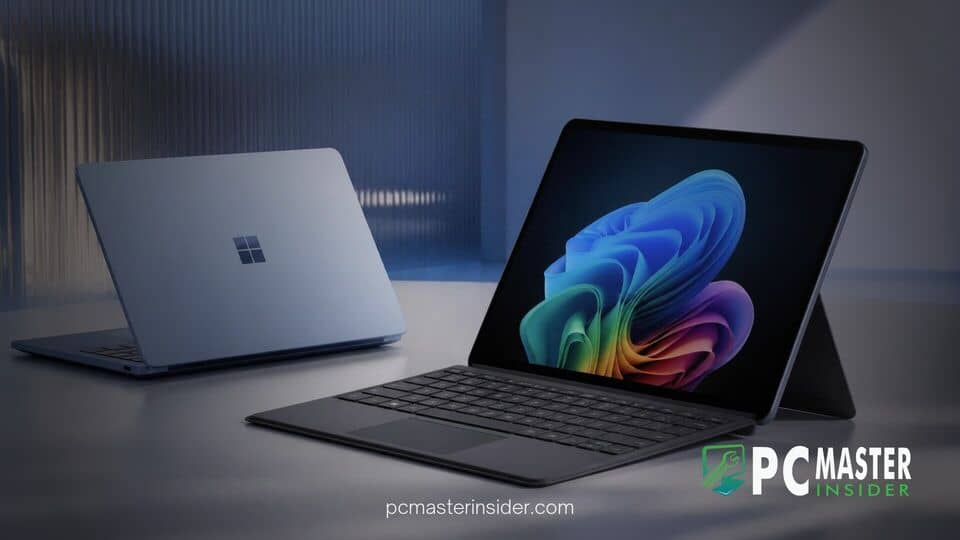
Microsoft officially unveiled refreshed versions of its entry-tier ultraportable PCs, equipping the new 12-inch Surface Pro and 13-inch Surface Laptop with Qualcomm Snapdragon X2 Plus processors. The hardware updates bring significant performance gains across local artificial intelligence tasks, graphical rendering, and overall battery efficiency while preserving the compact form factors of both devices.
Alongside the hardware announcements, Microsoft highlighted deep co-engineering efforts with Qualcomm designed to optimize Windows 11 Copilot+ capabilities on ARM architecture. The new models are scheduled to hit retail shelves and online storefronts starting October 13.
Microsoft Expands Surface Lineup with Snapdragon X2 Plus
Performance Gains, Battery Life Improvements, and NPU Enhancements
The updated 12-inch Surface Pro (2nd Edition) and 13-inch Surface Laptop represent a major architectural leap over their predecessors, which relied on first-generation Snapdragon X Plus processors. According to official engineering benchmarks published by Microsoft, the transition to the Snapdragon X2 Plus yields up to 17 percent faster performance in everyday Microsoft Office productivity workloads. Graphical throughput sees an even larger jump, with integrated Qualcomm Adreno graphics delivering more than 60 percent faster performance compared to earlier models.
Energy efficiency receives a welcome boost as well. Microsoft estimates that the new silicon architecture enables up to 18 percent better battery efficiency, allowing the Surface Laptop 13-inch to push overall battery runtimes further during active daily use. Meanwhile, the passively cooled 12-inch Surface Pro tablet rates for up to 15.5 hours of video playback and up to 11.5 hours of active web browsing on a single charge.
The most substantial upgrade arrives in local AI processing power. The Hexagon Neural Processing Unit (NPU) integrated into the Snapdragon X2 Plus yields an 80 TOPS (Trillions of Operations Per Second) rating. Microsoft states this allows up to 95 percent faster local AI inferencing compared to the previous generation. This expanded capacity empowers Windows 11 to run real-time generative capabilities, advanced background image handling, and local language models with lower latency and minimal impact on central processor cycles.
Engineering Qualcomm Silicon for Compact Surface Hardware
Key Features of the New Surface Pro and Surface Laptop
Integrating high-performance arm-based silicon into small-footprint devices required deep collaboration between Microsoft and Qualcomm engineering groups. Hardware designers focused on optimizing thermal envelopes and power distribution so thin chassis designs could maintain sustained operational performance without sacrificing quiet operation.
"Surface is hardware built to bring the best of Microsoft to life," Microsoft stated during the announcement at Qualcomm's Snapdragon Summit. "That work starts long before the chip is finished. Surface engineers partner with Qualcomm Technologies during silicon development to help make sure Snapdragon X2 is tuned for the realities of thin, light PCs: sustained performance, efficient power use, quiet thermals and responsive on-device AI".
Beyond internal silicon upgrades, both devices receive physical display enhancements. The Surface Pro 12-inch and Surface Laptop 13-inch feature 500-nit displays, representing a 25 percent increase in peak screen brightness over prior generations for better outdoor visibility.
The 12-inch Surface Pro retains its fanless 2-in-1 design, weighing just 686 grams with a thickness of 7.8mm. It incorporates a 2,196 x 1,464 PixelSense LCD with a smooth 90Hz refresh rate, dual USB-C ports, Wi-Fi 7, and support for the optional Surface Slim Pen and detachable keyboard covers. To complement stylus workflows, Microsoft also introduced Ink Canvas, a pen-first application designed to convert hand-drawn diagrams and sketches into structured text and digital assets.
The Surface Laptop 13-inch retains its ultraportable clamshell chassis weighing 2.7 pounds (1.22 kg). Configured with up to 24GB of RAM and fast UFS storage options, the laptop is built for mobile professionals who require a traditional typing form factor without carrying extra bulk.
Microsoft's ongoing push into ARM-based computing comes alongside continuous system updates for the operating system itself. Users managing enterprise environments or configuring network settings on modern Windows builds can stay updated on ongoing OS maintenance, such as how Microsoft warns September Windows 11 updates break enterprise Always On VPN connections, or how Microsoft confirms Windows 11 File History backup bug in September update releases.
Market Availability and Ecosystem Outlook for ARM-Based PCs
With hardware specs escalating and global component pricing facing upward pressures across the PC industry—much like how XMG raises laptop prices as DDR5 SO-DIMM RAM costs continue to surge—Microsoft has adjusted entry pricing for its refreshed lineup. The Surface Pro 12-inch (2nd Edition) starts at $1,150, while the Surface Laptop 13-inch opens at $1,199. Both systems will be officially available beginning October 13.
To complement the new computers, Microsoft also introduced an updated Surface Mouse featuring integrated haptic feedback, giving users subtle tactile responses during navigation and gesture inputs.
The release underscores Microsoft's commitment to shifting mainstream Windows computing toward power-efficient ARM architectures. By standardizing 80 TOPS NPUs across its compact lineup, Microsoft ensures that even its most portable entry-premium devices can run advanced Copilot features locally without depending exclusively on cloud processing. As Windows 11 continues to evolve, features like AI integration and system maintenance are constantly refined; users interested in customizing their software environment can check our guide on how to completely disable Microsoft Copilot in Windows 11 or read about how Microsoft overhauls Windows 11 Start menu with new customization controls.
With improved battery endurance, brighter displays, and vastly accelerated local AI performance, the new Snapdragon X2 Plus Surface devices offer a compelling upgrade path for users seeking ultraportable Windows hardware.