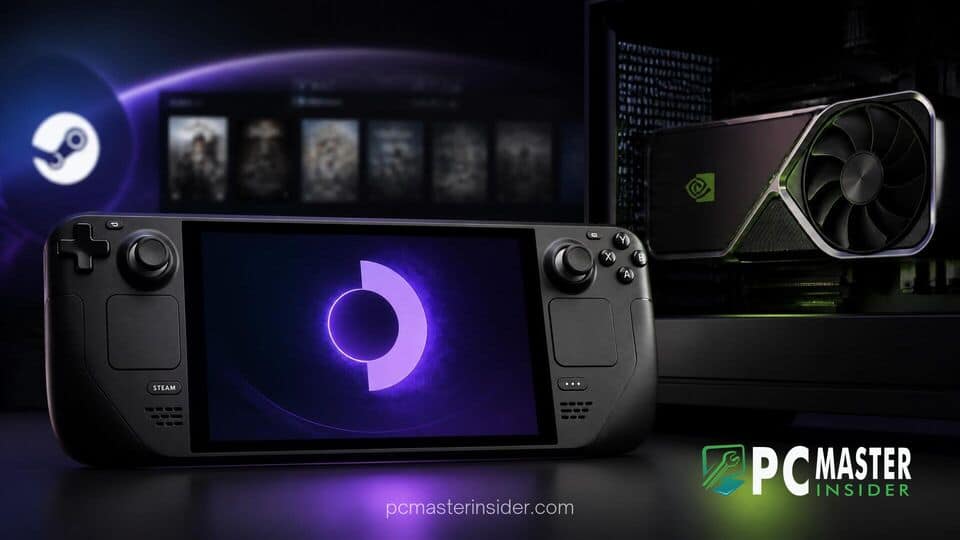
Valve has taken a significant technical step toward making SteamOS a universal operating system for desktop gaming PCs. Software engineers at the company confirmed that NVIDIA graphics drivers have been enabled directly within the primary development branch of SteamOS, allowing select GeForce graphics cards to boot and run on internal builds.
While the feature remains restricted to internal testing and development trees, this integration marks the first time Valve has natively compiled NVIDIA graphics drivers into the core system image, moving beyond the AMD-exclusive hardware focus that defined the Steam Deck ecosystem.
steamos nvidia gpu driver support
The addition of steamos nvidia gpu driver support inside Valve's primary codebase opens the door for mainstream desktop adoption. Valve developer Pierre-Loup Griffais confirmed in recent technical interviews that enabling GeForce compatibility is currently a top priority for the engineering team. By incorporating driver packages into the main branch, developmental images can now initialize display pipelines and render games directly on discrete NVIDIA hardware without requiring third-party modifications or custom Linux kernels.
According to Valve, early builds allow specific generations of GeForce cards to "light up" and run games. However, engineers caution that significant optimization work remains before the software reaches public beta or stable distribution channels.
Valve Enables NVIDIA Driver Support in SteamOS Development Branch
Historically, Valve's flagship Linux operating system was designed strictly around custom AMD APUs and open-source Mesa graphics drivers. Operating systems built on Valve's immutable root architecture rely on A/B system updates, making manual graphics driver installation impractical for general consumers. Integrating proprietary driver modules directly into the system image resolves this architectural barrier.
The news comes at a critical time for PC gaming hardware. Market research indicates that desktop GPU shipments reached four-year highs, with NVIDIA commanding approximately 90 percent of discrete graphics card sales. Valve's Steam Hardware Survey reflects similar trends, where GeForce GPUs consistently account for more than 70 percent of active gaming systems. Delivering out-of-the-box compatibility for NVIDIA hardware is therefore essential if Valve hopes to position SteamOS as a viable alternative to Windows 11.
Expanding Platform Compatibility Beyond AMD Hardware
Prior to this development, gamers seeking a console-like experience on desktop PCs with green-team hardware had to rely on community-maintained Linux distributions such as Bazzite or Nobara. These community projects handled the complex orchestration of NVIDIA kernel modules, Wayland compositors, and Gamescope session management.
By bringing native driver compilation in-house, Valve aims to offer a standardized experience across all major hardware vendors. Intel Arc support was quietly expanded in recent kernel updates, and the inclusion of NVIDIA drivers completes the foundational triad of modern graphics silicon. Gamers on GeForce platforms stand to gain access to hardware-accelerated features such as Deep Learning Super Sampling (DLSS), which has historically required careful configuration under Linux environments.
NVIDIA users have frequently relied on software maintenance updates, such as the latest NVIDIA App updates with DLSS controls, to optimize games on Windows, making parity on Linux a major point of interest.
Current Performance Gaps and Implementation Roadmap
Despite reaching the milestone of booting discrete cards, Valve developers noted that performance parity is still a work in progress. Griffais explained that a performance rift exists between the current state of SteamOS driver implementation and the maximum performance achievable by NVIDIA GPUs on established desktop platforms.
Engineers are working on mitigating frame pacing issues, Wayland compositing bugs, and display pipeline synchronization errors. When driver updates on other platforms encounter issues, manufacturers often issue immediate patches, as seen when NVIDIA released a GeForce hotfix driver to correct desktop flickering bugs. Valve is striving for a similar level of reliability within SteamOS before releasing ISO images to the public.
What SteamOS NVIDIA Support Means for Custom Gaming PCs
Native driver integration means custom PC builders will soon be able to convert standard gaming rigs into dedicated living room consoles running official Valve software. The ability to leverage GeForce features directly inside Valve's Game Mode interface could shift market dynamics for home-theater PCs and small-form-factor builds.
Furthermore, robust first-party Linux support from Valve provides a safety net for gamers affected by vendor lifecycle changes, such as when NVIDIA transitions Windows 10 driver support to security-only updates. A streamlined SteamOS ISO would give existing GeForce hardware extended utility without forcing upgrades to newer Windows environments.
While Valve has not announced a public release date for official SteamOS desktop installers, bringing NVIDIA drivers into the main development tree signifies that the most stubborn hurdle in Linux gaming distribution is actively being resolved.