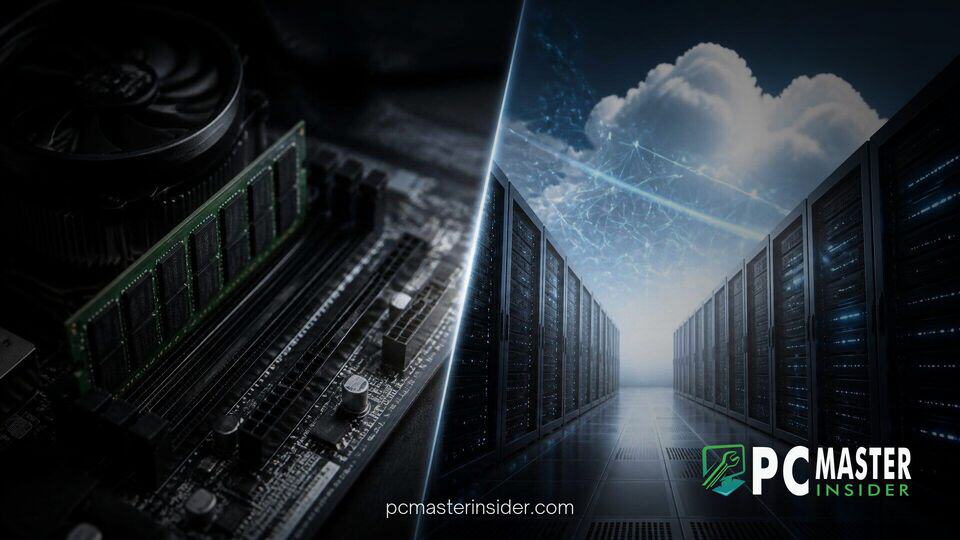
OpenAI Chief Executive Officer Sam Altman has sparked intense debate across the tech hardware community by criticizing the allocation of system memory in consumer PCs. Speaking during an appearance on the Cheeky Pint podcast, Altman argued that dedicating vast amounts of global dynamic random access memory (DRAM) to personal computers is inefficient given current semiconductor constraints.
His statements come as hardware manufacturers and cloud infrastructure providers compete for limited DRAM supplies, directly affecting consumer component pricing. Altman suggested that cloud data centers offer far superior resource utilization compared to individual desktop rigs or consumer laptops.
Sam Altman Consumer PC RAM Cloud Allocation Summary
In his interview, Altman framed the current global memory distribution as a structural bottleneck for artificial intelligence development. He noted that millions of personal computers sitting idle or underloaded waste memory chips that could otherwise power cloud data centers continuously. With memory supply severely constrained, Altman emphasized that prioritizing centralized cloud hubs yields maximum efficiency for global compute demands. His prospective vision calls for shifting memory capacity toward cloud infrastructure rather than tying up silicon in localized hardware.
Sam Altman Sparks Controversy Over Consumer PC Memory Allocation
During the podcast discussion, Altman addressed the growing consumer enthusiasm around running open weight AI models directly on desktop machines. He questioned the underlying efficiency of distributing high capacity memory across millions of home setups.
"From a global allocation perspective, actually, it's quite terrible to have everybody have a bunch of the world's limited supply of DRAM sitting in their own computer and being used 5% of the time," Altman stated during the conversation. "You want maximum utilization in the cloud if you're trying to deal with this very supply-constrained environment. And somehow many people's intuition is the opposite of that."
Altman's perspective reflects the huge infrastructure demands facing frontier AI companies. Data center operators continue to absorb massive memory orders to handle training runs and real-time user requests. In an market where semiconductor foundries struggle to satisfy total market demand, Altman views idle consumer memory as an underutilized global asset.
Arguments for Centralized DRAM Utilization in Cloud Data Centers
From an operational standpoint, centralized data centers operate near full capacity around the clock. Server-grade hardware handles multiplexed workloads from millions of global users simultaneously, ensuring that every gigabyte of memory contributes directly to active compute tasks. Large cloud providers can scale workloads across thousands of interconnected nodes, optimizing bandwidth and latency in ways individual desktops cannot match.
Infrastructure providers like CoreWeave have launched integrated platforms to streamline continuous AI model pipelines across high density cloud environments. Furthermore, major technology firms continue expanding enterprise deployments, as evidenced by recent financial reports showing Azure cloud and AI demand driving revenue surges. To industry leaders managing large clusters, concentrating DRAM within cloud facilities represents the fastest route to scaling complex intelligent agents and next generation foundational models.
Reactions from PC Gamers and Hardware Enthusiasts
Altman's comments drew immediate backlash from PC builders, gamers, and hardware enthusiasts. Skeptics pointed out that system memory in personal computers performs essential tasks beyond running artificial intelligence models. Multitasking, video editing, 3D rendering, and modern video games heavily rely on local system RAM. Framing desktop memory primarily as idle AI compute overlooks the actual daily usage patterns of personal computing hardware.
The broader consumer hardware market is already enduring pricing pressures linked to enterprise demand. Component shortages and memory supply pivots toward enterprise clients have created upward pricing pressure across consumer electronics. Industry executives have warned about these market shifts, with major vendors like Acer warning that consumer PC prices could rise significantly due to surging component costs and tight supply chains. Similarly, supply redirections have hit graphics hardware, as reports indicate Nvidia prioritizing enterprise silicon allocations over flagship consumer GPUs.
Many PC enthusiasts view Altman's comments as an dismissal of personal hardware ownership in favor of perpetual subscription models tied to proprietary cloud platforms.
The Tension Between Local AI Inference and Cloud Subscriptions
The debate surrounding consumer memory allocation highlights a fundamental divide in the technology industry. On one side, cloud providers advocate for centralized services where access to advanced models is mediated through remote APIs and paid subscriptions. On the other side, an expanding open-source ecosystem encourages users to run models locally on personal machines, prioritizing user privacy, offline capabilities, and zero recurring API costs.
Operating system developers have attempted to bridge this gap through balanced approaches. For instance, Microsoft introduced hybrid intelligence features for Windows 11 to split computing tasks between local hardware acceleration and cloud servers. By allowing lighter tasks to process locally, PC manufacturers aim to reduce server overhead while maintaining smooth responsiveness for desktop applications.
Critics argue that centralizing all hardware allocation under cloud providers creates market dependencies. If consumer PCs are starved of memory capacity, users lose the flexibility to execute local inference, locking them into cloud ecosystems. As memory prices remain elevated across the supply chain, the divide between local ownership and centralized cloud access will likely remain a central point of contention for both consumers and enterprise leaders.
Closing Remarks
Sam Altman's perspective on DRAM allocation highlights the intense resource competition taking place across the semiconductor sector. While cloud data centers undoubtedly offer high hardware utilization rates, consumer computing requires dedicated local memory for diverse everyday workloads. As AI infrastructure demands continue to test global manufacturing limits, balancing cloud expansion with the needs of individual hardware owners remains an ongoing challenge for the entire technology industry.