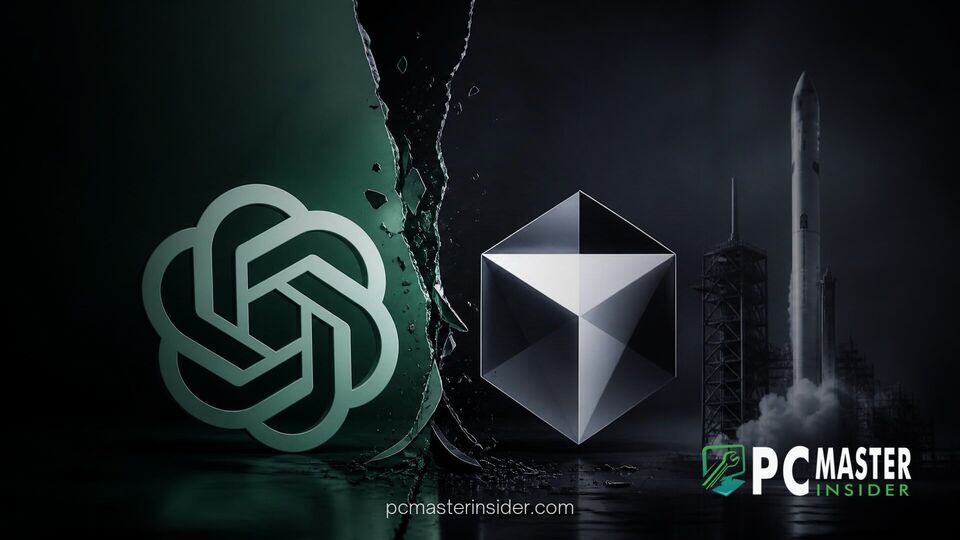
OpenAI has officially notified Anysphere, the developer behind the widely adopted AI powered code editor Cursor, that it will terminate direct enterprise model hosting and custom API partnerships. The decisive move follows SpaceX's high profile corporate acquisition activities and subsequent strategic shifts across the technology sector. The termination marks a dramatic pivot in how high performance foundational models are served to third party software development environments.
The announcement has sent ripples through the software engineering community, where Cursor has rapidly established itself as one of the most capable intelligent integrated development environments. While individual users can still leverage general API keys for standard model calls, the deep integration features, custom optimized endpoints, and co-developed enterprise routing privileges previously maintained between OpenAI and Cursor will be phased out entirely.
OpenAI Terminates Cursor Partnership SpaceX Deal Triggers Corporate Realignment
The decision by OpenAI terminates cursor partnership spacex dynamics that previously aligned independent tool developers with leading foundational model creators. Tensions reportedly mounted as corporate consolidation and strategic investments brought competing platform incentives into direct conflict. As enterprise giants expand their influence over the artificial intelligence ecosystem, foundational model providers are increasingly re-evaluating where their specialized API access and preferred infrastructure tiers are allocated.
According to sources familiar with the matter, the direct catalyst for ending the partnership stems from shifting governance protocols and enterprise exclusivity clauses. When major defense and aerospace entities like SpaceX expand their software footprints, data sovereignty, infrastructure control, and proprietary IP protections become paramount. OpenAI's enterprise division has increasingly prioritized internal platform integrations and direct enterprise contracts, making third party developer environments that act as intermediaries harder to reconcile within their long term commercial strategy.
Contractual Dispute Triggered by SpaceX Acquisition
At the heart of the partnership termination lies a complex contractual dispute regarding data handling, enterprise model distribution, and server capacity allocation. Following SpaceX's acquisition maneuvers in the developer tooling ecosystem, OpenAI conducted a comprehensive review of its strategic distribution partnerships. The review concluded that maintaining bespoke model endpoints for Cursor presented commercial overlapping risks and resource bottlenecks that no longer aligned with OpenAI's core mission.
Representatives from OpenAI emphasized that enterprise clients demand clear chain of custody controls over proprietary code bases. When a third party platform changes ownership structure or aligns with broader conglomerate interests, existing API arrangements undergo strict security and compliance audits. In this instance, the regulatory and operational complexities surrounding the SpaceX transaction created insurmountable friction points, forcing OpenAI to exercise its contractual termination clause.
OpenAI Sets November 2026 Cutoff for Cursor Model Access
To prevent immediate workflow disruption for thousands of enterprise engineering teams, OpenAI has established a transition window. OpenAI sets November 2026 cutoff for Cursor model access to allow existing corporate subscribers and individual developers time to migrate their workflows or reconfigure their API settings. Until the deadline, current enterprise routing configurations will remain functional under strict rate limits and monitoring protocols.
During this grace period, Anysphere will be required to transition its infrastructure away from direct, high throughput OpenAI backends. Once the deadline passes, any integration reliant on custom optimized models will cease to function. Developers wishing to continue using OpenAI models inside Cursor will be forced to rely on standard public API keys, which lack the bespoke latency optimizations and specialized context window handling that the direct partnership provided.
Implications for AI Assisted Software Development
The breakdown of this high profile alliance highlights the growing volatility within the AI assisted development ecosystem. For months, industry analysts have debated whether developer tools built on top of external AI models can maintain long term defensibility. As prominent corporate leaders like Satya Nadella warns enterprise leaders against single AI model dependency, software engineering teams are increasingly searching for flexible, multi provider environments rather than locked in single vendor pipelines.
This shift also underscores a broader industry movement toward diversified model backends. While OpenAI built an early lead in coding capabilities, alternative model families have rapidly closed the performance gap. Hardware manufacturers and open source platform providers are rapidly expanding their footprint in developer workflows. For instance, AMD releases ROCm 10 with ROCm AI framework tools that make on-device and private cloud execution far more viable for enterprise dev teams seeking independence from third party SaaS model providers.
Furthermore, local execution models have gained significant traction among security conscious developers. Operating system vendors are already building infrastructure to support these decentralized workflows, as seen where a Windows 11 update enables removal of on device AI models to give users granular control over local hardware resources. The dissolution of the OpenAI Cursor partnership is likely to accelerate the adoption of these locally hosted or multi provider development tools.
Response from Cursor and Future Model Availability
Anysphere responded to the announcement by reassuring its user base that Cursor was designed from the ground up to be model agnostic. While the loss of dedicated OpenAI endpoints represents a strategic hurdle, the company confirmed that Cursor will continue to support alternative state of the art models from competing providers, including Anthropic's Claude family, Google's Gemini models, and open weight solutions.
In an official statement addressing the community, Anysphere leadership emphasized that the future of intelligent code editing depends on flexibility rather than single vendor reliance:
"Our primary mission has always been to build the most efficient and powerful environment for software engineers. While our direct infrastructure partnership with OpenAI is coming to an end, Cursor's architecture remains fully capable of interfacing with a wide range of industry leading models. We are actively expanding our directly hosted model offerings and building custom fine tuned open weight models to ensure our users experience zero reduction in code generation quality or speed."
Industry reaction has been mixed, with many developers expressing concern over potential latency increases once dedicated OpenAI routing is removed. However, competition in the AI workspace market remains fierce. Developers looking for alternative environments are finding broader choices as platforms evolve, including recent announcements where Google adds native Windows 11 and WSL support to Antigravity AI platform tools to capture engineers affected by shifting vendor allegiances.
Meanwhile, enterprise consolidation across the AI landscape shows no signs of slowing down. Major hardware and platform vendors continue to acquire key software players to secure their supply chains and platform ecosystems, mirroring recent industry moves where NVIDIA reportedly nears 12 point 9 billion dollar acquisition of Hugging Face to integrate open source hosting directly into its hardware stack.
As the November 2026 cutoff date approaches, the software engineering sector will closely watch how Cursor adapts its underlying architecture. The severance of this partnership serves as a clear signal to the industry that early stage alliances between foundational AI research labs and specialized tool builders remain inherently fragile in an era defined by rapid corporate acquisitions and aggressive platform expansion.