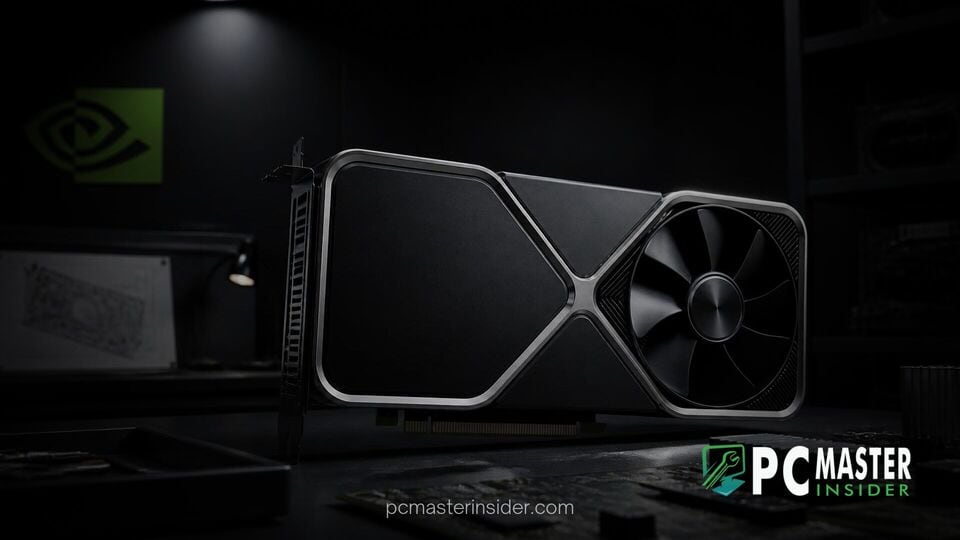
Reports indicate that Nvidia has missed its internal target to distribute official design kits for the rumored GeForce RTX 5080 24GB graphics card to its add-in board (AIB) partners. The distribution of these development packages was originally scheduled for completion by October, but key manufacturing partners are still awaiting essential documentation and physical hardware test samples.
Without these critical design assets, third-party manufacturers cannot begin the necessary engineering validation, thermal testing, or custom printed circuit board (PCB) layouts required before starting mass production. Consequently, industry analysts now cast doubt on rumors predicting a retail market arrival in early 2027.
Missing Documentation Impacting Board Partner Production Schedules
Design kits distributed by GPU vendors typically contain reference silicon, high-density VRAM samples, thermal layout specifications, and electrical guidance. For custom card manufacturers such as Asus, MSI, and Gigabyte, these resources are essential to design power delivery systems and bespoke cooling solutions. In standard hardware launch cycles, board partners require roughly six to eight weeks from receiving design kits to delivering retail-ready products to global distributors.
According to reports from BenchLife, Nvidia's failure to deliver these packages before October ended leaves partners without the baseline parameters necessary for mass assembly. As a result, partners cannot evaluate power draw variances or design custom cooling solutions for the upgraded graphics card.
Reported Delay in Distribution of Design Kits
The updated graphics card is anticipated to feature 24GB of high-speed GDDR7 memory, utilizing high-density 3GB memory modules across a 256-bit memory interface. This configuration represents a significant 50 percent capacity upgrade over the initial 16GB variant. However, integrating denser memory modules requires modified power delivery circuits and adjusted memory controller timings, making board partner validation even more crucial.
Custom board manufacturers often tweak voltage regulation modules and heatsink contact plates to accommodate higher-density memory layouts. With design kits still held up, partners cannot confirm whether existing PCB tooling for 16GB models can be reused or if entirely new board designs must be fabricated.
Potential Impact on Rumored Launch Window
Industry speculation previously pointed toward a potential announcement at CES in January 2027, followed by retail availability shortly thereafter. While Nvidia could still unveil the product during an executive keynote, physical retail stock arriving in stores by January appears increasingly unlikely given current production timelines.
Even if Nvidia releases design kits immediately, partner validation, thermal testing, mass manufacturing, and international freight logistics would push retail availability deeper into the first quarter of 2027. Hardware enthusiasts expecting a mid-winter upgrade may need to wait several weeks longer than initially anticipated.
Supply Chain Challenges and Component Shortages
The delay in distributing design kits comes against a backdrop of broader supply constraints across the semiconductor sector. Global demand for artificial intelligence hardware continues to strain high-density memory supply chains and specialized packaging capacity. High-performance GDDR7 modules, along with premium PCB substrates, remain tightly allocated across both enterprise server hardware and consumer enthusiast GPUs.
These supply pressures mirror wider issues across the industry, where AI infrastructure demand triggers PCB shortages that affect both PC motherboard and GPU manufacturing timelines. Additionally, high competition for memory allocations has forced hardware producers to carefully prioritize component distribution across enterprise and consumer divisions, leading enterprise vendors like Blackmagic Design to raise product prices citing skyrocketing memory costs.
What This Means for Upcoming High-End GPU Availability
For PC gamers and workstation creators waiting for an expanded VRAM footprint, the hold-up highlights the challenges of producing high-capacity consumer GPUs amidst tight component allocations. While the existing 16GB variant offers strong rasterization and ray tracing capabilities, modern graphical workloads, heavy texture mods, and local AI inferencing tools increasingly benefit from 24GB of frame buffer memory.
Software tools like the open-source tool unlocking Nvidia FP16 AI limiters and recent driver developments such as Nvidia GeForce driver 621.01 with Microsoft Advanced Shader Delivery demonstrate how demanding modern software pipelines have become. A delay in the 24GB model means buyers seeking large VRAM capacities on non-flagship graphics cards must remain patient.
In summary, while Nvidia has not officially announced product availability dates or hardware specifications, missed internal deadlines for board partner design kits make a January retail release unlikely. Consumers looking to upgrade to a 24GB enthusiast GPU should expect announcement details early next year, with wide retail distribution following later in the quarter once partner manufacturing catches up.