
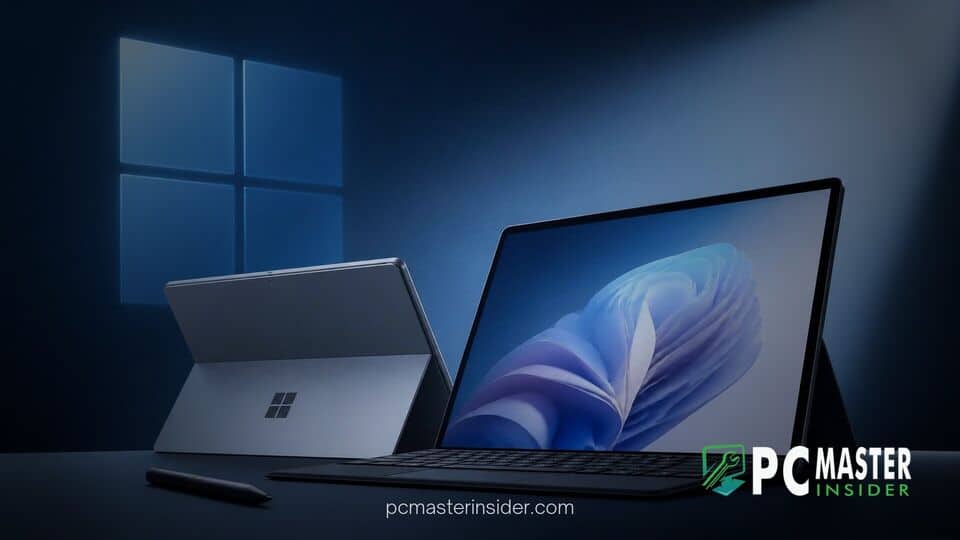
Microsoft has officially announced a major Windows and Surface event set for October 7, 2026, in San Francisco, California. The gathering marks the company's first primary Windows-centric showcase in over two years, centering heavily on how local artificial intelligence will define the next phase of personal computing.
Scheduled to begin at 10:00 AM Pacific Time, the presentation will feature an unusual lineup of executive speakers. Microsoft CEO Satya Nadella, Windows and Devices chief Pavan Davuluri, and NVIDIA CEO Jensen Huang will take the stage together to detail new developments across the broader PC ecosystem.
Microsoft Schedules San Francisco Event for October 7
The upcoming event represents a significant shift in Microsoft's event cadence. While the company routinely hosts virtual briefings and developer webcasts, this in-person San Francisco showcase is being treated as a marquee moment for both consumer hardware and operating system capabilities. The official invitation frames the briefing as a conversation on how local AI processing will fundamentally reshape personal computers.
Rather than relying primarily on cloud infrastructure to process generative AI requests, Microsoft and its silicon partners are pivoting heavily toward on-device processing. This strategy aims to deliver lower latency, improved privacy, and continuous offline capabilities for complex artificial intelligence agents. Industry analysts note that holding a high-profile physical event signals high confidence in the performance of upcoming consumer silicon.
Key Executives and Industry Partners Attending
The joint appearance of Satya Nadella and NVIDIA head Jensen Huang underscores the deepening alliance between the two tech giants. NVIDIA has expanded its reach beyond data center hardware to supply sophisticated systems-on-chip tailored specifically for client devices. Davuluri's presence confirms that Windows software optimizations will play an equal role alongside raw silicon performance.
OEM partners such as Dell, Lenovo, and Asus are also expected to participate in secondary announcements, highlighting a unified ecosystem rollout. While third-party manufacturers have previously teased experimental local AI systems, the October event is anticipated to establish standard baseline specifications and software targets across the industry.
Focus on Local AI and Next-Generation Surface Hardware
Central to the presentation will be the integration of hardware architectures engineered to run demanding neural network models directly on laptop processors. Readers following software evolution might recall how Perplexity released local portable computer AI agents for Windows RTX GPUs, proving that high-end consumer hardware can handle sophisticated autonomous agents without cloud assistance.
By shifting workload execution directly onto client PCs, Microsoft intends to make real-time system automation faster and less dependent on server availability. This local push requires massive hardware bandwidth, combining system-on-chip efficiency with expansive memory configurations.
Expected Teasers for Surface Laptop Ultra and RTX Spark
Industry observers expect the presentation to finalize details surrounding the Surface Laptop Ultra and the Surface RTX Spark Dev Box, both of which were previewed earlier in the year without finalized pricing or shipping dates. Built around NVIDIA's specialized RTX Spark platform, the Surface Laptop Ultra combines Arm-based CPU cores, high-performance graphics, and unified memory designed for heavy parallel processing.
Hardware announcements are also expected to highlight wider industry adoption. For instance, Geekom unveiled its IT13 2026 mini PC with Intel Panther Lake processors, demonstrating how desktop and compact PC manufacturers are aggressively updating form factors for local compute demands. Meanwhile, competitor developments, such as when Google confirmed Googlebook hardware pre-orders, have put pressure on Microsoft to clarify its exact timeline for next-gen flagship hardware.
What the Announcement Means for Windows 11 Users
Despite the event's broad scope, source reports indicate that Microsoft will not announce a brand-new operating system such as Windows 12. Instead, the software demonstration will focus on deep AI feature integrations within the existing Windows 11 platform.
To support advanced localized processing, Microsoft has been steadily refining underlying operating system components. Recent insider builds have concentrated on feature stability, system efficiency, and UI modernizations. Updates such as when Microsoft released Windows 11 Preview Build 28000.3079 with taskbar positioning controls show that the core user experience continues to receive iterative polish alongside major architectural changes.
Simultaneously, developer workflows on client machines are receiving targeted upgrades. Earlier updates like when Microsoft expanded Windows 365 Cloud PC tools for Windows 11 developers paved the way for hybrid setups where local hardware and cloud dev boxes operate in tandem. October's event is set to clarify how on-device neural processing units and local GPU acceleration will build upon those foundation layers.
With October 7 quickly approaching, the event stands to define how hardware manufacturers and software developers approach on-device AI for the upcoming year. Full details on pricing, availability, and developer APIs will be revealed during the official stream.