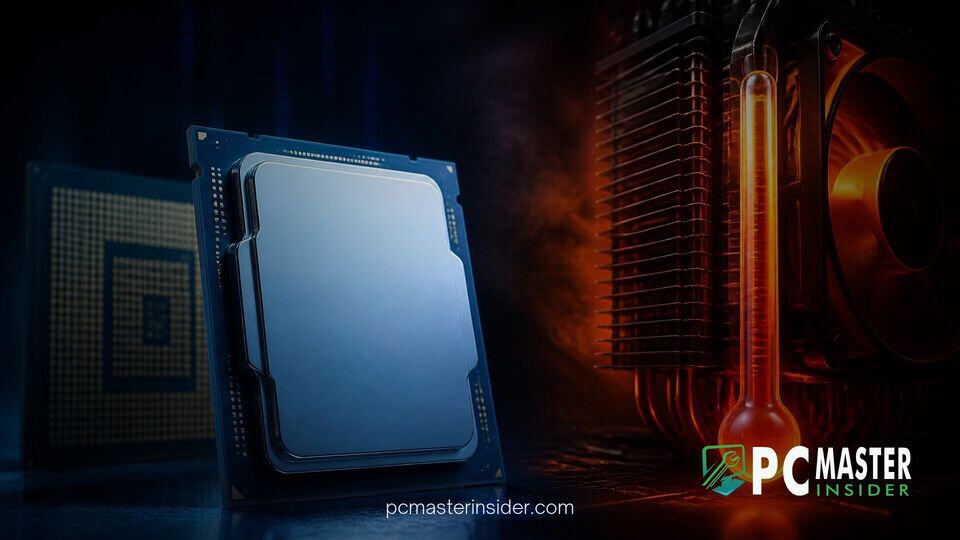
Intel's upcoming desktop processor architecture, codenamed Nova Lake-S, will reportedly introduce a firm frequency cap of 5.1 GHz whenever chip operating temperatures exceed 90 degrees Celsius. According to leaked technical details, this thermal boundary will function independently of traditional thermal throttling systems and cannot be modified by end users through BIOS settings.
The leak, shared on X by hardware industry insider Jaykihn, indicates that the thermal mechanism will apply across the entirety of the Nova Lake-S desktop processor stack. If accurate, the policy represents a notable shift in how high-performance desktop silicon balances aggressive clock speeds against long-term operational stability and thermal headroom.
Leaked Thermal Management Mechanism for Nova Lake-S
Preliminary details indicate that the intel nova lake cpu thermal frequency cap operates as a proactive safety layer. Rather than waiting for silicon temperatures to reach the traditional TJMax limit of 100 degrees Celsius, the processor will clamp peak core clock speeds to a maximum ceiling of 5.1 GHz as soon as sensor readings pass 90 degrees Celsius.
Crucially, this thermal cap is designed to operate completely separately from normal TJMax throttling. While TJMax traditionally triggers emergency voltage and frequency drops to prevent immediate hardware degradation or thermal shutdown, the 90-degree 5.1 GHz limit functions as an intermediate ceiling. Early information suggests that system builders and enthusiasts will not be given the option to raise this temperature threshold or disable the limit within motherboard firmware settings.
For mid-range SKUs whose maximum single-core boost clock speeds already sit at or below 5.1 GHz, the reported restriction will have no functional impact under heavy sustained loads. However, high-end desktop parts intended to succeed flagship processors like the Core Ultra 9 285K could see performance scaling curtailed if thermal dissipation falls short. As Intel confirms high-end Nova Lake desktop CPUs will aim directly at top-tier performance segments, keeping silicon running below 90 degrees Celsius will be critical for maintaining advertised boost clocks.
How the Fixed 5.1 GHz Frequency Cap Operates
Under standard operational parameters, modern x86 desktop processors rely on dynamic algorithms such as Thermal Velocity Boost to grant additional frequency steps whenever thermal budgets allow. Intel's reported implementation for Nova Lake-S operates in reverse by applying a rigid ceiling once specific thermal triggers are hit.
When processor junction temperatures remain strictly at or below 90 degrees Celsius, the CPU can freely utilize its maximum rated multi-core and single-core boost clocks. The moment thermals climb into the 91 to 99 degree Celsius range, the firmware limits all active cores to 5.1 GHz regardless of power delivery headroom. If temperatures continue climbing to reach 100 degrees Celsius, standard hardware throttling kicks in to reduce clocks further to maintain safe junction limits.
Shift in Intel Desktop Thermal Throttling Strategies
The leak highlights a continuing evolution in desktop platform thermal management strategies. Previous generations of desktop chips allowed enthusiasts to manually adjust thermal thresholds, often pushing TJMax targets upward on custom liquid cooling setups. By enforcing non-adjustable temperature boundaries, Intel appears focused on reducing degradation risks associated with prolonged operation at high temperatures.
This design choice arrives alongside significant silicon changes across Intel's roadmap. As detailed in previous leaks surrounding mobile flagships such as the Intel Core Ultra 9 4995HX Nova Lake mobile CPU, high core counts and advanced multi-tile packaging put premium demands on thermal transfer. Implementing strict frequency caps helps ensure predictable power draw profiles across diverse system configurations.
The strategic adjustments come at a time when competition in high-performance desktop hardware remains intense. While competitors project strong financial and market performance—with reports noting AMD Q4 revenue forecasts surpassing Intel—maintaining steady real-world performance without stability issues remains a key operational goal for upcoming platform launches.
Practical Implications for PC Builders and Cooling Setup
If the leaked parameters remain unchanged through final product validation, thermal cooling hardware will play a far more decisive role for system builders targeting top performance. High-end desktop processors pulling upwards of 250 watts under heavy multithreaded loads will require high-capacity liquid cooling loops or premium dual-tower air coolers to ensure temperatures do not cross the 90-degree boundary.
Additionally, motherboard makers will need to carefully optimize default core voltage curves. Excessive auto-voltage settings pushed by motherboard BIOS profiles could trigger the 90-degree limit early during intensive workloads, effectively locking peak performance at 5.1 GHz even on high-end custom builds.
System builders may also need to consider broader environmental factors, including ambient room temperatures and chassis airflow pathing. Small-form-factor builds or enclosures with restricted intake paths will face a higher probability of crossing the 90-degree line under prolonged rendering or gaming sessions.
Intel has not officially confirmed thermal management details or final clock specifications for the Nova Lake-S desktop architecture. Further details regarding the official launch timeline and platform features are expected as production nears.