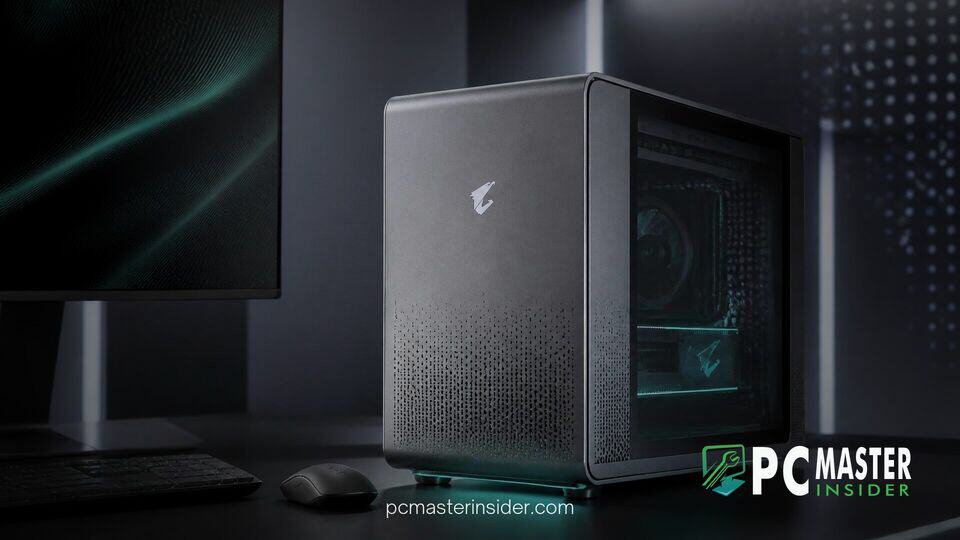
Gigabyte has officially launched the AI TOP AERO, a new small-form-factor desktop system designed specifically to handle modern artificial intelligence workloads, intensive content creation, and high-performance software applications. Built around Nvidia's newly introduced RTX Spark architecture, the personal computing workstation aims to deliver enterprise-grade local processing power directly to desktop environments.
By bringing local model execution into a ultra-compact chassis, Gigabyte is positioning the system as a primary choice for engineers, creative artists, and researchers looking for privacy-focused computing. The release marks another significant expansion of Gigabyte's growing artificial intelligence ecosystem.
Gigabyte Launches Compact AI Desktop with Nvidia RTX Spark
Gigabyte introduced the AI TOP AERO as a flexible desktop system tailored to execute large-scale generative models without needing constant connection to cloud infrastructure. The device utilizes the newly engineered Nvidia RTX Spark N1X Superchip platform. This architecture combines a high-efficiency 20-core Nvidia Grace CPU with an Nvidia Blackwell generation RTX graphics engine on a single silicon platform.
The compact desktop addresses rising consumer demand for local compute nodes that reduce operating expenses tied to cloud API subscriptions. With growing concerns surrounding data sovereignty and intellectual property, running local models gives organizational workflows total control over confidential data sets. Users can run advanced language models, generate real-time assets, and perform heavy multi-tasking while keeping sensitive information contained strictly within their local environment.
Hardware Specifications and Unified Memory Capabilities
Under the hood, the Gigabyte AI TOP AERO features up to 128 GB of high-speed LPDDR5x unified memory. This unified pool allows both the 20-core Arm-based Grace CPU and the Blackwell GPU architecture to access the same system memory seamlessly. As a result, users can load parameter-heavy artificial intelligence models locally that typically require multiple discrete graphics cards on standard desktop motherboards.
Storage options for the desktop scale up to a 4 TB PCIe Gen 5 NVMe SSD, ensuring fast data transfer rates for massive video footage, game assets, and database training sets. Thermal design plays a critical role in maintaining sustained performance within the system's tiny chassis. Gigabyte has integrated custom cooling hardware to manage energy demands and thermal output effectively. Given that Nvidia RTX 50 series GPUs face major price increases in standalone retail markets, integrated platform systems like the RTX Spark present an appealing pre-configured design.
Targeting Local AI Workloads and Creative Workflows
The system caters directly to digital creators, game designers, and software engineers who require uninterrupted GPU acceleration. By running on the Windows operating system with full support for the Nvidia CUDA stack, the AI TOP AERO natively executes standard developer frameworks and developer libraries. Software tools such as VS Code, Cursor, and PyTorch run locally with full hardware acceleration.
For video producers and 3D animators, the Nvidia Studio ecosystem provides accelerated viewport rendering through OptiX and DLSS technology. Hardware-level decoding and encoding support for modern formats like AV1, HEVC, and H.264 enables creators to edit raw video timelines without encountering performance stutters. This shift toward localized processing coincides with broader industry movements, such as when Microsoft released Foundry Local to help developers execute large open-weight models directly on local Nvidia hardware.
Additionally, software optimizations allow multi-agent workflows to run in the background while users switch between creative applications or gaming titles. The inclusion of high-speed connectivity options further allows power users to cluster multiple systems together for expanded local network computing.
Availability and Market Positioning
Gigabyte positions the AI TOP AERO directly against premium compact desktop hardware, offering a Windows-based alternative to compact Unix-based workstations like Apple's Mac Studio. Its tiny footprint allows the system to fit cleanly onto standard office desks while consuming significantly less wall power than traditional full-tower desktop rigs.
Market analysts note that the launch reflects a broader trend of hardware makers integrating neural processing capabilities into everyday personal computing form factors. While dedicated data centers handle heavy enterprise tasks, compact local stations are proving vital for rapid prototyping, data privacy, and daily productivity. Industry initiatives, including the Microsoft and Nvidia joint AI support scheme, highlight how hardware and software providers are pushing to equip smaller teams with robust local tools.
As retail hardware markets face supply shifts and changing pricing dynamics, pre-built localized platforms offer developers a predictable entry point into advanced computing. Information regarding specific regional pricing tiers and retail availability dates for the Gigabyte AI TOP AERO configurations will be released by Gigabyte and its authorized retail channels in the coming weeks.
With its combination of Nvidia's RTX Spark architecture, unified memory architecture, and compact industrial design, the Gigabyte AI TOP AERO stands out as a powerful personal workstation. It offers developers and creators a private, highly capable alternative to cloud-reliant workflows, bringing professional-grade local compute directly to the desktop environment.