Defense technology firm Anduril Industries has announced a strategic partnership with Qualcomm Technologies to develop and manufacture a new line of American-made rugged computing hardware dubbed BlueChip. Designed to address national security concerns stemming from offshore hardware manufacturing, the initiative aims to rebuild the domestic supply chain for computing systems serving military, government, and public safety organizations.
The joint endeavor combines Anduril's defense engineering expertise and domestic manufacturing infrastructure with Qualcomm's advanced System-on-Chip (SoC) technology. By shifting production and circuit board assembly back to the United States, the two companies plan to provide defense and first-responder personnel with highly secure, locally built hardware capable of handling sensitive operational tasks without reliance on overseas supply chains.
Anduril and Qualcomm Unveil BlueChip Hardware Initiative
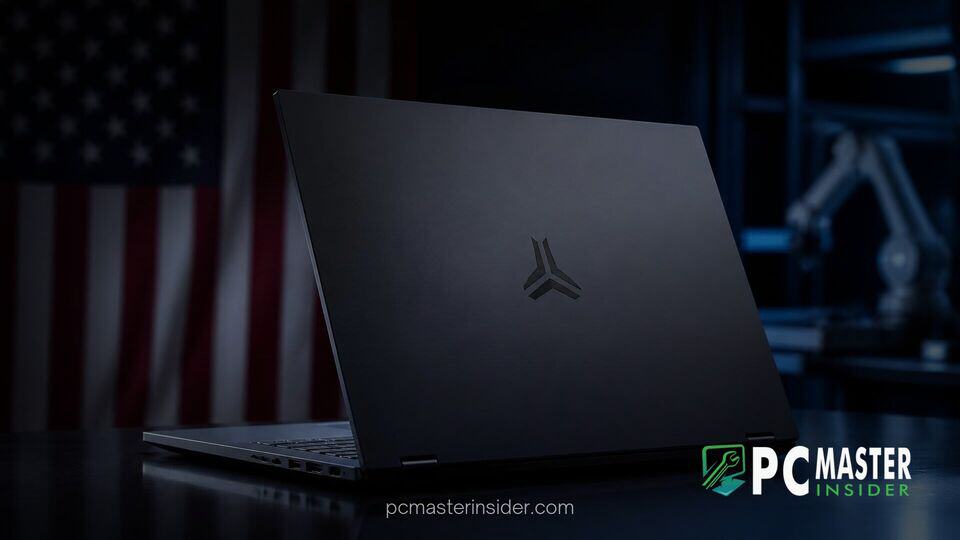
The flagship product under the BlueChip initiative is a ruggedized, military-grade laptop specifically engineered for harsh environments and secure operations. The device features a heavy-duty chassis built to withstand exposure to dust, moisture, and extreme physical strain, alongside integrated carrying solutions designed for field use. Rather than competing directly in the consumer market, the first wave of BlueChip systems will focus on fulfilling the strict operational demands of defense agencies, law enforcement, and emergency response units.
According to figures shared by Anduril founder Palmer Luckey, functional prototypes of the BlueChip laptop have already been produced, with roughly 90 percent of the initial bill of materials sourced from vendors within the United States or allied nations. While current manufacturing realities mean the very first production models will not achieve 100 percent domestic sourcing right out of the gate, the long-term roadmap envisions an end-to-end American supply chain for everything from battery enclosures to display components.
Snapdragon X Processing and On-Device AI Capabilities
At the heart of the BlueChip platform is Qualcomm's Snapdragon X Series processor architecture, which supplies the central processing unit, graphics, and specialized Neural Processing Unit (NPU) hardware. These Arm-based processors are slated to be fabricated locally at Taiwan Semiconductor Manufacturing Co. (TSMC) facilities located in Arizona, bringing core silicon manufacturing directly onto U.S. soil.
A primary technical driver behind selecting the Snapdragon X architecture is its ability to perform high-throughput, on-device artificial intelligence inference. Field personnel operating in defense and public safety sectors frequently deal with classified or zero-trust data environments where transmitting telemetry to cloud services is impossible or prohibited. Having dedicated local NPU processing allows operators to run complex language models, autonomous system routines, and data analysis locally on the laptop without generating external network traffic.
On the software front, the system is engineered to run both Microsoft Windows and secure Linux distributions preferred by defense agencies. Operating system stability remains critical for enterprise hardware deployments, particularly as tech vendors address operating system performance fixes. For instance, recent platform updates like Windows 11 KB5127936 fix app launch bottleneck issues to ensure fast system responsiveness under heavy workloads.
Domestic Manufacturing Strategy at Ohio Arsenal-1 Facility
The manufacturing architecture for the BlueChip line relies heavily on Anduril's expanding footprint, with printed circuit board assembly (PCBA) taking place at the company's Arsenal-1 facility in Ohio. Beyond board assembly, Anduril is actively developing domestic manufacturing capabilities for custom metallic enclosures, battery cells, and structural components to minimize reliance on foreign vendors.
This initiative arrives during a broader transition in hardware security standards across major tech ecosystems. As security oversight shifts more toward direct hardware vendors, major platform creators are altering how internal security modules interact with operating systems. A clear example of this industry-wide hardware evolution occurred when Microsoft ends Pluton TPM 2.0 integration for 2026 AMD and Qualcomm chips, returning root-of-trust management responsibilities directly to processor manufacturers and system OEMs.
Building specialized hardware domestically presents distinct financial and logistical challenges. Luckey noted that manufacturing laptops entirely within the United States carries an estimated 20 percent cost premium over traditional offshored production lines. However, government and defense buyers often place operational integrity, physical hardware security, and supply chain transparency above upfront unit costs.
Target Markets and Government Procurement Timeline
Anduril and Qualcomm plan to officially begin taking orders for the BlueChip laptop platform in 2027. The commercial rollout will follow a strict priority sequence focused on institutional sectors:
- U.S. Military and Defense Agencies: Primary launch target for field deployments, tactical command posts, and secure intelligence handling.
- First Responders and Public Safety: Fire, police, and emergency service providers requiring durable mobile units resistant to environmental hazards.
- Critical Infrastructure Operators: Energy, transportation, and utility entities seeking hardware isolated from foreign supply chain risks.
- Enterprise and Commercial Markets: Broader commercial availability may follow once high-priority defense supply requirements are met.
As AI integration accelerates across enterprise hardware, local processing capabilities are becoming essential for both commercial productivity and defense operations. Enterprise platforms continue to expand AI integration, as seen when Microsoft launches Copilot for Legal with 20 AI skills to automate sensitive document workflows directly within workplace software environments.
Furthermore, hardware platforms are increasingly leveraging on-device processing power for real-time security tasks. Similar local hardware capabilities are being deployed elsewhere, such as when Microsoft launches real-time AI phishing detection in Teams chats to identify threats directly on user devices without sending sensitive message logs offsite.
The alliance between Anduril and Qualcomm represents a significant test case for modernizing U.S. industrial policy and electronics manufacturing. If successful, the BlueChip initiative could establish a repeatable model for producing high-performance, domestic computing hardware tailored to the nation's most demanding operational environments.