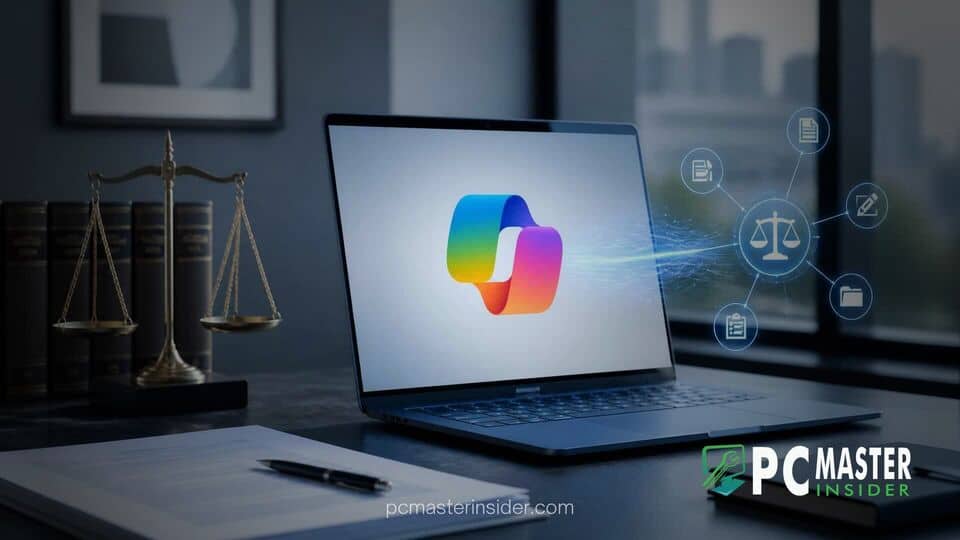
Microsoft has formally expanded its enterprise artificial intelligence portfolio by launching Copilot for Legal, a suite of specialized capabilities designed specifically for law firms, corporate legal departments, and in-house counsel. Available globally to Microsoft 365 Copilot commercial subscribers, the solution delivers more than 20 purpose-built AI skills operating directly inside Microsoft Word and Microsoft's agentic workspace, Cowork.
The announcement represents a significant shift in how legal professionals handle document review, contract drafting, and multi-file workflows. Rather than requiring practitioners to export sensitive files into third-party legal portals, Microsoft's native approach integrates legal intelligence directly into the applications where attorneys already conduct their daily work.
microsoft launches copilot for legal ai skills across enterprise workflows
With the release of Copilot for Legal, Microsoft introduces a dual-architecture deployment: dedicated legal plugins integrated into Word on desktop and the agentic Cowork environment. The launch builds upon Microsoft's earlier Legal Agent initiative, consolidating disparate automation models into a unified, secure system that adheres to enterprise governance standards.
In Microsoft Word, the legal plugin equips attorneys to conduct in-depth contract analysis, review complex agreements against custom organizational playbooks, and draft new contracts using approved precedent templates. Instead of returning static textual summaries, Copilot applies proposed modifications as native Word tracked changes while preserving formatting, structural tables, and custom styles.
In the Cowork agentic environment, legal teams can orchestrate broad, multi-step workflows across collections of documents. Key capabilities include extracting contractual obligations, cross-referencing liability terms across dozens of executed agreements, generating case chronologies, and identifying conflicting deadlines embedded across emails, chats, and stored repositories.
Purpose-Built AI Skills and Deep Microsoft 365 Integration
Microsoft emphasized that the 20+ legal skills included in the launch are not simple general-purpose prompts layered onto standard large language models. Built alongside legal engineers and domain experts, the skills incorporate legal reasoning and specific legal standards. For instance, when drafting contracts, Copilot can query precedent repositories hosted in Microsoft SharePoint and insert native Word content controls, creating structured, editable placeholders throughout the document.
Early operational metrics provided by Microsoft demonstrate notable efficiency gains. During trial phases with the earlier Legal Agent release, over 1,800 active corporate users generated nearly 100,000 document edits. Users retained approximately 70 percent of Copilot's suggested redlines and clause edits.
"For me, the real benefit of Copilot is that I don't have to change how I work," said Aneesh Mehta, senior corporate counsel at Microsoft. "I'm already living in Word when I negotiate an agreement, and now I can use Copilot to help with the first pass and see its proposed redlines right there in the document. Being able to look at the actual language in context is huge. Something that might take me an hour to review initially can often take several minutes, which means I can get to the substantive issues faster".
Third-Party Ecosystem and Legal Tech Partner Plugins
Alongside its native capabilities, Microsoft launched an expanded plugin registry connecting Copilot for Legal with external legal technology platforms. Initial ecosystem partners include major legal software providers such as Harvey, Legora, iManage, NetDocuments, Relativity, Everlaw, and Thomson Reuters HighQ.
These partner plugins allow legal teams to pull specialized data, legal research, e-discovery results, and matter management files directly into Word and Cowork. This hybrid approach bridges first-party Microsoft 365 document capabilities with highly specialized domain tools, eliminating repetitive context-switching across isolated desktop applications.
The move places Microsoft alongside other technology providers targeting industry-specific AI solutions. While competitors rely on separate browser platforms or specialized legal portals, Microsoft's strategy leverages the omnipresence of Microsoft Word across law firms and corporate legal offices worldwide. Organizations seeking to manage enterprise IT upgrades alongside productivity suites can also monitor related updates, such as the Windows 11 23H2 Enterprise support lifecycle updates or corporate infrastructure management.
Enterprise Security, Compliance, and Data Governance
Addressing stringent confidentiality requirements inherent to legal practice, Microsoft clarified that Copilot for Legal operates strictly within an organization's existing tenant security boundary. Customer data, internal prompts, and reviewed legal documents are never used to train foundational AI models.
The system automatically enforces existing Microsoft Purview sensitivity labels, access controls, and retention policies, ensuring sensitive attorney-client privilege is preserved. Moreover, Copilot acts exclusively in an advisory capacity, requiring legal professionals to manually inspect, approve, or reject any generated redline or drafted clause before finalization.
Furthermore, organizations managing complex enterprise hybrid environments can rely on established authentication frameworks, similar to how Windows 11 expands passwordless web sign-in to Entra hybrid PCs to secure user access across corporate networks.
Market Impact and Industry Adoption
Industry analysts view Microsoft's release as a pivotal moment for the legal tech sector. Because attorneys conduct the majority of contract drafting inside Word, providing native legal AI tools significantly lowers the barrier to adoption for firms hesitant to implement third-party software.
At the same time, maintaining open partner integrations ensures that specialist platforms remain accessible within the broader Microsoft 365 workflow. Organizations looking to modernize administrative workflows can pair Copilot tools with optimized client devices, taking advantage of overall platform performance improvements detailed in updates on Windows 11 memory management enhancements.
With Copilot for Legal now generally available to Microsoft 365 Copilot commercial customers worldwide, legal organizations can begin deploying the new legal plugins through their Microsoft 365 admin portals immediately. Additional capabilities, including advanced defined term navigation tools, are scheduled to roll out in preview updates later this month.