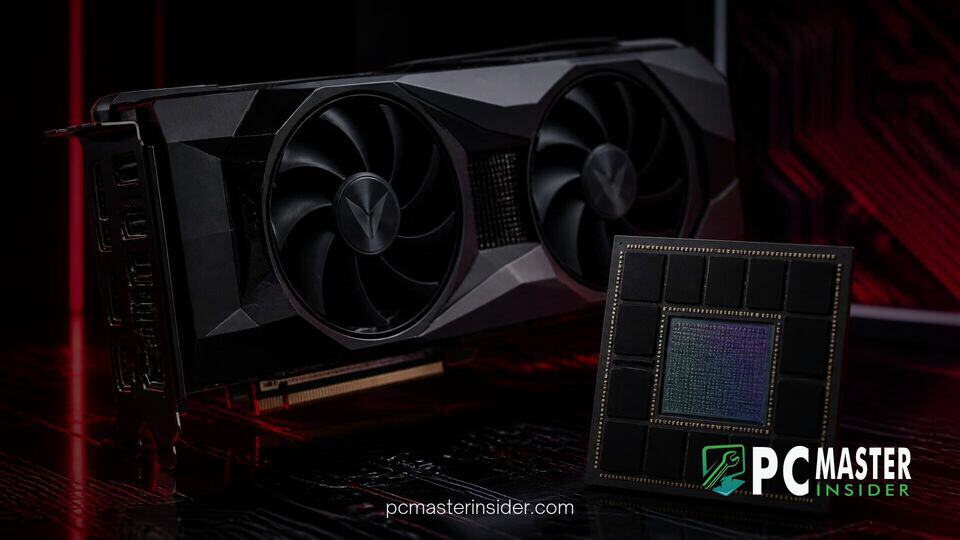
AMD has officially begun preparing its open-source Linux graphics driver stack for next-generation hardware equipped with GDDR7 video memory. New driver patches submitted to the Linux kernel add explicit recognition for GDDR7 VRAM alongside several updated internal hardware IP blocks.
The early software enablement marks the first direct reference to GDDR7 in AMD's graphics code. The move suggests that future consumer graphics architectures, such as the upcoming RDNA 5 platform, will transition away from the long-standing GDDR6 standard to deliver vastly superior memory bandwidth.
AMD Adds GDDR7 VRAM Support to Open-Source Linux Drivers
The headline update arrived in a patch submitted by AMD engineer Frank Min and reviewed by senior Linux graphics developers. In the submission titled [PATCH] drm/amdgpu: add GDDR7 vram name, the AMDGPU kernel driver was updated to add the GDDR7 string directly into the internal amdgpu_vram_names array. This array allows the operating system and system management utilities to correctly identify and report the exact physical memory standard attached to the graphics processing unit.
While the change itself is modest in terms of code size, its implications for the hardware roadmap are significant. AMD relied on GDDR6 memory across multiple generations of Radeon consumer graphics cards, including the RDNA 2, RDNA 3, and RDNA 4 lineups. Meanwhile, high-end enterprise platforms like the Instinct MI series leverage High Bandwidth Memory standards such as HBM3E and HBM4. By introducing GDDR7 directly into the AMDGPU module, AMD is establishing the necessary software foundation long before physical silicon reaches consumer hands.
Key Technical Details of the Driver Patch
The GDDR7 video memory string update is part of a broader set of upstream driver patches that enable crucial low-level IP blocks. Among these additions is support for IH 8.0, the latest revision of AMD's Interrupt Handler hardware block, which manages communication between the GPU cores and system processors. Additionally, the submission incorporates code for NBIF 7.10, representing the newest iteration of the New Bus Interface block.
These infrastructure changes build upon recent Linux driver developments that introduced Display Core Next 6 (DCN6) and early GFX13 targets. DCN 6 brings updated display logic features, including enhanced pre-scaling engines and revised color-space handling tailored for next-generation multi-monitor and high-refresh setups. Upstream Linux kernel development requires early code submissions to ensure that open-source operating systems offer day-one hardware compatibility when new GPUs hit store shelves. Drivers can even affect broader software performance, as seen when SteamOS added native NVIDIA GPU support to refine OS-level driver integration.
Architectural Hints for Next-Gen RDNA 5 GPUs
Industry analysts and open-source tracking communities widely associate the GFX13 target and DCN 6 blocks with AMD's future RDNA 5 graphics architecture. RDNA 5 represents a complete overhaul of AMD's graphics core design. While current generation cards offer competitive rasterization performance, high-bandwidth workloads and complex ray-tracing workloads benefit tremendously from raw VRAM speed.
Transitioning to GDDR7 solves critical bandwidth bottlenecks. Standard GDDR6 modules utilized in consumer products generally cap out around 20 Gbps per pin. In contrast, JEDEC GDDR7 specifications start at 28 Gbps and scale up to 36 Gbps in current implementations, with future revisions targeting up to 48 Gbps. Adopting GDDR7 allows AMD to achieve massive memory bandwidth increases even on narrower bus widths, simplifying circuit board routing and reducing total manufacturing power overhead.
Impact on Memory Bandwidth and Hardware Support
The shift to GDDR7 brings AMD in line with broader industry memory trends. Competitors like NVIDIA already implemented GDDR7 memory across high-performance desktop graphics processors. The substantial jump in data transfer rates ensures that high-resolution textures, complex geometry buffers, and generative AI workloads move into local framebuffers without stalling processor execution units.
However, memory transitions across the semiconductor sector arrive amid shifting economic conditions. Surging memory prices have impacted hardware manufacturers worldwide. Recent industry reports highlight that DDR5 RAM prices reached record highs due to shifts in global fab allocation toward enterprise hardware. Similarly, major manufacturers like Samsung have outsourced DDR5 memory production to focus internal cleanroom space on specialized high-bandwidth memory. These broader market dynamics influence how quickly consumer graphics card makers migrate their entire product stacks to premium GDDR7 memory modules.
Timeline for Future Graphics Card Releases
While the appearance of GDDR7 in the AMDGPU driver proves active testing and software enablement, it does not imply an immediate retail launch. Upstream Linux driver patches frequently surface six to eighteen months before retail hardware availability. Recent market projections and industry leaks suggest that next-generation RDNA 5 GPUs may see limited initial announcements or specialized workstation deployments, with broad consumer desktop rollouts taking shape further down the road.
For PC enthusiasts and Linux users, early open-source driver enablement remains welcome news. By committing GDDR7 support and GFX13 driver hooks to public kernel trees today, AMD is ensuring that open-source Linux gaming and workstation distributions will deliver stable, performant out-of-the-box experiences whenever the next generation of Radeon graphics hardware officially debuts.