
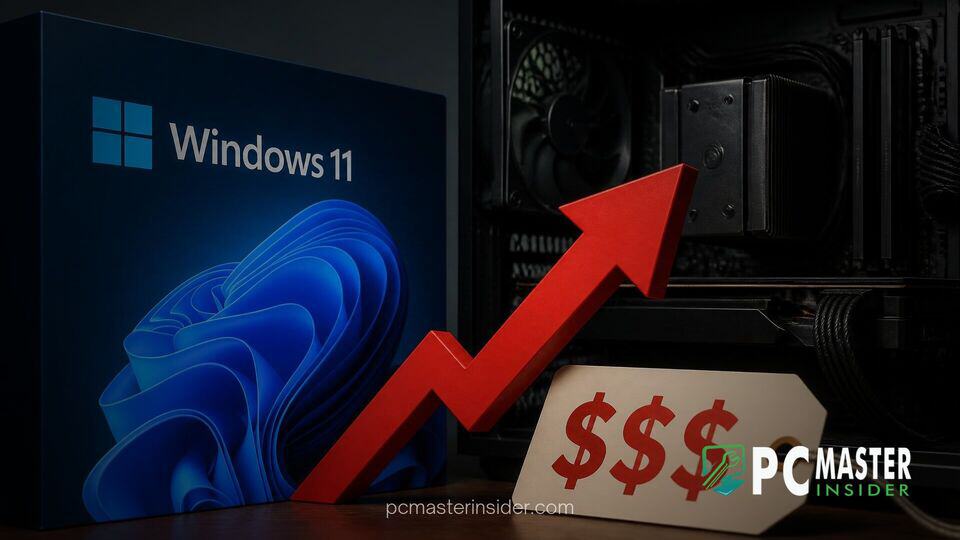
Microsoft has officially updated its original equipment manufacturer licensing rates, resulting in a direct cost increase for prebuilt personal computers. The adjustment targets pre-installed Windows operating system licenses supplied directly to hardware manufacturers and system integrators worldwide.
This fee update comes at a delicate time for the global technology market, where hardware makers are already managing elevated component costs for memory modules and solid-state storage. Consequently, consumers purchasing off-the-shelf desktop and laptop computers are expected to absorb higher retail prices in the coming quarters.
Windows 11 OEM license fee price increase and market overview
The updated pricing strategy affects the cost structure for original equipment manufacturers that bundle Microsoft software with new personal computers. The Windows 11 OEM license fee price increase shifts the baseline cost structure for low-end, mid-range, and premium computer configurations, causing system builders to recalculate their total bill of materials across several product portfolios.
While Microsoft periodically reviews software licensing structures to match evolving hardware performance capabilities, hardware vendors must now decide how much of the added expense to absorb and how much to pass on to end users. Market analysts note that software licensing represents a fixed cost per unit, meaning smaller system integrators and budget-focused prebuilt brands will feel the economic squeeze more acutely than high-volume tier-one manufacturers.
Microsoft Implements 7 to 10 Percent Windows 11 OEM Price Hike
Under the newly revised rate structure, system manufacturers are seeing royalty fee adjustments between 7 percent and 10 percent depending on the specific Windows 11 edition and hardware specification tier. These changes apply to both large-scale global original equipment manufacturers and regional system builders that source OEM product keys through authorized distributors.
Industry sources familiar with the matter report that the updated pricing agreements are taking effect during current procurement cycles. Because prebuilt PC manufacturers operate on tight profit margins, particularly in the competitive entry-level and mainstream sectors, even a single-digit percentage increase in operating system licensing costs directly alters retail pricing strategies for upcoming computer lineups.
Tiered Licensing Costs Based on Processor Classifications
Microsoft's OEM licensing structure relies heavily on hardware classification tiers, where the royalty fee correlates with the processing power, memory capacity, and hardware capabilities of the target device. Computers featuring high-performance multi-core processors, advanced graphics processing units, and higher baseline memory configurations fall into higher licensing brackets, incurring larger absolute fee increases.
Under this tiered model, entry-level laptops and basic office desktops remain in lower licensing brackets, keeping absolute dollar increases modest. However, premium gaming rigs, workstation-grade towers, and high-end enthusiast laptops trigger top-tier software royalties. As hardware specifications continue to advance, more systems cross over into higher licensing thresholds, amplifying the overall impact of the software price adjustment.
Compounding Cost Pressures from Soaring RAM and SSD Prices
The Windows 11 OEM fee revision does not occur in isolation. Over the past year, the personal computer supply chain has faced persistent pressure from rising hardware component prices, most notably high-speed random access memory and high-capacity solid-state drives. Dynamic RAM and NAND flash storage manufacturers have trimmed production schedules to stabilize prices, leading to sustained cost increases for system builders.
When combined with elevated shipping expenses and persistent inflation across international manufacturing hubs, the increased software license fees add yet another financial burden to system manufacturing. System integrators must now manage rising costs across processor, memory, storage, and software fronts simultaneously, leaving little room to maintain legacy retail price points without sacrificing profitability.
PC Manufacturer Responses and Expected Retail Price Adjustments
Major PC manufacturers are already recalibrating their financial models to address the cumulative cost increases. Several prominent system builders have indicated that retail shelf prices for prebuilt desktop computers, gaming towers, and mobile workstations will likely rise between 3 percent and 8 percent over the next two quarters as new inventory enters distribution channels.
Some hardware vendors are attempting to mitigate price hikes by adjusting standard base configurations, such as shipping entry-level models with modified storage sizes or leaner hardware bundles. Nevertheless, industry representatives acknowledge that software licensing increases represent a fixed overhead that cannot be easily offset through component engineering alone, making retail price adjustments virtually inevitable.
What Higher OEM Licensing Costs Mean for Prebuilt PC Buyers
For everyday consumers, students, and enterprise procurement departments, higher licensing fees mean higher total acquisition costs when buying new prebuilt PCs. While custom PC builders who purchase standalone retail Windows licenses or transfer existing digital licenses will not experience an immediate change, anyone buying a pre-assembled computer from a retail store or online builder will likely see higher checkout prices.
Budget-conscious shoppers looking for entry-level laptops may see price increases of $15 to $30, while buyers looking at high-performance gaming desktops or professional workstations could see total prices rise by $50 to $100 or more. Industry experts suggest that consumers planning to purchase new computer hardware in the near future may benefit from finalizing purchases before current distributor inventories featuring previous licensing rates are fully exhausted.
In summary, Microsoft's updated OEM royalty structure introduces additional financial friction into a PC market already managing elevated hardware component costs. As these licensing adjustments filter down through manufacturing supply chains, both retail consumers and corporate buyers should prepare for higher prices across prebuilt computer product lines in the coming months.