
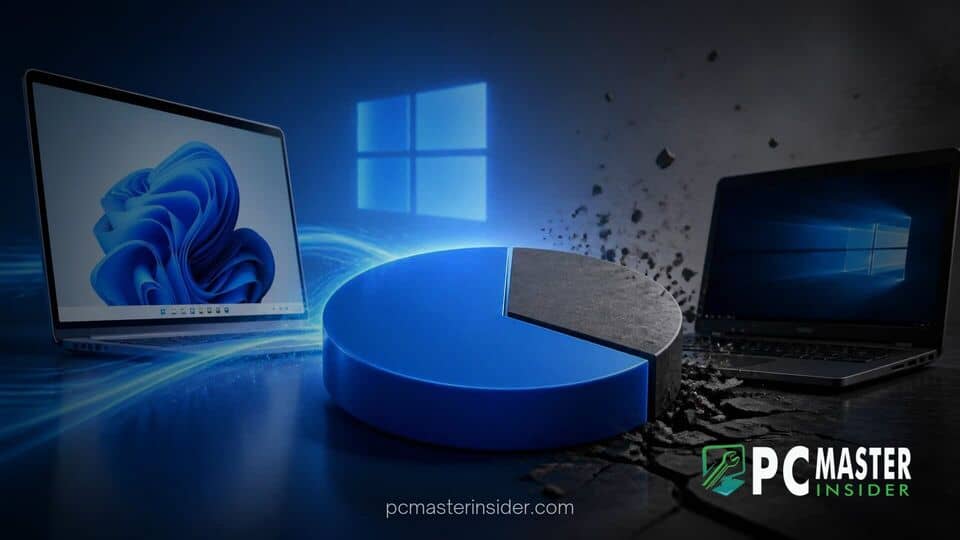
Windows 11 adoption has achieved a significant milestone, accounting for 71.5 percent of all desktop Windows installations worldwide according to the latest tracking data. The recent surge reflects a growing migration away from Windows 10, driven largely by impending fee increases for Microsoft's Extended Security Updates program.
Following a period of steady growth after Windows 10 reached its official end-of-support milestone in October 2025, enterprise IT departments and individual users are now accelerating their hardware upgrades and software transitions. With operating costs for legacy systems rising steeply, remaining on older software platforms has quickly become financially unfeasible for commercial organizations.
windows 11 market share statcounter 2026
According to September 2026 tracking statistics published by web analytics vendor Statcounter, Windows 11 now holds a dominant 71.5 percent share of global desktop Windows systems. In contrast, Windows 10 market share has dropped to 27.77 percent, while legacy operating systems like Windows 7 hover below one percent. The sharp trajectory highlights a distinct shift over the past year, as IT administrators systematically retire unsupported operating systems to avoid security vulnerabilities and heavy licensing penalties.
The expansion comes as Microsoft continues refining its flagship operating system. Recent technical developments, including work on unifying platform codebases and optimizing resource efficiency, have helped alleviate earlier performance concerns. In fact, recent developments such as Windows 11 26H2 RAM usage reduction have demonstrated tangible performance improvements, helping win over previously hesitant system builders and corporate managers.
Statcounter Data Shows Accelerated Windows 11 Adoption
The market share figures from Statcounter demonstrate a marked departure from the multi-year plateau observed earlier in the operating system's lifecycle. For years, strict hardware requirements, specifically the requirement for Trusted Platform Module (TPM) 2.0 chips and newer processors, limited upgrade velocity. However, natural PC replacement cycles paired with enterprise fleet modernizations have steadily lowered those barriers.
Consumer adoption has also picked up, bolstered by expanding cloud recovery and system management features. Modern convenience capabilities like Windows 11 Cloud Rebuild Settings have simplified system recovery for general consumers, making the operating system more resilient and user-friendly compared to its predecessors.
Surging Extended Security Update Costs Drive Migration
The single primary catalyst for the recent migration spike is the escalating price structure of Microsoft's Extended Security Updates (ESU) program. When Windows 10 support ended in late 2025, commercial organizations were given a temporary bridge by purchasing ESU coverage at $61 per device for Year One. However, under Microsoft's published pricing terms, those fees double every consecutive year.
As organizations enter Year Two of the ESU lifecycle, the cost jumps to $122 per machine. By Year Three, the cost escalates to $244 per unit, bringing the cumulative three-year total to $427 per computer. For a small fleet of just 100 workstations, maintaining Windows 10 through the full ESU program would cost over $42,000, an expense far exceeding the price of simply purchasing compliant new hardware or upgrading existing systems.
Furthermore, Microsoft's policy requires retroactive payment for previous years if an organization enrollees late, preventing businesses from skipping Year One to buy only Year Two patches. These escalating financial terms have forced Chief Information Officers to accelerate planned hardware refreshes rather than absorb recurring software penalties.
Enterprise Challenges and Remaining Windows 10 Devices
Despite the strong push toward Windows 11, nearly 28 percent of Windows desktop devices remain on Windows 10. Industry analysts point out that moving the final tier of legacy PCs presents complex operational challenges. Many of these systems are tied to specialized industrial machinery, propriety enterprise applications, or medical equipment that cannot easily be migrated to newer platforms without costly recertification.
Additionally, while Microsoft continues updating native applications, platform changes sometimes introduce minor friction during migrations. Software shifts like missing legacy features or unexpected bugs require active IT oversight. For instance, administrators recently had to manage issues where a Microsoft Word SharePoint PDF bug affected cloud workflows, or address minor core framework adjustments such as when Microsoft fixed WinUI 3 memory leaks in native desktop apps.
To assist enterprise management, Microsoft has introduced automated tools to streamline administrative oversight. Features such as Windows settings backup for Entra-joined PCs allow system administrators to migrate user profiles seamlessly across corporate networks, further lowering the technical barriers to deployment.
With ESU pricing climbing higher each year and hardware costs stabilizing, Windows 11 is expected to expand its market share leadership even further through late 2026 and into 2027. While a stubborn minority of legacy devices will remain due to specialized technical dependencies, the era of Windows 10 as a dominant workstation operating system has effectively drawn to a close.