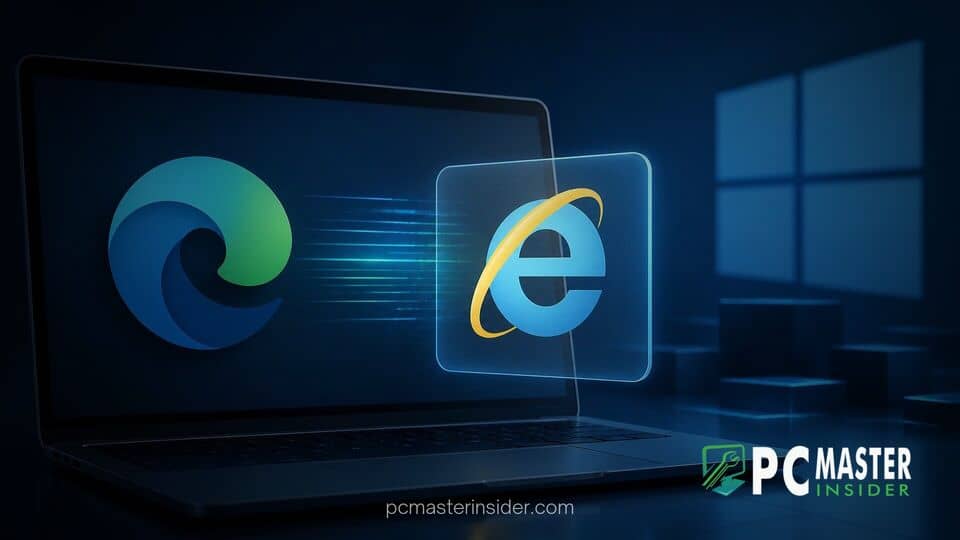
Microsoft has issued a fresh reminder to enterprise IT administrators that Internet Explorer mode in Microsoft Edge will remain supported through at least the end of 2029. The company is encouraging organizations to start auditing and modernizing their legacy web applications now to prevent potential operational disruptions when the technology is finally retired.
While the standalone Internet Explorer 11 desktop application was officially retired across most consumer versions of Windows back in June 2022, its underlying MSHTML and Trident rendering engine lives on inside Microsoft Edge. This compatibility layer allows business users to run legacy active controls, internal web apps, and older intranet sites without needing a secondary browser.
Microsoft Edge Internet Explorer Mode 2029 Timeline and Support Notice
In a recent admin center notification (MC1473151), Microsoft clarified its long term roadmap regarding backward compatibility in Edge. Microsoft Edge will continue hosting Internet Explorer mode through at least 2029 across global corporate, commercial, and government cloud deployments. Microsoft committed to giving IT managers at least a one-year advance notice before initiating any official phase-out.
The extended support window gives companies time to address deep dependencies on ancient web standards, ActiveX controls, and legacy web technologies. However, Microsoft emphasizes that modernization projects often take multiple years to complete, which is why organizations must begin mapping their infrastructure today rather than waiting until the deadline approaches.
Impact on Legacy Enterprise Web Applications and Intranets
For decades, Internet Explorer served as the foundational web browser for corporate IT infrastructure. Many enterprise resource planning (ERP) platforms, healthcare record portals, internal human resources systems, and government databases were custom built around Internet Explorer's proprietary Trident layout engine. Rebuilding these legacy systems for modern web rendering standards like Chromium often requires substantial capital investment, custom development, and strict compliance testing.
By retaining IE mode inside Microsoft Edge, enterprise users can access modern web apps built on Chromium while seamlessly rendering legacy URLs using the embedded MSHTML engine. This dual engine capabilities approach helps organizations avoid business interruption while updating critical workflows. While consumers running Windows 11 rarely encounter these legacy rendering requirements, thousands of large corporations, financial institutions, and public sector agencies remain dependent on IE mode every day.
However, running aging rendering technologies introduces security concerns over time. Attackers frequently target deprecated WebGL implementations, legacy script engines, and old browser components. Although Microsoft continues issuing security patches for the underlying MSHTML components when bundled with supported versions of Windows, removing legacy components entirely remains a long term priority for improving operating system security. Modern security updates, including major platform overhauls such as Windows 11 26H1, highlight Microsoft's ongoing push to modernize core operating system architecture and shrink legacy attack surfaces.
Roadmap for Transitioning Away from Legacy Trident Engine Dependencies
Microsoft's guidance outlines a structured transition strategy designed to eliminate dependencies on the Trident engine entirely over the next few years. The company advises IT departments to categorize their internal web assets into four distinct action categories:
- Inventory: Identify every internal website, intranet portal, and custom enterprise application that currently invokes IE mode.
- Update or Modernize: Rewrite legacy web apps to run natively on modern HTML5 standards and Chromium rendering engines.
- Replace or Rehost: Transition obsolete software to modern Software-as-a-Service (SaaS) alternatives or modern cloud hosts.
- Retire: Safely decommission redundant legacy tools that no longer serve active business processes.
To assist with complex app migrations, Microsoft offers free compatibility engineering support through its App Assure program. If an enterprise web application breaks after updating to modern web standards, Microsoft engineers work directly with corporate developers to remedy compatibility roadblocks.
Administrator Recommendations for Long Term Browser Compatibility
For system administrators, no immediate action or tenant configuration change is required right away. Current Group Policy configurations and Enterprise Mode Site Lists will continue to function normally without disruption. System admins managing corporate deployments, including those administering recent enterprise environments like Windows 11 KB5124010 update preview deployments, can rely on existing Edge policies to enforce compatibility.
However, relying on IE mode as a permanent fix is discouraged. Administrators should utilize built-in Microsoft Edge analytics tools to log when users access legacy web pages. By monitoring usage metrics, IT teams can prioritize which internal portals need immediate redevelopment based on employee traffic and operational importance. Enterprise organizations maintaining remote infrastructure, such as systems managing complex configurations or addressing known issues like Always On VPN bugs, must ensure legacy browser dependencies do not become unmaintainable bottlenecks during future network updates.
Microsoft's commitment to supporting Internet Explorer mode through 2029 offers essential operational stability for businesses worldwide. Nevertheless, the clock is running down on 1990s web architecture. IT teams should view this timeline as a clear migration window to ensure all enterprise web software moves smoothly into the modern browser era well before final retirement.