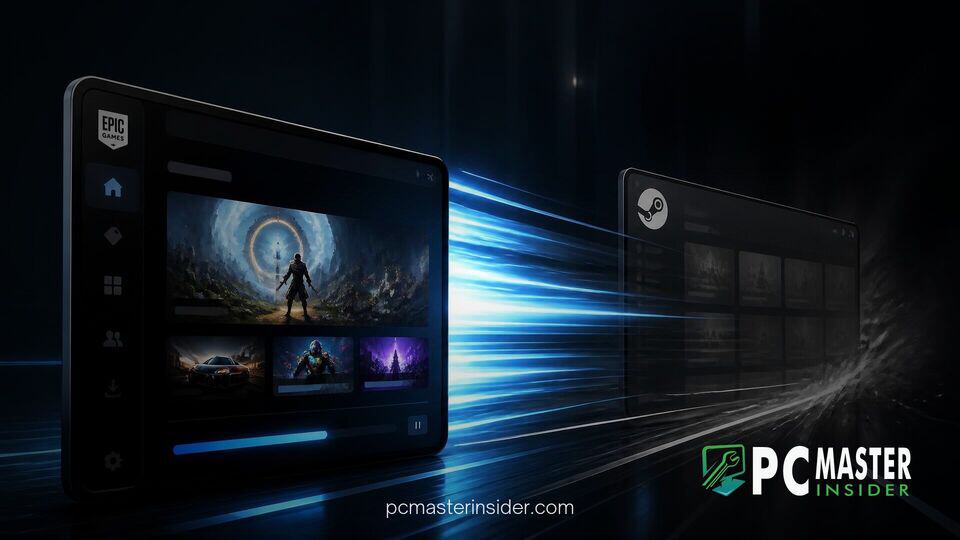
Epic Games has officially unveiled a preview version of its completely rebuilt PC client, promising substantial performance improvements and a modernized user experience. The company claims that the redesigned desktop client launches 46 percent faster than Valve's competing storefront, Steam, in cold startup benchmarks.
The fresh client represents a total ground-up rewrite of Epic's desktop infrastructure. Built primarily using generative artificial intelligence tools and automated code agents under human supervision, the early-access software aims to resolve years of user complaints regarding sluggish response times and heavy background resource utilization.
Epic Games Store Unveils AI-Optimized Desktop Launcher Preview
The newly released public preview showcases a completely refactored core architecture intended to deliver immediate performance gains across a wide range of hardware configurations. Epic Games published benchmarking data collected by independent testing contractor Keywords Studios, which highlights a cold startup duration of 5.47 seconds for the new launcher. In comparison, Valve's client registered a 10.07-second startup under identical testing parameters, giving Epic a 1.8x speed advantage from a fresh boot.
Beyond initial boot performance, the client restores from the Windows system tray in 0.36 seconds, beating Steam's 0.42-second tray restore time. The company also highlighted dramatic improvements in library browsing speed, noting that game library rendering operates up to 30 times faster than the legacy application. The update arrives at a critical moment for PC gaming storefronts, especially as competing platforms like the Microsoft Xbox PC app undergo major overhauls to streamline library rendering and platform performance.
Performance Claims and Feature Upgrades
While the initial build focuses heavily on raw speed and lightweight performance, it introduces several significant functional additions for PC gamers:
- Unified Library Integration: Players can connect external PC libraries to manage titles across various storefronts inside a single interface.
- Dedicated Game Hubs: Every title features an individual landing page detailing update logs, cumulative playtime, installation status, and quick-launch controls.
- Granular Download Controls: A redesigned download monitor offers real-time visibility into active throughput, disk read and write speeds, queued tasks, and scheduled updates.
- Customizable Layouts: Users can pin frequent applications to a top navigation bar, toggle between grid and list views, and organize titles using customizable collections.
- Lightweight Footprint: The core application footprint has been streamlined down to approximately 300 megabytes to reduce background memory consumption.
How AI Code Optimization Powered the Client Redesign
The development approach behind the updated app marks a notable departure from traditional software engineering workflows. In its official announcement, Epic humorously quipped that "programming is hard," explaining that engineering teams leveraged AI agent workflows to write and review code across both the user interface shell and the underlying store architecture. This transition aligns with broader industry trends where major studios explore automated tools, echoing recent strategic moves such as when Epic delayed its unannounced Disney shooter project to pivot toward AI coding workflows.
Speaking in an interview regarding the technical transition, Martin Keely, Vice President and General Manager of the Epic Games Store, explained that the software shell, download manager, and product discovery pages were rebuilt from scratch. Keely noted that human developers directly managed and supervised the AI agents throughout the development process to ensure stability and code safety. However, because the client is light on legacy features, Epic recommends that competitive players and Unreal Engine developers remain on the mainline release until full feature parity is achieved.
Linux Support and Handheld Expansion Plans
Alongside Windows and macOS compatibility, the launcher preview officially introduces native Linux support for the first time. Official installation packages are currently available for major Linux distributions, including Ubuntu 22.04 LTS, Fedora 43, and Debian 12. This expands native storefront accessibility for handheld gaming PC enthusiasts who previously relied on third-party community wrappers to access their Epic library on Linux-based operating systems.
Epic also confirmed ongoing work to make its popular battle royale title, Fortnite, natively playable on Linux through the new client. To accomplish this, the company is collaborating with open-source distribution maintainers to upgrade Easy Anti-Cheat (EAC) security protocols. The initiative highlights growing competition across the PC landscape as Valve continues to expand its platform reach, recently marked by Steam reaching a record 43.5 million concurrent players. Gamers seeking optimal system responsiveness during high-end play sessions can also review technical guides on enabling HAGS and Game Mode in Windows 11 to eliminate performance stutters.
The Epic Games Launcher preview is available to download immediately for interested testers. Epic plans to issue periodic software updates to integrate missing storefront functionality, social tools, and account management options before initiating a full transition away from the current desktop client.