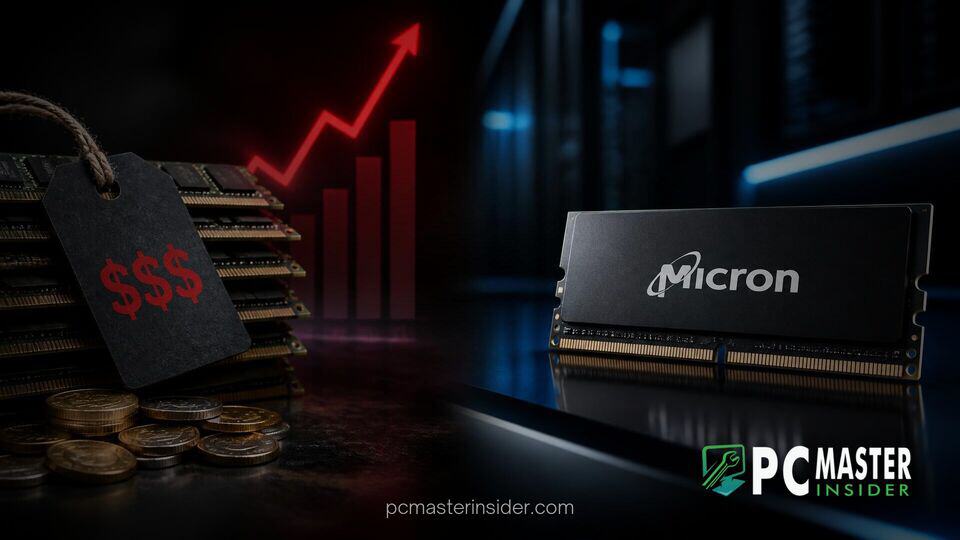
Tesla and SpaceX chief executive Elon Musk has publicly criticized semiconductor memory manufacturers for demanding excessively high quotes during an ongoing industry supply crunch. In social media statements, Musk praised Micron Technology for offering fair rates while describing the pricing practices of rival memory suppliers as extortionate.
His remarks come at a time when rapid expansion across artificial intelligence data centers, electric vehicles, and high-performance computing platforms has created unprecedented demand for High Bandwidth Memory (HBM) and conventional DRAM. The severe bottleneck in memory production continues to push hardware costs higher across consumer and enterprise markets alike.
elon musk memory pricing comments
In a direct response to market research highlighting long-term semiconductor supply agreements, Musk voiced strong frustration regarding how major component vendors handle customer pricing during shortages. He noted that Micron has been reasonable regarding future memory prices, whereas competing chipmakers have resorted to aggressive pricing strategies that enterprise buyers will not forget. Musk emphasized that prioritizing long-term customer loyalty over short-term financial extraction is the smarter strategic move for component manufacturers.
Elon Musk Slams Extortionate DRAM Pricing in Public Remarks
Praise for Micron Amid Rising Memory Costs
Musk commended Boise-based Micron Technology for maintaining balanced commercial terms despite tight global inventory. According to industry reports and financial notes from major investment banks, Micron has secured dozens of long-term supply agreements that lock in allocations through 2030. Musk pointed out that treating major buyers fairly during supply crunches establishes crucial goodwill that remains valuable long after the immediate market imbalance resolves.
The tech chief had previously acknowledged Micron for securing dedicated memory allocations for Tesla vehicles and AI supercomputers. As tech firms rapidly build out compute infrastructure, securing predictable component pricing has become vital for controlling capital expenditure.
Targeting Industry Leaders Samsung and SK Hynix
Although Musk refrained from naming specific competitors in his public comments, industry analysts widely interpret his remarks as targeting major South Korean suppliers, namely Samsung Electronics and SK Hynix. Together with Micron, these companies form a tight oligopoly controlling nearly the entirety of the global DRAM and HBM supply.
Because confidential procurement terms prohibit buyers from disclosing exact contract figures, verifying specific price differentials between suppliers remains difficult. However, public comments from hardware executives reflect widespread dissatisfaction across tech supply chains over escalating component fees.
Escalating Memory Costs Impact Hardware Ecosystem
AI Data Center Demand Squeezing Consumer DRAM
The primary driver behind the current market strain is the rapid pivot toward AI infrastructure. Leading semiconductor foundries and memory makers have reallocated substantial wafer production capacity toward HBM chips required by advanced AI accelerators. Consequently, the available manufacturing capacity for standard DDR5, DDR4, and mobile DRAM modules has tightened sharply.
This reallocation has rippled throughout the broader consumer electronics market. System builders and retail buyers are experiencing steep price surges for system RAM and graphics memory. Similar cost pressures have pushed desktop memory prices to historic highs, where 32GB DDR5 Desktop RAM Kits Hit 450 Dollars as DRAM Supply Tightens. Furthermore, legacy platforms are facing unexpected demand, causing DDR4 Memory Prices Surge 280 Percent as PC Builders Pivot Away from Costly DDR5.
System integrators, graphics card manufacturers, and single-board computer makers have all faced difficult decisions regarding retail pricing. For instance, small-scale hardware producers have been forced to adjust retail tags, as seen when Raspberry Pi Increases 2GB Pi 4 and Pi 5 Prices by $12.50 Citing Memory Costs. Similarly, major silicon vendors have passed on rising substrate expenses, resulting in scenarios where AMD Reportedly Raises GDDR6 Prices for Radeon GPU Board Partners.
Industry Response and Long-Term Market Outlook
The broader semiconductor landscape reflects persistent supply constraints. Analyst reports project that structural memory shortages could extend over the next several years as production facilities struggle to scale complex stacking technologies required for HBM modules. Financial forecasts indicate that demand for high-performance memory in AI servers will continue outstripping supply into late decade horizons.
As memory costs remain high, consumer purchasing power is being tested across every sector. Market researchers have observed declining system shipments worldwide, noting that Global PC Shipments Drop 20 Percent in Q3 2026 as Memory Costs Rise. While memory suppliers are currently enjoying high profit margins, vocal feedback from influential buyers like Elon Musk signals that aggressive pricing strategies during supply shortages may carry severe long-term customer relationship risks once global production capacity finally catches up with demand.