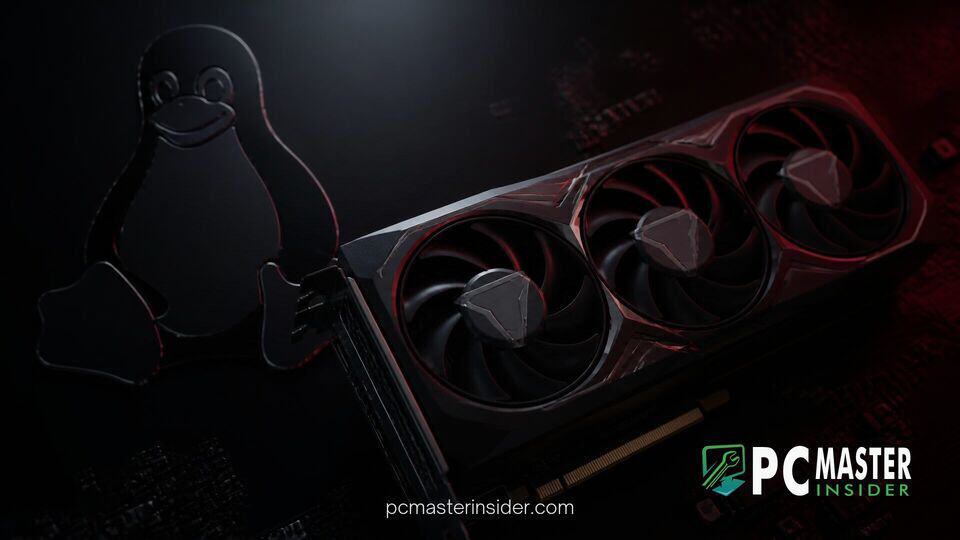
AMD has officially begun bringing up software enablement for its next-generation graphics architecture within the open-source Linux kernel stack. The company submitted initial pull requests to DRM-Next, introducing early driver support for the GFX13 graphics IP.
This early driver code is slated for landing in the Linux 7.5 kernel merge window. While hardware launches for these next-generation GPUs remain well off on the horizon, the preliminary code submission lays the essential groundwork for seamless open-source support on day one.
amd rdna 5 linux driver support
AMD has started rolling out preliminary amd rdna 5 linux driver support through kernel updates targeting the Linux 7.5 release cycle. The initial patch set integrates the GFX13 graphics core along with core IP updates required for early silicon bring-up. This ongoing work ensures that open-source graphics stacks, including kernel drivers and Mesa userspace components, will be fully prepared long before consumer hardware hits store shelves.
AMD Submits RDNA 5 Enablement Patches for Linux 7.5
The latest driver code pull request sent to DRM-Next introduces experimental enablement for Graphics Core 13 (GC 13), widely understood to be the architectural codename for AMD RDNA 5. These initial commits follow an extensive series of earlier patch submissions that added over 12,000 lines of driver code to the open-source AMDGPU kernel module.
By targeting the Linux 7.5 merge window, AMD continues its long-standing practice of upstreaming hardware support months in advance. Software maintainers noted that these initial patches represent foundational architecture enablement rather than polished, consumer-ready drivers. Consequently, early code focuses heavily on low-level register headers, initialization sequences, and essential hardware state management.
This development methodology mirrors past driver rollouts for previous architectures like RDNA 3 and RDNA 4. By establishing driver stability inside the mainline kernel tree early, Linux distribution vendors receive sufficient lead time to compile and package necessary software components before retail availability.
Key Hardware Blocks and GFX13 Architectures Identified
The DRM-Next submission includes updates across several crucial graphics subsystem blocks. Beyond the core GC 13 graphics engine, the patch set introduces Graphics Memory Controller 13 (GMC 13), System Direct Memory Access 8 (SDMA 8), and System-on-Chip (SoC) v2.0 support. Updates were also pushed for Display Core Next 6 (DCN6), the display engine responsible for driving modern display outputs and pixel scaling.
Interestingly, the driver code explicitly references two distinct IP targets: GFX 13.0.1 and GFX 13.0.4. While these version tags do not directly reveal specific commercial product branding, they confirm that AMD is actively testing at least two distinct silicon configurations within its internal laboratories.
The introduction of GMC 13 is particularly notable among industry observers. While preceding GPU generations relied on GDDR6 memory controllers, GMC 13 prepares the memory pipeline for next-generation interfaces, which are widely expected to include GDDR7 support on future consumer cards. Additionally, updates to the AMDKFD compute driver introduce new wave state trap handlers and clock gating controls designed to optimize power consumption during idle hardware states.
While kernel developers focus on low-level driver safety, operating system security continues to evolve across competing platforms. For instance, Microsoft launched the Windows Endpoint Security Platform GA to replace kernel drivers, shifting critical software out of sensitive OS ring levels.
Launch Timeline and Day-One Linux Support Strategy
AMD's proactive upstreaming strategy highlights the importance of the open-source ecosystem to the company's long-term business model. Unlike proprietary driver models, open-source kernel drivers require rigorous peer review and public merge cycles before reaching end users. Merging GFX13 support into Linux 7.5 guarantees that future Linux distributions will ship with out-of-the-box hardware detection.
In parallel with kernel driver bring-up, open-source developers are already laying the groundwork across the broader graphics ecosystem. Supporting patches are being drafted for Mesa, ensuring that both the RadeonSI OpenGL driver and the RADV Vulkan driver can communicate effectively with GFX13 hardware. This dual focus on kernel and userspace components aims to deliver stable day-one performance for Linux gaming and compute workloads.
Industry projections suggest that RDNA 5 graphics hardware will likely launch in the second half of 2027. By initiating driver enablement so far ahead of retail deployment, AMD avoids launch-day driver compatibility issues that historically plagued new hardware releases on Linux distributions.
For PC enthusiasts and Linux gamers, the early arrival of GFX13 code offers a clear signal that next-generation hardware development is progressing steadily behind closed doors. As kernel development cycles progress toward the Linux 7.5 release, additional driver refinements will continue to provide clearer insights into AMD's upcoming GPU capabilities.